SUMMARY
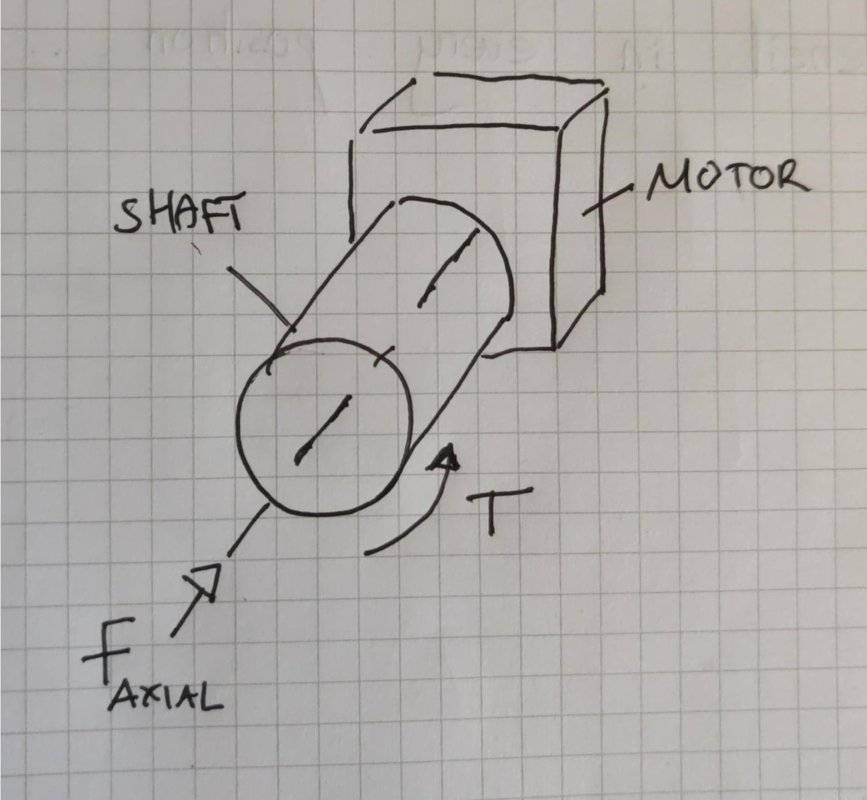
The discussion centers on the impact of axial thrust force (Faxial) on motor torque and performance. A significant axial force necessitates the use of thrust bearings, particularly in vertical motors, which are designed to handle such loads. The presence of Faxial increases friction in the thrust bearing, ultimately reducing the motor's available output torque. Understanding the construction differences between vertical and horizontal motors is crucial for optimizing performance and longevity.
PREREQUISITES
- Understanding of axial thrust forces in motor applications
- Familiarity with thrust bearings and their functions
- Knowledge of vertical versus horizontal motor configurations
- Basic principles of torque and friction in mechanical systems
NEXT STEPS
- Research the specifications and applications of thrust bearings in motors
- Study the differences in lubrication requirements for vertical motors
- Explore the design and performance characteristics of double shaft motors
- Learn about the impact of axial loads on motor efficiency and lifespan
USEFUL FOR
Electrical engineers, motor design specialists, and maintenance professionals seeking to optimize motor performance and understand the implications of axial forces on torque and bearing life.