Electrostatic seperator questions

  • Thread starter Thread starter connor67
  • Start date Start date
  • Tags Tags
    Electrostatic
Click For Summary
An individual is constructing an electrostatic separator for plant material, aiming to separate two negatively charged substances with differing responses to positive charges. They have outlined a plan involving a 220v power source, a rectifier, and aluminum electrodes of varying sizes. Questions were raised about the suitability of a 35a 400v bridge rectifier and grounding requirements for the positive electrode. However, the project has been deemed dangerous for inexperienced individuals, highlighting significant fire and shock hazards. The discussion was closed due to safety concerns and the need for professional electrical engineering assistance.
connor67
Messages
3
Reaction score
0
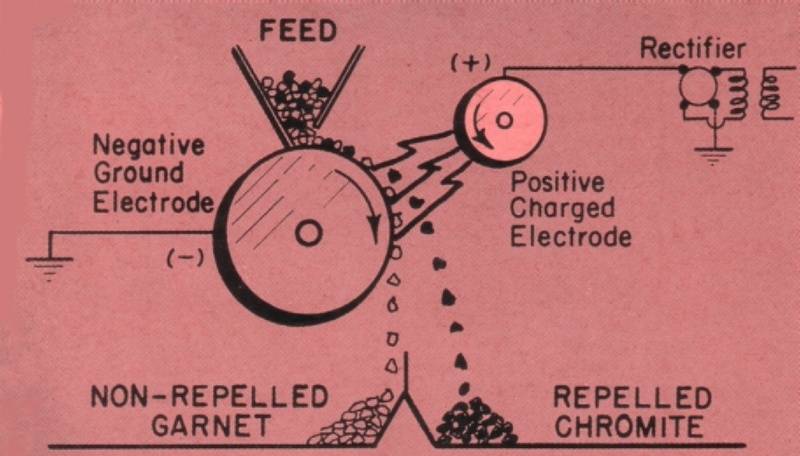
howdy, i am building an electrostatic seperator for plant material. the two materials i am trying to separate have a negative charge but one responds a lot more to positve charges so i feel there will still be sufficient seperation. i have the general plan for it done, i just had a few questions in regard to the rectifier, and if anybody had any input with the other aspects it would also be greatly apreciated. So now let me get into the plan. i attached a diagram to give you all an idea of what i am talking about. i plan on running a 220v cord to a junction box. from there i will have three connections, one to each motor and then one to the rectifier. then from the rectifier it will run to the positive electrode. attached to the motors will be the electrodes, the negative charge rotating clockwise and the positive rotating counter-clockwise. each electrode is going to be made of aluminum. the negative having a diameter of 6 inches and the positive a diameter of 12 inches. each also will have a depth of 12 inches. i feel this is the max size to go with still keeping a sufficient charge on the positive electrode. then the negative will be grounded to the steel frame. so to my questions, i was thinking of using a 35a 400v bridge rectifier and was wondering if that would be the appropriate one. also would it be fine to run just a positive from the junction box to the rectifier then the the electrode without a ground on that side? the only ground for the electrodes would be the one on the negative charge side. if i do need one between the rectifier and positive electrode, what would be the best way of placing it there? also do you all feel aluminum would be the best material to use for the electrodes? any help would be much appreciated.
ElStatDia1.jpg
 
Engineering news on Phys.org
This is a very dangerous project for an inexperienced amateur to try to take on. There are numerous fire and shock hazards in what you are trying to do. Please find a local EE to help you do this project safely. You and s/he will need to build this system so it could be approved by a safety agency like UL (even if you do not actually submit it to UL). If you don't, and somebody gets hurt or it catches fire and causes property damage, you will be the one held responsible.

Thread is closed as a dangerous discussion, which is not allowed at the PF.
 
  • Like
Likes CalcNerd
I am trying to understand how transferring electric from the powerplant to my house is more effective using high voltage. The suggested explanation that the current is equal to the power supply divided by the voltage, and hence higher voltage leads to lower current and as a result to a lower power loss on the conductives is very confusing me. I know that the current is determined by the voltage and the resistance, and not by a power capability - which defines a limit to the allowable...

Similar threads

  • · Replies 2 ·
Replies
2
Views
2K
  • · Replies 3 ·
Replies
3
Views
1K
Replies
8
Views
4K
  • · Replies 7 ·
Replies
7
Views
19K
  • · Replies 18 ·
Replies
18
Views
4K
  • · Replies 12 ·
Replies
12
Views
2K
  • · Replies 10 ·
Replies
10
Views
2K
  • · Replies 13 ·
Replies
13
Views
3K
  • · Replies 8 ·
Replies
8
Views
3K
  • · Replies 11 ·
Replies
11
Views
2K