FEA Torque Sim: Custom Wrench Design & SolidWorks File

Click For Summary
A user is designing a custom wrench and wants to conduct a Finite Element Analysis (FEA) in SolidWorks to test for potential failure under a 100 ft-lbs torque load. The discussion focuses on how to correctly apply the load in the FEA model, debating whether to use torque or force. It is suggested to fix the part holding the socket and apply the force to the handle for accurate results. The torque wrench's length is also questioned regarding its influence on the load application. Understanding these aspects is crucial for effective FEA simulations of common tools like wrenches.
grunt5897
Messages
2
Reaction score
0
I'm making a custom wrench for personal use. For fun, I'd like to run an FEA and see if the wrench will fail. Below is a similar wrench. 100ft-lbs are applied with a torque wrench to the square socket. Where do I fix and apply the load? Should it be a torque or a force? I'm doing the FEA in SolidWorks if anyone wants the file.
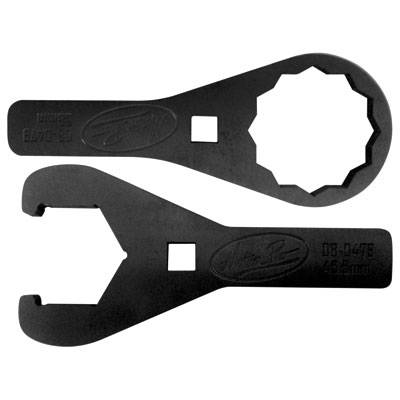
Axle Nut Wrench.jpg
 
Engineering news on Phys.org
Had my central air system checked when it sortta wasn't working. I guess I hadn't replaced the filter. Guy suggested I might want to get a UV filter accessory. He said it would "kill bugs and particulates". I know UV can kill the former, not sure how he thinks it's gonna murder the latter. Now I'm finding out there's more than one type of UV filter: one for the air flow and one for the coil. He was suggesting we might get one for the air flow, but now we'll have to change the bulb...

Similar threads

  • · Replies 4 ·
Replies
4
Views
2K
  • · Replies 9 ·
Replies
9
Views
2K
  • · Replies 3 ·
Replies
3
Views
9K
  • · Replies 14 ·
Replies
14
Views
1K
  • · Replies 1 ·
Replies
1
Views
2K
Replies
3
Views
4K
  • · Replies 3 ·
Replies
3
Views
4K
  • · Replies 17 ·
Replies
17
Views
3K
  • · Replies 8 ·
Replies
8
Views
4K
  • · Replies 8 ·
Replies
8
Views
12K