Ferrite Rod Geometry for Magnetorquer Design

  • Thread starter Thread starter inversquare
  • Start date Start date
  • Tags Tags
    Geometry Solenoid
Click For Summary
SUMMARY

The discussion focuses on the design of solenoid magnetorquers for cubesats using unique ferrite rod geometries, specifically 19.6 cm in length and 0.67 cm in diameter. Participants highlight that the fluted design may require longer wire to achieve the same magnetic properties as a simple cylindrical rod, potentially increasing weight. The primary goal is to maximize the magnetic dipole moment for effective torque against Earth's magnetic field. Further information on part numbers and manufacturers is currently being sought by the team.

PREREQUISITES
  • Understanding of solenoid magnetorquer design principles
  • Familiarity with magnetic dipole moment concepts
  • Knowledge of ferrite materials and their properties
  • Basic principles of electromagnetism
NEXT STEPS
  • Research the impact of ferrite rod geometry on magnetic performance
  • Explore the design and optimization of solenoid magnetorquers
  • Investigate the weight implications of different ferrite rod designs
  • Look into manufacturers and part numbers for specialized ferrite rods
USEFUL FOR

Engineers and designers working on cubesat projects, aerospace professionals, and researchers interested in magnetorquer technology and ferrite material applications.
inversquare
Messages
17
Reaction score
0
Hello!

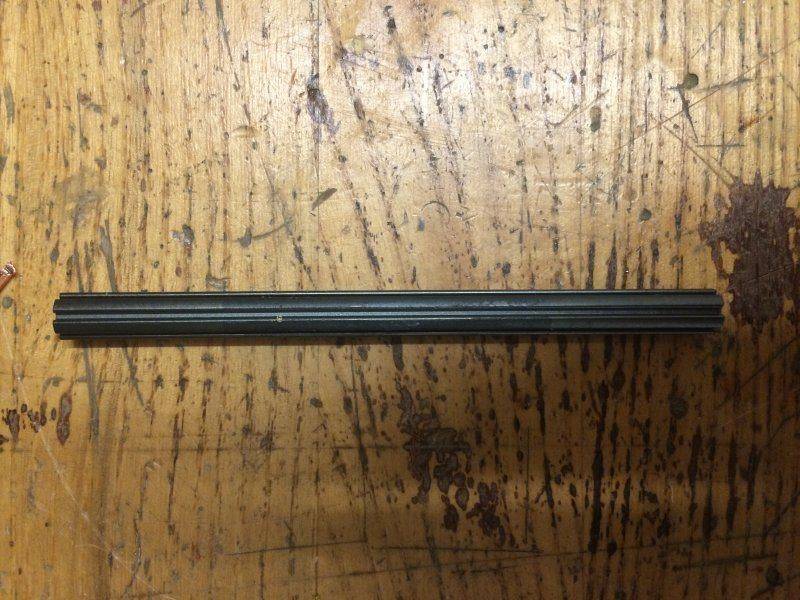
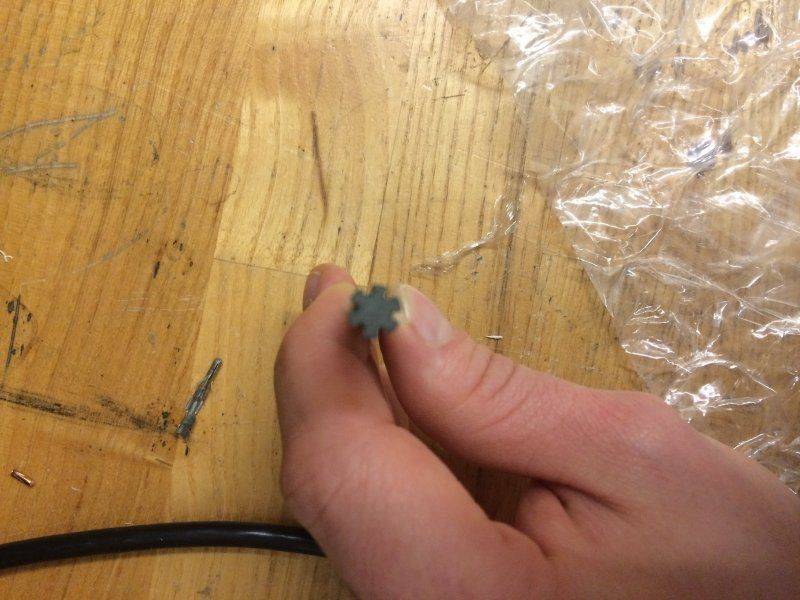
We are working with some ferrite rods to build solenoid magnetorquers for a cubesat design. The geometry on these rods is unique. Are there benefits to this type of a geometry?
IMG_8305.JPG
IMG_8304.JPG
They are 19.6 cm length x .67cm diameter.
 

Attachments

  • IMG_8304.JPG
    IMG_8304.JPG
    65.3 KB · Views: 748
  • IMG_8305.JPG
    IMG_8305.JPG
    87.3 KB · Views: 504
Physics news on Phys.org
Can you give us a part number or a link to the manufacturer of the 6 fluted rods? What are they designed to do?

Since your coil does not contain ferrite where the flutes are, you will need a longer wire to surround the same section of ferrite. That will weigh more than when wound on a simple cylindrical rod.
 
I see! Good to know, so you would even recommend to just use a simple cylinder? We are trying to maximize magnetic dipole moment for torque against the magnetic field of the Earth.

As to part numbers etc, I wish. I have no part information. I am working on our team leads to get some more data on them. In the meantime, I thought I would ask on here from a physics standpoint how the flutes will affect things.
 

Similar threads

  • · Replies 33 ·
2
Replies
33
Views
5K
  • · Replies 6 ·
Replies
6
Views
3K
  • · Replies 0 ·
Replies
0
Views
2K
  • · Replies 6 ·
Replies
6
Views
4K
Replies
2
Views
2K
Replies
11
Views
3K
  • · Replies 1 ·
Replies
1
Views
1K
  • · Replies 16 ·
Replies
16
Views
2K
  • · Replies 55 ·
2
Replies
55
Views
5K
  • · Replies 1 ·
Replies
1
Views
2K