viper2788
- 3
- 0
basically, I am trying to reduce vibrations from my break barrel air rifle which has dual recoils in either direction. they happen almost simultaneously, but it still throws off my accuracy as one occurs just before the pellet leaves the barrel. the kick isn't strong but rather sharp. here's a pic so you may get a better idea:
http://www.airgunsofarizona.com/Crosman/Nitro/NitroVsSpring.jpg
and then i came across this:
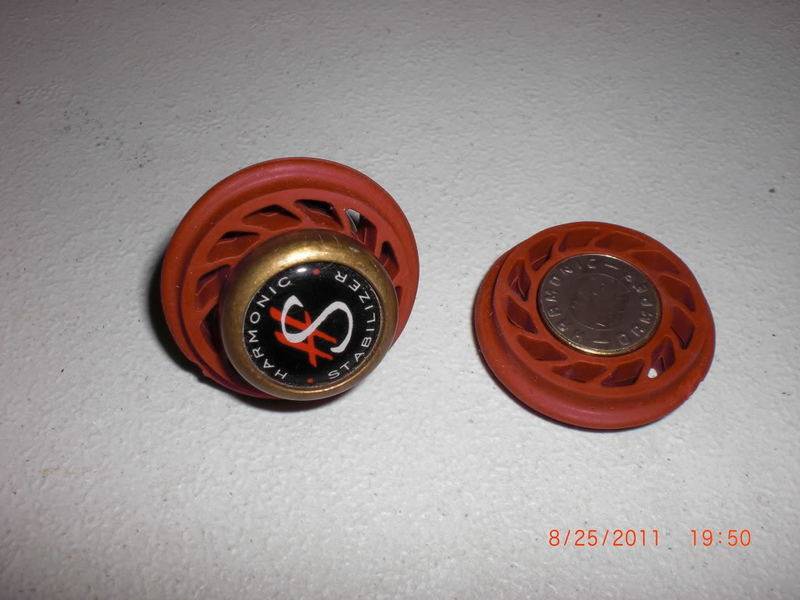
what if i were to mount these onto the stock of my rifle? the gun is about twice as heavy as a bow, but it should still make a difference, right? what concerns me is that the bow is uniformly made of aluminum alloy, whereas for the gun, the initial vibrating part is the metal internals, which are held tightly to the wooden stock by screws. would i gain noticeable benfits from this?
http://www.airgunsofarizona.com/Crosman/Nitro/NitroVsSpring.jpg
and then i came across this:
The Mathews Harmonic Stabilizer dampens residual bow vibration by 75 percent and significantly improves bow balance and aiming.
what if i were to mount these onto the stock of my rifle? the gun is about twice as heavy as a bow, but it should still make a difference, right? what concerns me is that the bow is uniformly made of aluminum alloy, whereas for the gun, the initial vibrating part is the metal internals, which are held tightly to the wooden stock by screws. would i gain noticeable benfits from this?
Last edited by a moderator: