Heat Surge Amish-made fireplace

  • Thread starter Thread starter Ivan Seeking
  • Start date Start date
  • Tags Tags
    Heat
Click For Summary

Discussion Overview

The discussion revolves around the Heat Surge "Amish-made" fireplace, focusing on its effectiveness as a heating solution, marketing strategies, and consumer perceptions. Participants explore the implications of its pricing, the legitimacy of its claims, and the quality of its construction, with references to both technical specifications and consumer experiences.

Discussion Character

  • Debate/contested
  • Technical explanation
  • Conceptual clarification
  • Exploratory

Main Points Raised

  • Some participants argue that the Heat Surge fireplace is essentially a 1500 watt electric heater housed in an expensive cabinet, questioning its value compared to cheaper alternatives.
  • Others suggest that the targeted consumer demographic may include shut-ins or the elderly, indicating a potential marketing strategy.
  • A few participants express skepticism about the claims of heat output, with one noting that the maximum BTU rating is misleading.
  • Concerns are raised about the marketing tactics used by Heat Surge, with comparisons made to other products that exaggerate performance claims.
  • Some participants share anecdotes about using similar heaters, describing them as primarily decorative rather than effective heating solutions.
  • There are discussions about the legitimacy of the "Amish-made" label, with one participant stating that the heaters are actually manufactured in China, while only the wood mantle is crafted by Amish artisans.
  • Technical discussions arise regarding electrical ratings and the implications of power consumption, with participants questioning the accuracy of power ratings for various devices.

Areas of Agreement / Disagreement

Participants express a range of opinions, with no clear consensus on the effectiveness or value of the Heat Surge fireplace. Disagreements persist regarding the legitimacy of its marketing claims and the quality of its construction.

Contextual Notes

Some participants highlight limitations in the product's claims, particularly regarding its heating efficiency and the implications of its pricing structure. There are also unresolved questions about the accuracy of electrical ratings and the implications for consumer safety.

Ivan Seeking
Staff Emeritus
Science Advisor
Gold Member
Messages
8,215
Reaction score
2,661
Heat Surge "Amish-made" fireplace

We were already using all electric heat in this house. With the Roll-n-Glow Fireplace, I believe we still saved money last winter. In a very short time the room heats to the comfort wanted, quietly and cheaper! It's paid for itself already!

Rolls Anywhere
Slash Heat Bills
Christmas Rush Forces Household
Limit of 2
Only Uses about 8¢ Electricity an Hour on standard setting
Heat Surge Miracle Heaters Given Away Free with Order of Handmade Amish Fireplace Mantle
http://www.heatsurgetv.com/

Essentially anywhere there's an outlet you can place a Roll-n-Glow electric fireplace. Perfect for any house, apartment, condo, dorm, mobile home, cottage, office, hotel, or garage
http://www.heatsurge.com/images/cherry-07.jpg
http://www.heatsurge.com/

The problem? These sell for up to $587.00 but are just a 1500 watt electric heater plus the fancy "Amish-made" cabinet.

A 1500 watt electric heater like this sells at Walmart for less than $14.00
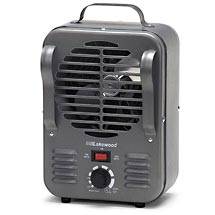
0002983779257_215X215.jpg

http://www.walmart.com/catalog/product.do?product_id=7768641

Note that the Heat Surge cited maximum of 5110 BTUs, is just 1498 watts.
 
Last edited by a moderator:
Computer science news on Phys.org


the first one looks warmer. and it's pretty.

the targeted consumer is probably shut-ins/elderly. :|


No one knows more about electric devices than the Amish.


Heat Surge is an established company with millions of satisfied customers whose focus is to exceed customer expectations.

To accomplish this, along with other successful methods, we’ve set up a Web site to share the facts about our company at http://heatsurge.wordpress.com to address any questions or concerns you may have.

Chris Pugh
Heat Surge
 
Last edited:


True or false: You can get the same amount of heat from a $15 electric heater from Walmart?


Ivan Seeking said:
True or false: You can get the same amount of heat from a $15 electric heater from Walmart?
Yes, but this one does also raise barns for you
 
Last edited:


Looks like you hooked a troll Ivan.

Wooow. 5000 BTU's? That's a lot of BTUs...isn't it? That a lot of thousands of BTU thingies.

Taking advantage of the general public's stupidity is obviously a viable business practice still. This goes right up there with marketing 2 HP shop vacs for 110V use.

If I were dead set on giving there website a hit, I'd love to see what the cabinets are made out of. Do the Amish raise particle board barns now a days?


Proton Soup said:
the first one looks warmer. and it's pretty.

the targeted consumer is probably shut-ins/elderly. :|

I was just about to say I liked it. :redface:
I feel old. :frown:

Denton said:
No one knows more about electric devices than the Amish.

:smile:
 
  • #10


I won't even bother checking the web-site. I've seen their print ads and they are just a bunch of scammers, fleecing the ignorant. In our area, electricity is by far the most expensive way to heat a house and the climate is such that 5000 BTU would be like throwing a hot-dog to a hungry lion.

Edit: How do you get a "heat surge" out of a cheap 5000 btu resistive heater? The name itself is ridiculous.
 
  • #11


I had one like this for the bathroom at my old house. It was from Home Depot.

It was basically decorative, but it's also a space heater.
 

Attachments

  • elec fireplace.jpg
    elec fireplace.jpg
    34.5 KB · Views: 524
  • #12


I could get more heat by dragging out my tube amp and playing guitar for a while. All those tubes throw a bit of heat. I used to own a Peavey Classic 30 that got really hot - like the old Vox amps, it was a single-ended design that was dissipating power at max even when it was idling. At least I would be getting the side-benefit of guitar practice.
 
  • #13


Cheezy marketing for sure, but spot heating most certainly does save energy.

With the price, though, buying it for looks is the better bet.
 
  • #14


russ_watters said:
Cheezy marketing for sure, but spot heating most certainly does save energy.

It might be fair to sell it as a decorative item, but zone heating can be accomplished using any 1500 watt [electric] heater. If the intent is to save money, the last thing one needs is a fancy $200-$500+ cabinet enclosing an otherwise cheap heater.
 
Last edited:
  • #15


FredGarvin said:
This goes right up there with marketing 2 HP shop vacs for 110V use.

These rating are often obtained by increasing the voltage to the motor until the point that it self-destructs. The power rating is obtained just before it bursts into flames, or smokes. That is the "peak HP".
 
Last edited:
  • #16


FredGarvin said:
This goes right up there with marketing 2 HP shop vacs for 110V use.
I just bought a 300W UPS that is also labeled 650VA
 
  • #17


mgb_phys said:
I just bought a 300W UPS that is also labeled 650VA
Wow! Isn't the 2-gauge power cable a bit stiff?
 
  • #18


I was mainly wondering what shape the sine wave output would have to be for that to add up.
 
  • #19


I don't need no steenkin' heat surge. I'll just plug in my wife's hair dryer and point it at my feet to warm up.
 
  • #20


mgb_phys said:
I was mainly wondering what shape the sine wave output would have to be for that to add up.

We can guess...

300W should be the output rating (why not in VA?). 650VA could be the peak VA requirements during line drop-out conditions.


I can't wait for summer when I can by my Amish Frost Bite richy appointed in shimmering icicles.
 
  • #21


FredGarvin said:
Taking advantage of the general public's stupidity is obviously a viable business practice still. This goes right up there with marketing 2 HP shop vacs for 110V use.
I must be missing something here. 2 HP is 1660 W, assuming a 90% efficient motor (and assuming that a 2hp motor actually provides 2 HP when attached to a vacuum cleaner - there is no reason to expect that it must). That's easily within the range of a household circuit.
 
  • #22


mgb_phys said:
I just bought a 300W UPS that is also labeled 650VA
Hmm - that seems pretty common. Wonder what tha's about.
 
  • #23


russ_watters said:
I must be missing something here. 2 HP is 1660 W, assuming a 90% efficient motor (and assuming that a 2hp motor actually provides 2 HP when attached to a vacuum cleaner - there is no reason to expect that it must). That's easily within the range of a household circuit.

(1660W/0.9)/110V = 16.75A aren't 110V circuits 15A in the US?
 
  • #24


mgb_phys said:
(1660W/0.9)/110V = 16.75A aren't 110V circuits 15A in the US?

Not only that, many so called 2 HP vacs are only rated at 6-10 amps, at 110VAC. [I did time in a vacuum store while in college].

I think I've seen the 2HP Peak rating on motors that use as little as 4.5 amps, at 110VAC.
 
Last edited:
  • #25


FredGarvin said:
Taking advantage of the general public's stupidity is obviously a viable business practice still. This goes right up there with marketing 2 HP shop vacs for 110V use.

Electrical service, outlets and power cords are rated in amps. The common household outlet is 15 amps. It could be fused for less. 117V*15A > 2HP.

Motors are rated in HP and duty. It could be still be a 10 HP shop vac rated at 100% duty, if their were such animals, and be fine running off a household outlet. The pump just can't load the motor over 2HP--for very long.
 
  • #26


i think 15A is a common breaker size now for wall outlet circuits. in the past, larger size fuses may have been used. few enough and large enough to be fire hazards.

wall outlets in an actual "shop" in a commercial building may be another story, though. do we have an electrician in the house?
 
  • #27


From CTV British Columbia

http://winnipeg.ctv.ca/servlet/an/local/CTVNews/20080924/BC_olsen_amish_smart_photo_080924?hub=BritishColumbiaVideo"

"---despite the headline --these heaters are not made by the Amish: they're made in China. If you read the ad carefully, you realize that only the wood mantle is made by Amish craftsmen."

I'm outraged. I want my electronics made by Amish, and my woodwork done in China.
 
Last edited by a moderator:
  • #28


Phrak said:
I'm outraged. I want my electronics made by Amish, and my woodwork done in China.
Me, too. And I want the UL labels to be counterfeited by Native American printing shops.
 
  • #29


Phrak said:
Motors are rated in HP and duty. It could be still be a 10 HP shop vac rated at 100% duty, if their were such animals, and be fine running off a household outlet. The pump just can't load the motor over 2HP--for very long.

It is still meaningless if they don't cite the voltage at which the peak HP is reached.

Also, to be rated for 10 HP, the plate rated maximum current would be exceedingly high [on the order of 70 amps], which you never see.
 
  • #30


10 HP on a 120V residential circuit? Let go of my leg, scammer!