Discussion Overview
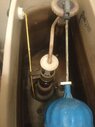
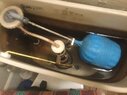
The discussion revolves around troubleshooting a leaky toilet in an old apartment building, focusing on potential causes and solutions without replacing parts. Participants explore various mechanisms involved in toilet operation, including the float, flapper valve, and inlet valve, while considering both visual inspections and adjustments.
Discussion Character
- Exploratory
- Technical explanation
- Debate/contested
Main Points Raised
- Some participants suggest that the leak may be caused by water overflowing through the overflow tube due to a badly adjusted float, which could be fixed by readjusting the float.
- Others propose that the flapper valve may not seal properly, indicating a need for visual inspection and possibly replacement.
- One participant identifies a central sliding valve in the toilet, referring to it as a canister valve, and provides links for further guidance.
- Another participant mentions that the inlet valve might not close completely, leading to continuous flow, and suggests that lifting the float could temporarily stop the leak.
- Some participants discuss the possibility of disassembling and cleaning the valve to fix the leak without replacement parts, although they note that the seal may still need replacement.
- Concerns are raised about the quality of modern toilet mechanisms compared to older designs, with some participants expressing skepticism about their durability.
Areas of Agreement / Disagreement
Participants present multiple competing views on the causes of the leak and the effectiveness of various solutions. No consensus is reached on a single cause or solution.
Contextual Notes
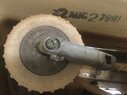
Participants express uncertainty regarding the specific type of valve and its operation, and there are limitations in the visual inspection based on the provided pictures. Some assumptions about the condition of the toilet components remain unverified.