How can there be back-bonding in PF3?

  • Thread starter Thread starter prakhargupta3301
  • Start date Start date
Click For Summary
SUMMARY

The discussion centers on back bonding in phosphorus trifluoride (PF3), specifically addressing the hybridization states of phosphorus and fluorine. Both phosphorus and fluorine are sp3 hybridized; however, back bonding occurs due to phosphorus having vacant 3d orbitals that can interact with the lone pairs of fluorine. The NBO analysis performed using Gaussian 09W with DFT (B3LYP) reveals that PF3 exhibits 99.420% Lewis structure occupancy, indicating significant covalent character in the P-F bonds. The analysis also highlights that the d-orbitals in phosphorus serve as polarization functions rather than direct contributors to back bonding.

PREREQUISITES
  • Understanding of hybridization concepts in molecular chemistry
  • Familiarity with phosphorus and fluorine electronic configurations
  • Knowledge of NBO (Natural Bond Orbital) analysis techniques
  • Experience with computational chemistry software, specifically Gaussian 09W
NEXT STEPS
  • Learn about NBO analysis and its application in molecular bonding studies
  • Explore DFT (Density Functional Theory) methods and their implications in computational chemistry
  • Investigate the role of d-orbitals in main group compounds and their bonding characteristics
  • Study the limitations of hybridization models in explaining molecular geometries and bonding
USEFUL FOR

Chemists, particularly those specializing in computational chemistry, molecular modeling, and inorganic chemistry, will benefit from this discussion, as it provides insights into the complexities of bonding in PF3 and the use of advanced analytical techniques.

prakhargupta3301
Messages
58
Reaction score
1
Phosphorus: sp3 hybridized
Fluorine (each one of three): sp3 hybridized
Back bonding can occur between only PURE orbitals ie those which are unhyridized.
Let's look at e- config. of both of them to be a little clear of what I'm asking:
P:

upload_2018-7-10_21-18-43.png

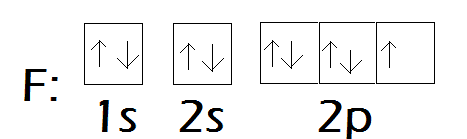
F:
upload_2018-7-10_21-19-4.png


Since fluorine is sp3 hybridized, the orbitals ie either of px, py or pz (2 of which are filled and are lone pairs on F of the 3 total lone pairs) can't participate in back bonding with the unhiybridized d orbital of Phosphorus.

My question is, then how does it show back bonding? I know it does, but how?
 

Attachments

  • upload_2018-7-10_21-18-43.png
    upload_2018-7-10_21-18-43.png
    4.6 KB · Views: 1,995
  • upload_2018-7-10_21-19-4.png
    upload_2018-7-10_21-19-4.png
    1.4 KB · Views: 2,541
Chemistry news on Phys.org
prakhargupta3301 said:
Since fluorine is sp3 hybridized

I don't know. Is it?
 
prakhargupta3301 said:
Phosphorus: sp3 hybridized
Fluorine (each one of three): sp3 hybridized
Back bonding can occur between only PURE orbitals ie those which are unhyridized.
Let's look at e- config. of both of them to be a little clear of what I'm asking:
P: View attachment 227890
F:View attachment 227891

Since fluorine is sp3 hybridized, the orbitals ie either of px, py or pz (2 of which are filled and are lone pairs on F of the 3 total lone pairs) can't participate in back bonding with the unhiybridized d orbital of Phosphorus.

My question is, then how does it show back bonding? I know it does, but how?
In general , every compound in which central atom has vacant orbitals and adjacent atoms(or even molecules) have lone pair of electrons back bonding occurs.
Here P has vacant 3d orbitals even when it is sp3 hybridized to form normal covalent bonds with p orbitals of F atoms( note that the hybridization occurs only to the orbitals of the central atom ). Also there are 3 lone-pairs available for each F atom. This satisfies the general condition and thus back bonding is likely to exist in PF3 molecule.
Hope you are clear.
 
prakhargupta3301 said:
Phosphorus: sp3 hybridized
Fluorine (each one of three): sp3 hybridized
Back bonding can occur between only PURE orbitals ie those which are unhyridized.
Let's look at e- config. of both of them to be a little clear of what I'm asking:
P: View attachment 227890
F:View attachment 227891

Since fluorine is sp3 hybridized, the orbitals ie either of px, py or pz (2 of which are filled and are lone pairs on F of the 3 total lone pairs) can't participate in back bonding with the unhiybridized d orbital of Phosphorus.

My question is, then how does it show back bonding? I know it does, but how?
Hybridization is not a property of an atom but a way to explain certain types of bonding, and geometries more easily. In fluorine, the energetic difference between s and p orbitals is so high, that hybridization makes no sense and is also not necessary as a linear bond geometry can be explained without hybridization.
What is even more problematic is that bonding and backbonding involving d-orbitals in main group compounds has since long been disproven. Nevertheless chemistry teachers seem still to be widely ignorant about this fact. See for example, https://onlinelibrary.wiley.com/doi/abs/10.1002/anie.198402721
 
  • Like
Likes   Reactions: HAYAO
As a reference, here's what happens when you calculate PF3 in Gaussian 09W with NBO (natural bonding orbitals). Essentially, NBO analysis gets you as close as possible to the Lewis structure of a molecule, which would help you understand the bonds.

Computational details: DFT (B3LYP), aug-ccPVDZ, Structure optimization, full NBO analysis.

The result yielded that PF3 have 8 core electron pairs, 3 two-center bonds, 0 three-center bonds, and 10 lone pairs.
Lewis occupancy was 99.420% and non-Lewis occupancy was 0.580% (Valence 0.408%, Rydberg 0.173%). Basically, this means that the molecule is 99.420% Lewis structure, roughly speaking.

The 3 two-center bonds (which is what we are looking at) was this:
1st P-F bond:
P (14.56%) s(11.36%) p(84.45%) d (4.20%)
F (85.44%) s(28.28%) p(71.55%) d (0.17%)
1.jpg
2nd P-F bond:
P (14.56%) s(11.36%) p(84.45%) d (4.20%)
F (85.44%) s(28.28%) p(71.55%) d (0.17%)
2.jpg
3rd P-F bond:
P (14.56%) s(11.36%) p(84.45%) d (4.20%)
F (85.44%) s(28.28%) p(71.55%) d (0.17%)
3.jpg

Basically, 14.56% of the electrons (of a single bond) lies on the P atom and 85.44% of the electrons lies on the F atoms.
The percentage of s, p, and d shows the degree of hybridization of each atomic-like orbitals. You can see here that the hybridization of P is not sp3 but something a little more complicated than that. On the other hand hybridization of F seems to be close to being sp3.
As for the backbonding, I have never tried NBO analysis for analyzing backbonding so I do not know precisely of the procedures. I am assuming that the choice of the reference bonds (turning off donor-NBO-to-acceptor-NBO interaction) is crucial in this case to correctly account for how strong the backbonding energy is. I'll try it if I have the time since I am also interested.
 

Attachments

  • 1.jpg
    1.jpg
    43.9 KB · Views: 946
  • 2.jpg
    2.jpg
    43.6 KB · Views: 925
  • 3.jpg
    3.jpg
    42.9 KB · Views: 915
Last edited:
First I want to mention that this is a density functional study and thus not directly comparable to valence bond. The small d-orbital contribution is not a sign of backbonding. Rather, the d-orbitals serve as polarisation functions. GAMESS contains the possibility to do true VB calculations, however, I don't have it installed. Maybe somebody wants to try out.
 
DrDu said:
First I want to mention that this is a density functional study and thus not directly comparable to valence bond. The small d-orbital contribution is not a sign of backbonding. Rather, the d-orbitals serve as polarisation functions. GAMESS contains the possibility to do true VB calculations, however, I don't have it installed. Maybe somebody wants to try out.
Hence the reason why I performed NBO calculation. But yes, of course, DFT is not a valence bond calculation.

I didn't claim that d-orbital contribution is a sign of backbonding. Just a hybridization, or in a sense polarization like you said. Analyzing backbonding requires to turn off certain interactions and is not simple in this case. I think I have written that quite explicitly above...
 

Similar threads

  • · Replies 18 ·
Replies
18
Views
4K
  • · Replies 5 ·
Replies
5
Views
3K
  • · Replies 5 ·
Replies
5
Views
2K
  • · Replies 9 ·
Replies
9
Views
3K
  • · Replies 1 ·
Replies
1
Views
4K
Replies
3
Views
7K
  • · Replies 4 ·
Replies
4
Views
3K
  • · Replies 11 ·
Replies
11
Views
3K
  • · Replies 11 ·
Replies
11
Views
3K
  • · Replies 6 ·
Replies
6
Views
5K