How is the ISS Captured Using a Telephoto Lens?

  • Thread starter Thread starter Andy Resnick
  • Start date Start date
  • Tags Tags
    Iss
Click For Summary

Discussion Overview

The discussion revolves around capturing images of the International Space Station (ISS) using a telephoto lens during its flyover. Participants share their experiences, settings used for photography, and techniques for tracking the ISS in the sky.

Discussion Character

  • Exploratory
  • Technical explanation
  • Debate/contested

Main Points Raised

  • Participants share their photographic settings and results from recent ISS flyovers, noting different apparent magnitudes and elevations.
  • Some participants discuss the challenges of capturing the ISS, particularly the need to track its movement across the sky with a telephoto lens.
  • There is a debate about whether a stationary camera can be used effectively; some argue that tracking is necessary due to the speed of the ISS.
  • One participant mentions adjusting the tripod for vertical orientation, which affected the camera's positioning during the sequence of images.

Areas of Agreement / Disagreement

Participants generally agree that tracking the ISS is necessary when using a telephoto lens, but there are differing views on the effectiveness of stationary setups versus actively following the object.

Contextual Notes

Some participants mention specific settings and conditions that affected their ability to capture the ISS, such as light pollution from the moon and the need for precise adjustments to their equipment.

Andy Resnick
Science Advisor
Education Advisor
Insights Author
Messages
7,764
Reaction score
4,010
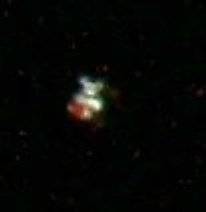
ISS flyover about an hour ago:

DSC04091-1_zpsopt51s0v.jpg


800/5.6, 1/1000 s, ISO 1000. ISS was maximum magnitude -2.0, I tried to 'pre-calibrate' against Vega but still underexposed.
 
  • Like
Likes   Reactions: davenn, Drakkith and russ_watters
Astronomy news on Phys.org
Nice!
 
Here's the whole set during the flyover:

7_31_2015%20Montage_2_zpsmzhsr8wy.jpg
 
  • Like
Likes   Reactions: davenn and Drakkith
Let's try this...

 
  • Like
Likes   Reactions: OmCheeto and Drakkith
I looked for it. But the moon was on blast, and it's bright around here to begin with.

It would have appeared moving right?
 
Andy Resnick said:
Let's try this...

Even as blurry as it is, that's awesome!
 
  • Like
Likes   Reactions: davenn and Andy Resnick
Here's what I got from tonight's flyover- it passed close enough to Arcturus for this:

DSC04233_zpslona9v5o.jpg


and the video:


deets: same lens settings, except 1/1250s. ISS max apparent magnitude -3.1, max elevation 78 degrees.
 
Jimster41 said:
I looked for it. But the moon was on blast, and it's bright around here to begin with.

It would have appeared moving right?

Right- just like an airplane, but no flashing lights.
 
  • Like
Likes   Reactions: Jimster41
Cool. So a stationary camera with a telephoto?
 
  • #10
tfr000 said:
Cool. So a stationary camera with a telephoto?

no, not stationary
with any sort of telephoto lens big enough to give the sort of image size that Andy got he used 800mm, you are going to have to follow the object across the sky
it will move out of field of view very quicklyDave
 
  • #11
davenn said:
no, not stationary
with any sort of telephoto lens big enough to give the sort of image size that Andy got he used 800mm, you are going to have to follow the object across the sky
it will move out of field of view very quickly

Yes, I kind of assumed maybe he'd gotten it aimed before the pass...
I have seen the ISS a couple of times, and yes, it moves right along.
 
  • #12
Tonight's flyover- this time the station is front-illuminated:


1/1250s, ISO 800. apparent magnitude -3.3, elevation = 58 degrees.
 
  • #13
tfr000 said:
Cool. So a stationary camera with a telephoto?

davenn said:
no, not stationary
with any sort of telephoto lens big enough to give the sort of image size that Andy got he used 800mm, you are going to have to follow the object across the sky
it will move out of field of view very quickly

Yes, it's a telephoto lens on a stationary tripod- I slew the lens a few degrees/s to keep up, tho. A minor point- for the second movie, I had to alter the tripod a little to enable near-vertical orientation, like this:

http://www.richardpeters.co.uk/blog/wp-content/uploads/2009/06/vertical.jpg

and as a consequence, the camera executes a 180-degree roll throughout the sequence of frames which I did not remove.
 
  • Like
Likes   Reactions: davenn

Similar threads

  • · Replies 1 ·
Replies
1
Views
2K
  • · Replies 3 ·
Replies
3
Views
3K
  • · Replies 15 ·
Replies
15
Views
4K
  • · Replies 5 ·
Replies
5
Views
2K
Replies
3
Views
8K
  • · Replies 1 ·
Replies
1
Views
5K
  • · Replies 4 ·
Replies
4
Views
2K
  • · Replies 3 ·
Replies
3
Views
2K
  • · Replies 5 ·
Replies
5
Views
2K
Replies
5
Views
3K