How should I do calculations as an Engineer?

  • Context: Studying 
  • Thread starter Thread starter Mohmmad Maaitah
  • Start date Start date
  • Tags Tags
    Study Tips
Click For Summary

Discussion Overview

The discussion revolves around strategies for organizing calculations and improving clarity in engineering work. Participants share tips on maintaining neatness in written calculations, the importance of including units, and methods for effectively communicating complex ideas on paper.

Discussion Character

  • Exploratory
  • Technical explanation
  • Conceptual clarification
  • Debate/contested
  • Homework-related

Main Points Raised

  • Some participants emphasize the necessity of including units in calculations, arguing that it is crucial for preventing errors and maintaining clarity.
  • Others suggest that the organization of written work reflects one's mental processes, advocating for a logical flow in calculations.
  • A participant proposes the idea of free-form sketching as a preliminary step to clarify thoughts before formalizing diagrams and equations.
  • There is mention of the importance of creating clear documentation for calculations, especially in professional settings where verification by peers is required.
  • Some participants recommend developing a structured approach to writing calculations, similar to the process of drafting and revising written work in school.

Areas of Agreement / Disagreement

Participants generally agree on the importance of clarity and organization in calculations, but there are multiple competing views on the best methods to achieve this. The discussion remains unresolved regarding specific techniques and personal preferences for organizing work.

Contextual Notes

Participants express varying opinions on the balance between neatness and the natural flow of ideas, as well as the necessity of including units in every calculation. There are also differing perspectives on the use of tools and technology for enhancing presentation.

Who May Find This Useful

This discussion may be useful for engineering students, professionals seeking to improve their documentation practices, and anyone interested in enhancing their calculation presentation skills.
Mohmmad Maaitah
Messages
90
Reaction score
20
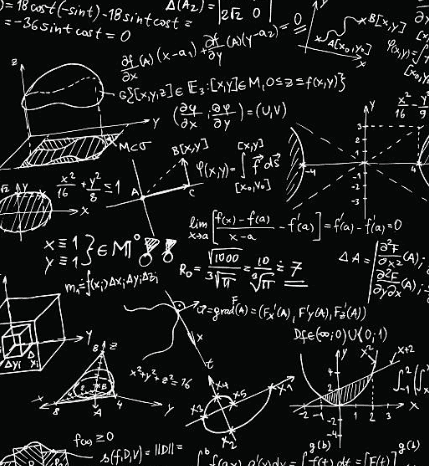
I always get lost in my work and my work looks like this mess usually.
Any tips on how to be neat? How to do calculations?
Should I do put all numbers with their units in the paper?
How about the units my Statics book says that I should always put them and this really gets boring so any idea on how can I get better?
please provide pictures if you can, thanks in advance!
1694584134946.png
 
Physics news on Phys.org
Your guidance would be suggested from the good textbooks from which you study. Your much more formal guidance comes from your teacher, professors, and instructors. If these personnel are guiding you poorly, then you will need to decide just how, on paper, you can communicate both with yourself and with other people who may wish or need to understand your written calculations. You must at least arrange some logical flow in your written work. The illustration shown in the black background and white drawings and text is disorganized. YOU organize to have clear flow and meaning! Need less crowding.
 
  • Informative
Likes   Reactions: Mohmmad Maaitah
Mohmmad Maaitah said:
Should I do put all numbers with their units in the paper?
Definitely, yes. A big YES. Units can save lives being an engineer and you should get used to this habit.
 
  • Like
Likes   Reactions: DeBangis21, symbolipoint and berkeman
Mohmmad Maaitah said:
I always get lost in my work and my work looks like this mess usually.
Any tips on how to be neat? How to do calculations?
What and how you write on paper could be considered a reflection of your mental processes.
If those become more logical and ordered, such will become what you express on paper for others and for your own analysis.

It is not easy, but enough practice could help you slowdown the flow of ideas and make each of then clearer and in better harmony with each other.
Study how good books progressively and ordered show the information that the authors expose for us to understand.

Always keep in mind that the person you are trying to communicate with needs and deserve the clearest presentation possible: he/she doesn't know all the details you do.

Please, see:
https://www.physicsforums.com/insights/frequently-made-errors-equation-handling/

https://web.cs.ucdavis.edu/~amenta/w10/writingman.pdf

https://www.eng-tips.com/viewthread.cfm?qid=395328

:cool:
 
Last edited:
  • Love
Likes   Reactions: Mohmmad Maaitah
Thanks all this was very helpful!
 
  • Like
Likes   Reactions: Lnewqban and berkeman
Mohmmad Maaitah said:
I always get lost in my work and my work looks like this mess usually.
Any tips on how to be neat? How to do calculations?
I think there is value in free-form sketching when you are first trying to get a handle on a problem. If it's not obvious how to best approach a new problem, doing some free-form sketching can start to bring out some approaches and ideas, and help to guide you to the best way to do the final diagram (FBD or EM diagram or whatever). But for presentation to others (on homework solutions or exam solutions or real world work solutions), it's best to use a neat and well-ordered set of diagrams and equations. That's where using some drawing program and LaTeX or similar can help.

When I was in undergrad many years ago, I did "crib sheets" for each of my classes that summarized the important concepts and equations. I always wished that I had programs to help me do those (like maybe Visio or other drawing programs, and LaTeX or similar for the equations), but that was before their time. So I lived with doing them (and re-doing them) by hand. Now you have much better options... :smile:

Mohmmad Maaitah said:
Should I do put all numbers with their units in the paper?
Definitely. Carrying units along in calculations is one of the most important basic tricks you can learn. Doing this helps you to keep an intuitive understanding of what you are doing, and it helps you to find mistakes in big calculations right away instead of finding the error many lines later at the end of the calculation.

One of the best lessons I learned in my first semester in undergrad was in an intro Engineering class where all the different Engineering specialties were studied. At one point the TAs were up in front of the class and we were all working through a relatively simple velocity-distance-time problem, and the TAs asked us which form of the equation we should be using to calculate the answer. The first student's guess was wrong, and the second student's guess was right. The TAs patiently explained that we could think about the units in the equations to verify that we were using the correct form of the equation...
$$v(t) [m/s] = \frac{x(t) [m]}{t [s ]}$$
 
  • Like
  • Informative
Likes   Reactions: DeBangis21, Lnewqban and Mohmmad Maaitah
I agree with @berkeman , Post 6. A few amplifying thoughts:

Depending on the situation, you may have to write out your calculation twice: first as a nasty mess that evolves as you figure it out, and second as a "smooth" calculation that you keep for yourself, or turn in as a class assignment, or forms part of the design record where you work.

Once you finish school and start working, you will probably need to keep the calculations that support whatever design or analysis you do. Different industries have different requirements for such documentation, ranging from none, to duplicate storage for 40 years. The idea is that if a question arises ("why is this bracket only 1/8 inch strip?") you, or someone else, can look back at the design calculation and re-create the original thinking.

Where I worked (nuclear power plant design), all of our calculations were independently verified by another engineer. The verifier has to reach the same results without talking to the author. So our calculations had to be clear and complete, in addition to being correct.
 
  • Like
  • Informative
Likes   Reactions: DeBangis21, symbolipoint, Lnewqban and 2 others
@gmax 's description in post #7 need to be emphasized more!
 
Here is a thought for the original question described:

Remember when you were being taught basic writing skills as a child? Make written organized information; make an outline; make a rough composition; decide how to clean it and make a final composition which is then what you give to your teacher for assessment. You can do something like that.

Do you remember if your first real Physics course written work (homework) was required to be arranged into a certain form, like maybe this? A section for necessary drawings, diagrams, figures; a list of given values, a list of unknown variables, ; a listing of any relevant equations, principles, relationships, laws for the exercise problem; Your steps to SOLVING the problem; AND THEN a section for making the substitutions for the given values, and then finish the computation or "evaluation". This meant that your work was organized; and you and other people can follow what you did. You could do the same or something like it for Engineering exercises.
 
  • Like
Likes   Reactions: Mohmmad Maaitah

Similar threads

  • · Replies 10 ·
Replies
10
Views
1K
Replies
5
Views
5K
Replies
3
Views
2K
  • · Replies 7 ·
Replies
7
Views
3K
  • · Replies 102 ·
4
Replies
102
Views
8K
  • · Replies 4 ·
Replies
4
Views
2K
  • · Replies 19 ·
Replies
19
Views
1K
  • · Replies 14 ·
Replies
14
Views
2K
  • · Replies 13 ·
Replies
13
Views
2K
  • · Replies 39 ·
2
Replies
39
Views
5K