SUMMARY
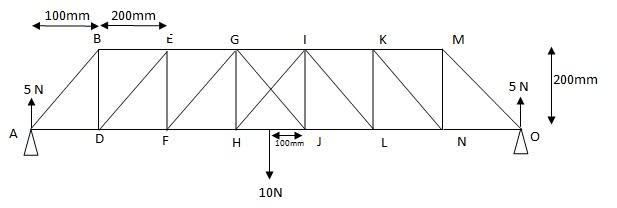
This discussion focuses on calculating tension and compression forces in a truss bridge, specifically when a load is applied at the midpoint between two joints. Participants suggest splitting the central load into two equal forces and emphasize using the method of joints rather than the method of sections for analysis. The method of joints allows for treating the external load as a moment on the joint being analyzed, ensuring force equilibrium. The conversation highlights the importance of starting calculations from the supports and progressing towards the center of the truss.
PREREQUISITES
- Understanding of truss bridge design principles
- Familiarity with the method of joints in structural analysis
- Basic knowledge of force equilibrium concepts
- Ability to interpret truss diagrams and load distributions
NEXT STEPS
- Study the method of joints in detail for truss analysis
- Learn about calculating moments in structural engineering
- Explore software tools for structural analysis, such as SAP2000 or ANSYS
- Research common mistakes in truss calculations and how to avoid them
USEFUL FOR
Civil engineers, structural analysts, and students studying truss bridge design and analysis will benefit from this discussion.