How to find a point that corresponds to hyperreal number?

  • Context: Undergrad 
  • Thread starter Thread starter Mike_bb
  • Start date Start date
Click For Summary
SUMMARY

This discussion focuses on identifying points on the hyperreal line that correspond to hyperreal numbers, specifically infinitesimals. The algebraic definition of a finite hyperreal is given as r + k ε, where ε is the smallest infinitesimal, and r is a real number. The conversation highlights the need for a rigorous model of the hyperreal line, with the ultrapower construction being a common method that utilizes the Axiom of Choice. An example of an infinitesimal is provided through the equivalence class of the sequence (1, 1/2, 1/3, ...).

PREREQUISITES
  • Understanding of hyperreal numbers and their definitions
  • Familiarity with the Axiom of Choice in set theory
  • Knowledge of equivalence relations and sequences
  • Basic concepts of infinitesimals in non-standard analysis
NEXT STEPS
  • Study the ultrapower construction of hyperreal numbers
  • Learn about the Axiom of Choice and its implications in mathematics
  • Explore non-standard analysis and its applications
  • Investigate the concept of equivalence classes in set theory
USEFUL FOR

Mathematicians, students of advanced calculus, and anyone interested in non-standard analysis and the properties of hyperreal numbers.

Mike_bb
Messages
191
Reaction score
19
TL;DR
How to take random point that corresponds to hyperreal number on the hyperreal line?
Hello!

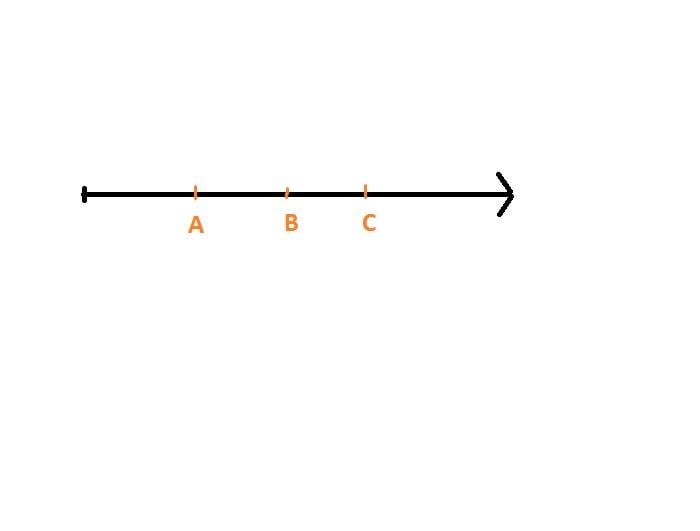
I considered number line and I couldn't take random points that correspond to hyperreal numbers on the hyperreal line. Instead it was points A, B, C that correspond to real numbers.

1.jpg


How to take random point that corresponds to hyperreal number on the hyperreal line?

Thanks.
 
Physics news on Phys.org
It seems trivial to me that if this is a hyperreal line then they are hyperreal numbers.
 
  • Like
Likes   Reactions: Mike_bb
Hill said:
It seems trivial to me that if this is a hyperreal line then they are hyperreal numbers.
Ok. How to take infinitesimal numbers on hyperreal line?
 
Mike_bb said:
How to take random point that corresponds to hyperreal number on the hyperreal line?
Using the definition of a (finite) hyperreal as ## r + k \epsilon ## where ## \epsilon ## is the smallest infinitessimal, take a random ## r \in \mathbb R ## and ## k \ne 0 \in \mathbb Z ##.

Edit: I realise that I have used a non-standard definition of the hyperreals above: for the standard definition omit ## r ##: there are no non-real hyperreals ## h: \epsilon < h < \frac 1 \epsilon ##.
 
Last edited:
  • Informative
Likes   Reactions: Mike_bb
pbuk said:
Using the definition of a (finite) hyperreal as ## r + k \epsilon ## where ## \epsilon ## is the smallest infinitessimal, take a random ## r \in \mathbb R ## and ## k \ne 0 \in \mathbb Z ##.
It's algebraic definition of hyperreal numbers. But how will it look on the hyperreal line?
 
  • Like
Likes   Reactions: Mike_bb
Mike_bb said:
It needs infinitesimal microscope to see this infinitesimal number.
Yes it does.

Mike_bb said:
I don't think that is the standard representation of the hyperreal line: where would ## \frac \omega 2 ## be found?

In the standard representation the reals are all clustered around 0.
 
  • Informative
Likes   Reactions: Mike_bb
pbuk said:
Using the definition of a (finite) hyperreal as ## r + k \epsilon ## where ## \epsilon ## is the smallest infinitessimal, take a random ## r \in \mathbb R ## and ## k \ne 0 \in \mathbb Z ##.

Edit: I realise that I have used a non-standard definition of the hyperreals above: for the standard definition omit ## r ##: there are no non-real hyperreals ## h: \epsilon < h < \frac 1 \epsilon ##.
Smallest infinitesimal?? There is no such thing.

More precisely, there is no smallest positive infinitesimal. If there was one, say ##\varepsilon##, then ##\varepsilon/2## would be a smaller positive infinitesimal.

And of course there are non-real hyperreals between the positive infinitesimal ##\varepsilon## and the infinite ##1/\varepsilon##. For example: ##2\varepsilon##.
 
  • Like
Likes   Reactions: pbuk
  • #10
It is not clear to me what the OP means by "taking random points that corresponds to hyperreal numbers on the hyperreal line". In the literal sense, we need a probability distribution to do this, and no one is given.

I think that what the OP wants is an explicit example of a (positive) infinitesimal. To give such an example, we need a model of the hyperreal line. We can talk about the hyprerreals figuratively by the microscope and telescope in a previous post, but although this is a useful intuitive way of thinking of hyperreals, it is not rigorous.

The most common way of constructing a model of the hyperreal line is the ultrapower construction.
In this construction, we must use the Axiom of Choice (or at least some weaker version of it, I don't know exactly which one is the weakeast possible). This means that we cannot specify the hyperreals completely, but there is a non-constructive element in the model.

We use the Axiom of Choice to establish the existence of a nonprincipal ultrafilter on the set ##\Bbb N## (natural numbers). Given such an ultrafilter ##\cal U##, we define an equivalence relation on the set of infinite sequences of real numbers, such that two sequences ##(r_1, r_2, r_3,\dots)## and ##(s_1, s_2, s_3,\dots)## are considered as equivalent if the set of numbers ##n## such that ##r_n=s_n## belongs to the ultrafilter ##\cal U##. A hyperreal is then defined as an equivalence class given by this equivalence relation.
We identify each real number ##r## by the equivalence class containing the constant sequence ##(r,r,r,\dots)##.
al
An example of an infinitesimal is then (the equivalence class containing) ##(1, 1/2, 1/3, 1/4, \dots)##. For any positive real number ##r##, ##1/n < r## for all but finitely many ##n##, and the set of all ##n## for which this holds belongs to ##\cal U##, which means that ##(1, 1/2, 1/3, \dots) < (r,r,r,\dots)## as hyperreals (more precisely, this holds for their equivalence classes). Since this holds for all positive reals ##r##, (the equivalence class of) ##(1, 1/2, 1/3, \dots)## is infinitesimal.

For the details, see https://en.wikipedia.org/wiki/Hyperreal_number
 
Last edited:
  • #11
Erland said:
Smallest infinitesimal?? There is no such thing.
Yes of course you are right, I am not sure why I posted that.
 

Similar threads

  • · Replies 8 ·
Replies
8
Views
3K
  • · Replies 24 ·
Replies
24
Views
6K
  • · Replies 6 ·
Replies
6
Views
4K
  • · Replies 85 ·
3
Replies
85
Views
9K
  • · Replies 11 ·
Replies
11
Views
6K
Replies
6
Views
2K
  • · Replies 30 ·
2
Replies
30
Views
3K
  • · Replies 1 ·
Replies
1
Views
3K
  • · Replies 1 ·
Replies
1
Views
2K
  • · Replies 5 ·
Replies
5
Views
2K