Discussion Overview
The discussion revolves around the concept of magnetizing water using a super magnet, exploring whether this process can alter the properties of water, such as reducing surface tension and viscosity, and breaking down molecular clusters. Participants consider both theoretical and practical implications of magnetism on water, with a focus on its chemical and physical properties.
Discussion Character
- Debate/contested
- Conceptual clarification
- Technical explanation
Main Points Raised
- Some participants suggest that placing a super magnet under a water bottle could magnetize the water, leading to various beneficial effects on its properties.
- Others argue that water molecules have a permanent electric dipole but lack permanent magnetic dipoles, making them unsuitable for alignment in a magnetic field.
- It is noted that water is diamagnetic, meaning it would create a weak magnetic field opposite to that of the magnet, thus not supporting the idea of magnetization.
- Some contributions question whether a strong magnetic field could help break down water molecule clusters into smaller clusters, despite the lack of evidence supporting this claim.
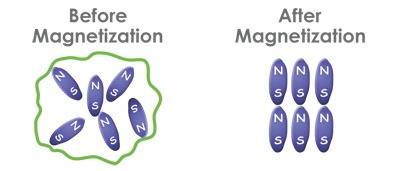
- Participants discuss the nature of magnetization, clarifying that water cannot retain a permanent magnetic moment after the magnetic field is removed.
- There are claims that while water does not become magnetic, it may experience temporary effects under strong magnetic fields, such as alignment of protons, but these effects do not lead to permanent changes.
- One participant suggests that breaking hydrogen bonds between water molecules might be possible, but this is met with skepticism and claims that such effects are not scientifically supported.
Areas of Agreement / Disagreement
Participants generally disagree on the potential for magnetizing water and the effects of magnetic fields on its properties. Multiple competing views remain, with no consensus reached regarding the validity of claims about magnetization and its effects on water.
Contextual Notes
Limitations include the lack of empirical evidence supporting claims about magnetization effects on water, dependence on definitions of magnetization, and unresolved questions about the nature of molecular interactions in water under magnetic fields.