I thought it was only Amazon that sold unsafe junk

  • Thread starter Thread starter Averagesupernova
  • Start date Start date
Averagesupernova
Science Advisor
Gold Member
Messages
4,824
Reaction score
1,506
TL;DR
Unsafe cord on an under cabinet light.
I grabbed an under cabinet LED light today at a big box store. Nothing special. 18 inches in length and made to plug several lights together. Here is a pic of the power cord:
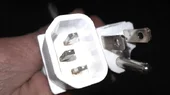
KIMG6521.webp

The drawing on the box led me to believe that it would accept a standard IEC cord which surprised me. But it's a variation of it. I didn't try it, but I would assume you could plug a standard IEC cord into this and have a double male cord AKA suicide cord. And to boot, it's likely going to reverse the hot and neutral doing this. Admittedly this cord is no safer than a suicide cord. This is a very well known popular brand in home lighting.
 
Engineering news on Phys.org
I was about to say that I thought these things were supposed to be CE certified, but I see that only applies to the EU.
 
Averagesupernova said:
Admittedly this cord is no safer than a suicide cord.
Wow, that's not good. Are there any certification markings on the box or the cord? Anything like UL or similar?
 
I am not informed enough to understand the implications of the opening post.

It's male plug in a sheath so that it (optimally) only meshes with its female counterpart. I'm not sure if it's 12V or 120V.

Surely, any wiring setup can be rendered dangerous if you perform aftermarket shenanigans upon it.

OK, I guess what I'm seeing is that the shown plug is the live end, i .e. if you stuck your finger in there you'd get zapped? Which is why, generally, live ends are normally female?

But I'll take y'all's word for it that this is a gap in safe design.
 
DaveC426913 said:
OK, I guess what I'm seeing is that the shown plug is the live end, i .e. if you stuck your finger in there you'd get zapped? Which is why, generally, live ends are normally female?
Yes, we call them "suicide cords" or "widowmakers" because they don't obey safe practices of keeping AC Mains live wire connections hidden so they can't be touched. We used to have such cords or similar (with alligator clips for example) in our HW Lab test setups. But only very experienced engineers and technicians were allowed to use them, and we kept them locked up in drawers and cabinets when not in use so no unsuspecting person would try to use them for something.
 
 
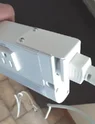
Here is the manufacturers attempt to make it safer:

KIMG6526.webp
There is nothing to prevent it from working if the retaining bracket is left off. It will simply come unplugged if pulled on and expose live conductors.
 
Averagesupernova said:
Here is the manufacturers attempt to make it safer:

View attachment 368116
There is nothing to prevent it from working if the retaining bracket is left off. It will simply come unplugged if pulled on and expose live conductors.
Are there manufacturer’s instructions telling you to assemble it like that?

If so, the live conductors are only accessible with a tool, when the fitting is assembled to spec. That may be how they got it through certification. Of course, I agree they shouldn’t be supplying suicide plugs!

It makes me think of the ‘grandfather rights’ given to things that probably wouldn’t be approved today - toasters and bayonet light fittings with exposed live conductors, for example.
 
Guineafowl said:
Are there manufacturer’s instructions telling you to assemble it like that?
The instructions tell to assemble using the bracket. But as I said, there is a high probability of many of those brackets getting left off.
 
  • #10
Averagesupernova said:
The instructions tell to assemble using the bracket. But as I said, there is a high probability of many of those brackets getting left off.
Yes, I bet. But would that give them a get-out clause in the event of an accident, ie not assembled to manufacturer’s specs? Or does the manual have a weasel clause, such as ‘only to be installed by a competent/suitably qualified person?’ Ie, if you got a shock, you weren’t competent?
 
  • #11
Guineafowl said:
Yes, I bet. But would that give them a get-out clause in the event of an accident, ie not assembled to manufacturer’s specs? Or does the manual have a weasel clause, such as ‘only to be installed by a competent/suitably qualified person?’ Ie, if you got a shock, you weren’t competent?
It's difficult to be "only installed by qualified" when they send a power cord. Not only that, defining the word "qualified" opens a whole new can of worms. They send mounting screws to attach to the cabinet. They also send a small connector to attach flexible conduit in the event it is to be permanently wired.
-
Big box hardware stores sell everything a person needs to wire a complete house.