Identifying magnetic rocks and possible meteorites

  • Thread starter Thread starter leerace
  • Start date Start date
Join the discussion
Registration is free. Ask a follow-up in this thread, or start your own.
5 replies · 3K views · last reply
leerace
Messages
1
Reaction score
0
I have some rocks wondering if they were meteorites.
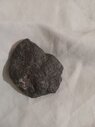
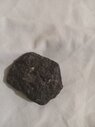
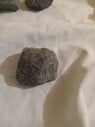
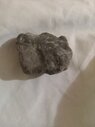
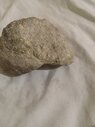
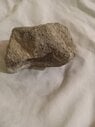
Hoping I could get some help Put 2 pictures of each. The first one is magnetic as well as the second one
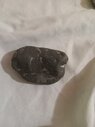
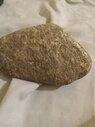
The second one you can see the lines fold over The third one.
Was not magnetic
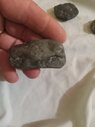
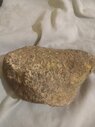
But has diamond Lake stones The fourth one looks like it has lines going in 1 direction from like an entry.
And is magnetic the 5 one is magnetic to just not as strong
 
Attachments
  • Close-up photo of a dark grey, pitted and rough-textured rock on a light fabric background, with a small pale patch near the lower left edge.
    1708216627883277332140819457272.jpg
    34.7 KB · Views: 209
  • Dark grey, rough-textured rock with small pale flecks and a tiny reddish-brown spot, resting on a white fabric surface.
    17082166608526809241119292249710.jpg
    33.4 KB · Views: 169
  • Dark grey rounded stone with small pale streaks and patches on its surface, resting on a white fabric background.
    17082167079519147866596078125226.jpg
    27.7 KB · Views: 124
  • Grey rock held between fingers of a hand, with a smooth, glossy patch and rounded edges; two more grey rocks sit on a white cloth in the background.
    17082167227936837955638363505691.jpg
    23.9 KB · Views: 112
  • Close-up photo of a grey, rough-textured rock resting on a white cloth, with another rock partly visible at the top edge.
    17082167465888228531321512827190.jpg
    28.4 KB · Views: 157
  • Photo of a grey, rough-surfaced rock with pitted and ridged texture lying on a white fabric background, with a shadow falling across the cloth.
    17082167817405072024481977011985.jpg
    25.2 KB · Views: 120
  • Photo of a rounded, weathered brownish-tan rock with a rough, pitted surface and yellowish mineral speckles, resting on a white fabric.
    1708216811343151831233286324099.jpg
    39.6 KB · Views: 121
  • Photo of a rounded, weathered rock with a grainy, tan and gold surface, resting on a white cloth.
    17082168307715986370455262074561.jpg
    38.4 KB · Views: 200
  • Close-up photo of a grey, rough-textured rock with pitted, granular surface resting on a light fabric sheet with soft shadows.
    1708216860639359721005485530942.jpg
    35.9 KB · Views: 183
  • Photo of a grey, rough-textured rock with a pitted surface and small lighter specks, resting on a white fabric sheet.
    17082168797565939049027630921162.jpg
    36.8 KB · Views: 162
Astronomy news on Phys.org
"Leverite," as in leave her/it right there; veerrryyyy ollddd joke.
 
Welcome to PF.
Unfortunately, I do not see any meteorites in the collection.

I guess these rocks came from at least two different places. Some are water worn, from a river or a sea shore. It is difficult to identify rocks without being able to get close enough to handle, lick or smell them. A photograph is often insufficient for identification.

The Earth is a big and varied rock collection. It would really help if the latitude and longitude of the finds were recorded, (use Google Earth). That can reduce the possibilities. Also, were they found in an excavation, in a river bed, or on a beach?

What follows is obviously a gross generalisation.

Black, slightly-magnetic rocks tend to be basalts. They may have white minerals deposited by groundwater at the time of the flow. They can also pick up and include local rocks from the river valleys they flow down. Basalts are chemically unstable, reactive, and tend to weather quickly, producing some magnetite, hence the magnetism and red-rust staining.

Black non-magnetic rocks tend to be mudstone, or limestone. They may contain white shell fossils.

Light coloured rocks tend to be sandstones or granites. If they contain vesicles, they may be a volcanic tuff or pumice, that contained gas bubbles when erupted.
Fragile fossils are not well-preserved in sandstones, as they get broken by the high energy environment, then dissolved by groundwater to cement the sand grains.
 
In addition to what Baluncore wrote, perhaps you can tell us what leads you to suspect these are meteorites anyway?
 
leerace said:
The first one is magnetic as well as the second one

The first pair of pic's is the only rock that remotely resembles a meteorite
The only killer is that white crystalline stuff I can see on it in the first pic.
ALL the rest are guaranteed Earth rocks .... sandstones and similar

There's no hint of any fusion crust on them
Meteorites of those general sizes would likely to have "flight" features on them
regmaglyphs etc. When I get home from work, I will post some examples from my collection

cheers
Dave
 
  • Informative
  • Like
Likes   Reactions: Vanadium 50 and berkeman