Is Distributed Electric Propulsion the Key to Efficient Private Planes?

  • Thread starter Thread starter mheslep
  • Start date Start date
  • Tags Tags
    Aviation Electric
Click For Summary

Discussion Overview

The discussion centers around the concept of Distributed Electric Propulsion (DEP) in the context of private aviation, particularly focusing on NASA's X-57 project and its implications for energy efficiency, range, and aircraft design. Participants explore theoretical benefits, challenges, and existing examples related to electric propulsion systems.

Discussion Character

  • Exploratory
  • Technical explanation
  • Debate/contested

Main Points Raised

  • Some participants highlight NASA's claim that distributing electric power across multiple motors could reduce energy consumption for cruising at 175 mph by five times, suggesting that a larger propulsive airflow area allows for lower prop flow velocity.
  • Others argue that while increased power is interesting, the primary concern in electric aviation is range, proposing that using less power could extend flight duration significantly.
  • One participant suggests that reduced power requirements could enable prolonged loitering or even sustained solar-powered flight, allowing aircraft to remain airborne indefinitely.
  • Concerns are raised about the lack of many-motor designs in the RC electric aircraft and UAV sectors, with speculation that cost may be a limiting factor despite the potential for increased range.
  • Some participants propose that multiple motors could lead to increased airflow over the wings, potentially allowing for smaller wing designs, while others contest this idea, citing research indicating that positioning motors differently could reduce drag and turbulence.
  • There is a discussion about the efficiency of multiple motors compared to a single motor, with claims that multiple motors can produce the same thrust more efficiently by maximizing engine area rather than relying on high exit air velocity.
  • One participant notes that the design shown in the NASA project has a high aspect ratio and even airflow, which may contribute to an exceptional lift-to-drag ratio.

Areas of Agreement / Disagreement

Participants express differing views on the implications of distributed electric propulsion, particularly regarding its impact on range versus power. There is no consensus on the optimal design considerations or the most significant challenges facing electric aviation.

Contextual Notes

Participants mention various assumptions about efficiency, design, and operational capabilities of electric propulsion systems, but these remain unresolved and depend on further research and development.

mheslep
Gold Member
Messages
376
Reaction score
714
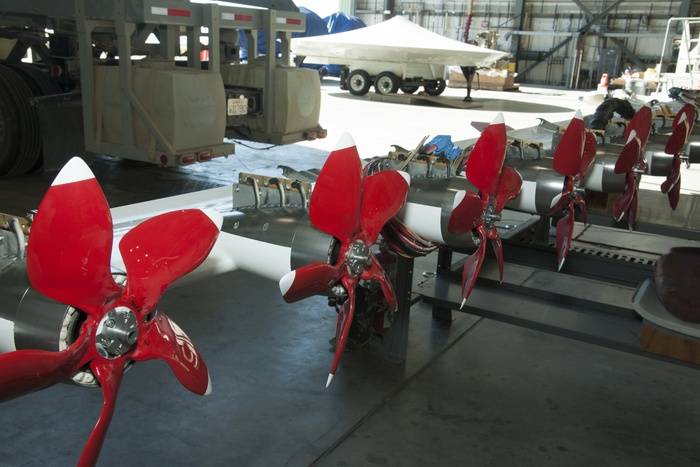
NASA has press release out today highlighting its electric aviation program via a new 4-seat X plane to explore the concept, the X-57.

Most interesting to me was this claim:

NASA’s aeronautical innovators hope to validate the idea that distributing electric power across a number of motors integrated with an aircraft in this way will result in a five-time reduction in the energy required for a private plane to cruise at 175 mph.

which I imagine comes about by having a much large propulsive air flow area across the 14 e-motors, allowing the prop flow velocity to be much lower.

Goal:
NASA researchers ultimately envision a nine-passenger aircraft with a 500-kilowatt power system in 2019. To put that in perspective, 500 kilowatts (nearly 700 horsepower) is about five times as powerful as an average modern passenger car engine

That goal is interesting but ill-considered IMO, as range is the issue in electric aviation, not power.
afrc2016-0065-32.jpg


Video of fourteen motor wing under test

 
Last edited:
Engineering news on Phys.org
mheslep said:
That goal is interesting but ill-considered IMO, as range is the issue in electric aviation, not power.
If you can do the same for 1/n of the power then you can do it for n times longer. That increases range by a factor n.
 
  • Like
Likes   Reactions: mheslep and FactChecker
Baluncore said:
If you can do the same for 1/n of the power then you can do it for n times longer. That increases range by a factor n.
That is one optional benefit. It also could allow you to loiter in place and observe for a long time, even if the cruse speed is decreased. It might even allow sustained solar-powered flight where the plane can stay up indefinitely.
 
Baluncore said:
If you can do the same for 1/n of the power then you can do it for n times longer. That increases range by a factor n.

Point taken.

Aside: I don't see efforts at many-motor designs among RC electric aircraft hobbyists, or in the UAV arena. Perhaps cost is an issue, though since the RC's with their LiPos are quite range (time aloft) limited, say, 15 mins, there should be ample motivation to try. Edit: here's a competition for time aloft (traditional design) with a maximum of 26 mins.
 
Last edited:
FactChecker said:
.. It might even allow sustained solar-powered flight where the plane can stay up indefinitely.
Overnight unmanned electric flight was accomplished six years ago. http://tucson.com/business/local/tucson-firm-s-solar-batteries-power-record-flight-attempt/article_00ec5266-f412-5b3d-aaa5-04e9d87ec896.html made by QinetiQ with Sion batteries flew non-stop for 14 days using PV: dual prop, 70 ft wingspan, 110 lbs. The term of art going forward is "solar powered atmospheric satellites"
http://www.unmannedsystemstechnolog...for-solar-powered-atmospheric-satellite-uavs/
 
Last edited by a moderator:
  • Like
Likes   Reactions: FactChecker
Presumably the idea behind multiple motors and props is to increase the air flow over the wing meaning a smaller wing can be used?
 
CWatters said:
Presumably the idea behind multiple motors and props is to increase the air flow over the wing meaning a smaller wing can be used?
I don't think so. There's some work on a design indicating lower turbulence with aft fuselage mounted engines thus reducing drag by positioning motors in places not practical with combustion engines.

But as I understand it, the principal advantage of multiple motors is that they are theoretically more efficient than one at producing the same amount of total thrust. That is , thrust is proportional to both air velocity and the area through which the air is driven, but high velocity exit air is wasted kinetic energy in the atmosphere. Thus it is more efficient to achieve thrust by greater engine area when possible than by higher velocity air flow.
 
  • Like
Likes   Reactions: CWatters and FactChecker
mheslep said:
I don't think so. There's some work on a design indicating lower turbulence with aft fuselage mounted engines thus reducing drag by positioning motors in places not practical with combustion engines.

But as I understand it, the principal advantage of multiple motors is that they are theoretically more efficient than one at producing the same amount of total thrust. That is , thrust is proportional to both air velocity and the area through which the air is driven, but high velocity exit air is wasted kinetic energy in the atmosphere. Thus it is more efficient to achieve thrust by greater engine area when possible than by higher velocity air flow.
The arrangement shown has a very high aspect ratio with very even airflow from the props over the wing. That should give an exceptional lift to drag ratio.
 

Similar threads

  • · Replies 3 ·
Replies
3
Views
5K
  • · Replies 4 ·
Replies
4
Views
7K
  • · Replies 3 ·
Replies
3
Views
4K