SUMMARY
The discussion centers on the causes of high PM2.5 readings and the presence of mist or haze in urban environments, particularly in the early morning. Participants clarify that mist is primarily composed of water droplets, while haze results from pollution, often leading to reduced visibility. The phenomenon of increased pollution levels during the early morning hours is attributed to atmospheric conditions that trap pollutants close to the ground, exacerbated by high humidity and low temperatures. The conversation also highlights the importance of understanding local geography, such as proximity to bodies of water, in influencing air quality.
PREREQUISITES
- Understanding of PM2.5 particle pollution and its health impacts.
- Knowledge of atmospheric conditions affecting air quality, such as humidity and temperature.
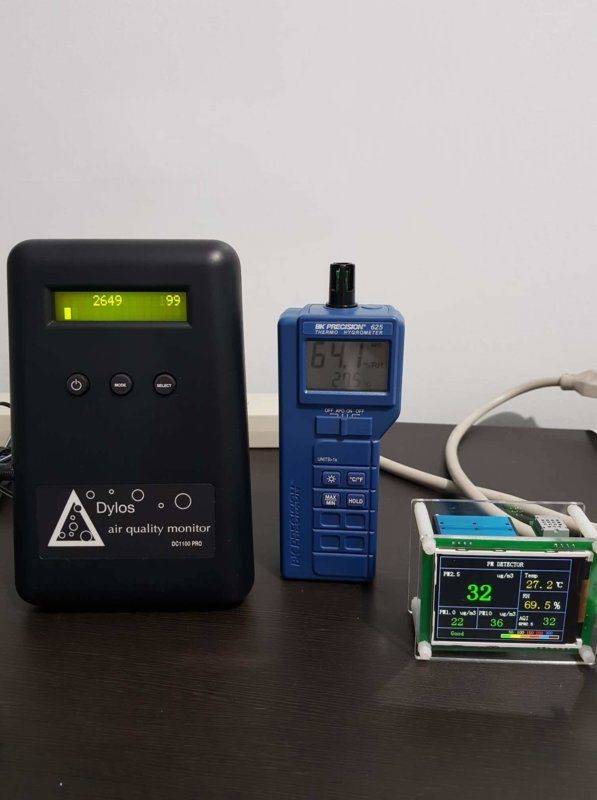
- Familiarity with air quality measurement tools like Plantower 5003 and Dylos testers.
- Awareness of local geographical factors, such as bodies of water and urban heat islands.
NEXT STEPS
- Research the effects of humidity on air quality and PM2.5 concentration.
- Learn about atmospheric inversion layers and their impact on pollution levels.
- Investigate air quality monitoring tools and their methodologies.
- Explore the relationship between urban geography and air pollution dispersion.
USEFUL FOR
This discussion is beneficial for environmental scientists, urban planners, public health officials, and residents concerned about air quality and its effects on health, particularly in urban settings.