_Bd_
- 107
- 0
Hi,
Its been a while since I had my thermal heat transfer classes and I am a little skeptical on what I remember.
Im trying to insulate a copper block, the sides are covered by an insulating material which has a low thermal conductivity (they are touching). Howver there is a surface on the top which I want to cover to minimize radiation/convection heat loss.
I know the best results are from very reflective materials that have low absorptivity and high emmissivity, say aluminum foil. However would this not backfire if the aluminum foil is touching the copper? (Say I just put a thin sheet of aluminum foil on top of that surface).
My logic says the aluminum would absorb a lot of heat via conduction and radiate most of it out due to its high emmissivity.
My logic says in order for the aluminum to be a good radiation insulation it has to be a small distance away from the copper block to have still air in between that minimizes convection/conduction and the radiation is reflected back. I just wanted to confirm if my reasoning is correct with some respectable folks like this community.
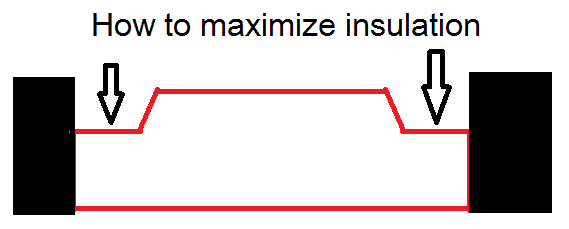
Thank you!
Its been a while since I had my thermal heat transfer classes and I am a little skeptical on what I remember.
Im trying to insulate a copper block, the sides are covered by an insulating material which has a low thermal conductivity (they are touching). Howver there is a surface on the top which I want to cover to minimize radiation/convection heat loss.
I know the best results are from very reflective materials that have low absorptivity and high emmissivity, say aluminum foil. However would this not backfire if the aluminum foil is touching the copper? (Say I just put a thin sheet of aluminum foil on top of that surface).
My logic says the aluminum would absorb a lot of heat via conduction and radiate most of it out due to its high emmissivity.
My logic says in order for the aluminum to be a good radiation insulation it has to be a small distance away from the copper block to have still air in between that minimizes convection/conduction and the radiation is reflected back. I just wanted to confirm if my reasoning is correct with some respectable folks like this community.
Thank you!