Discussion Overview
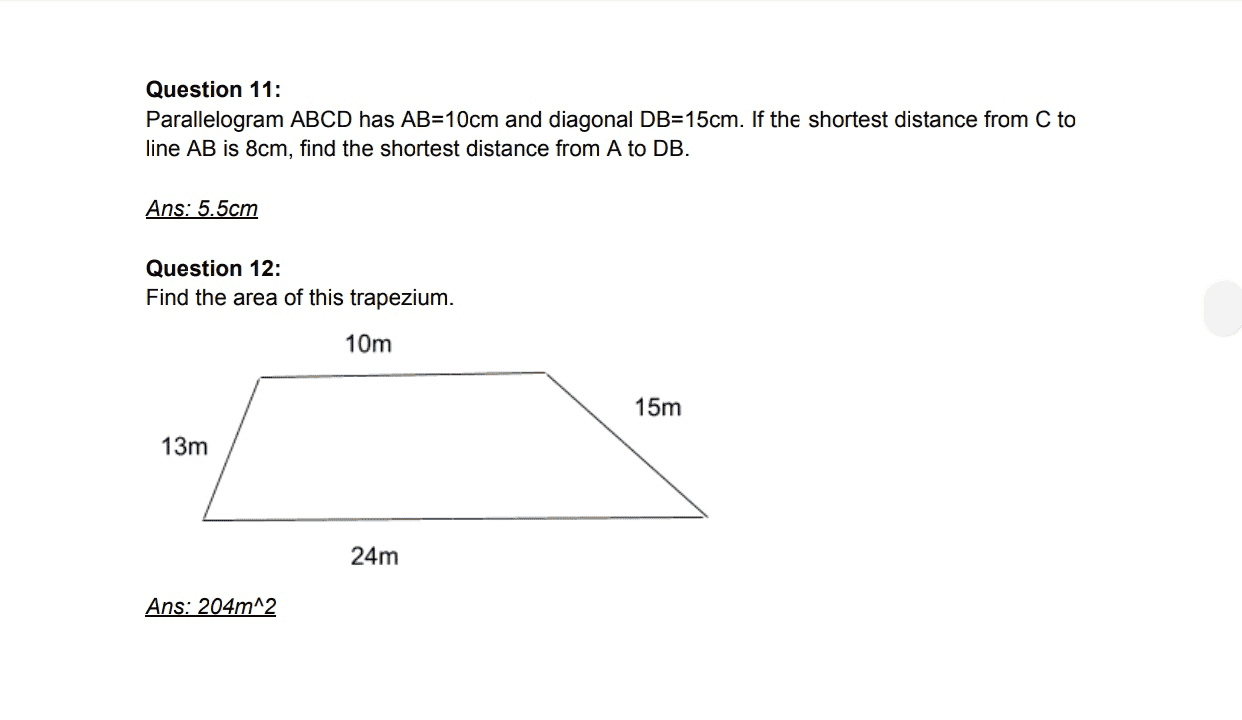
The discussion revolves around two mensuration questions posed by a high-school student seeking assistance. Participants engage in exploring the methods for calculating areas of geometric shapes, specifically a parallelogram and a trapezium, while sharing their reasoning and challenges faced in solving the problems.
Discussion Character
- Homework-related
- Mathematical reasoning
- Debate/contested
Main Points Raised
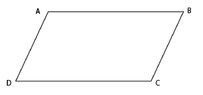
- One participant suggests that the area of the parallelogram is calculated as 10 x 8 = 80 cm², splitting it into two triangles, each with an area of 40 cm².
- Another participant questions the correctness of the area calculation and proposes an alternative method for finding the shortest distance in Question 11, using trigonometric functions.
- A participant expresses difficulty in finding the height (h) for the trapezium area calculation, considering the use of Pythagoras' theorem but encountering further issues.
- Some participants provide links to external resources for additional assistance with trapezium calculations.
- There is a mention of a discrepancy in the calculated distance, with one participant asserting that the correct answer is 5.33 cm instead of 5.5 cm, while acknowledging the possibility of error.
Areas of Agreement / Disagreement
Participants have not reached a consensus on the correct methods or answers for the mensuration problems. Multiple competing views and uncertainties remain regarding the calculations and approaches discussed.
Contextual Notes
Some participants reference specific calculations and methods without fully resolving the mathematical steps or assumptions involved in their reasoning.