ryaamaak
- 16
- 11
(Edited with suggestions from Berkeman)
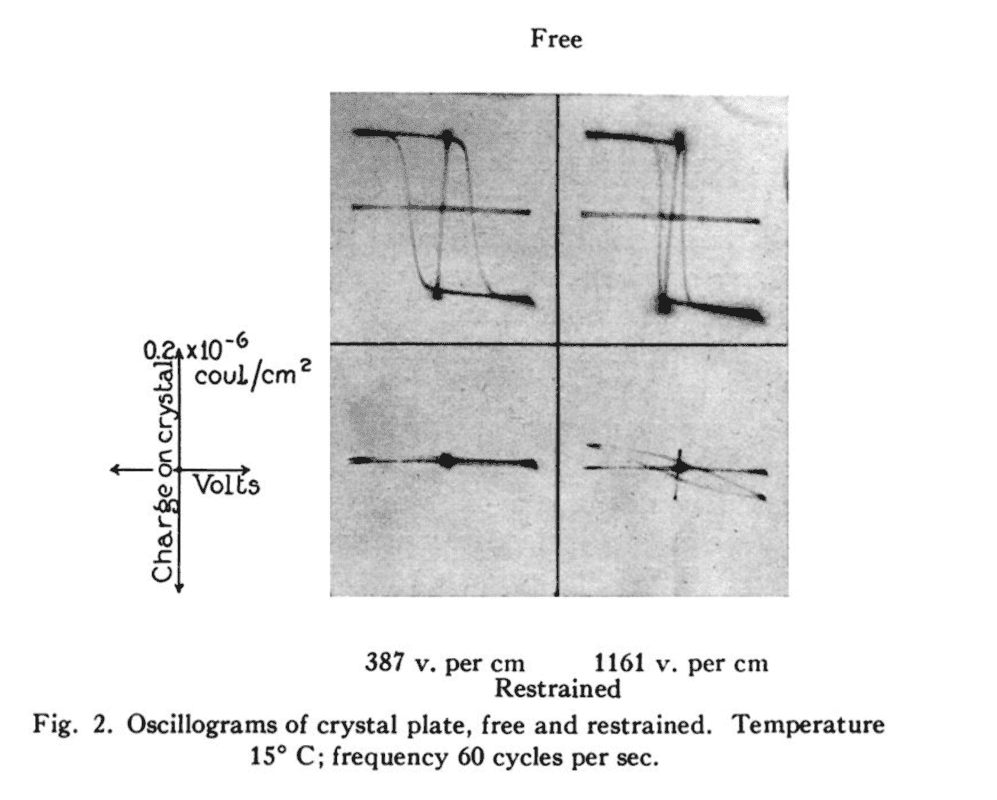
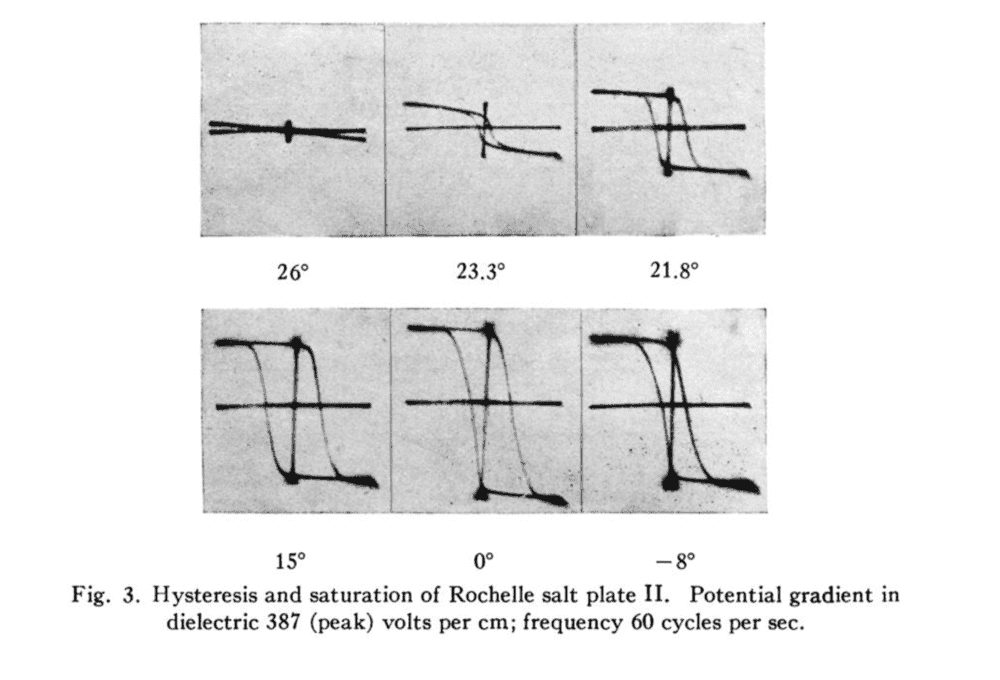
After reading the original 1930 paper by Sawyer and Tower (link to original paper here), I noticed that their hysteresis loops are mirrored around the y-axis from many of the ferroelectric hysteresis loops reported today ( see FE examples here, here, here). Why? Has something changed in the measurement approach, or does the differing orientation imply something about the sample under test? (Sawyer and Tower were characterizing Rochelle Salt.)
Here are example hysteresis loops from Sawyer & Tower:
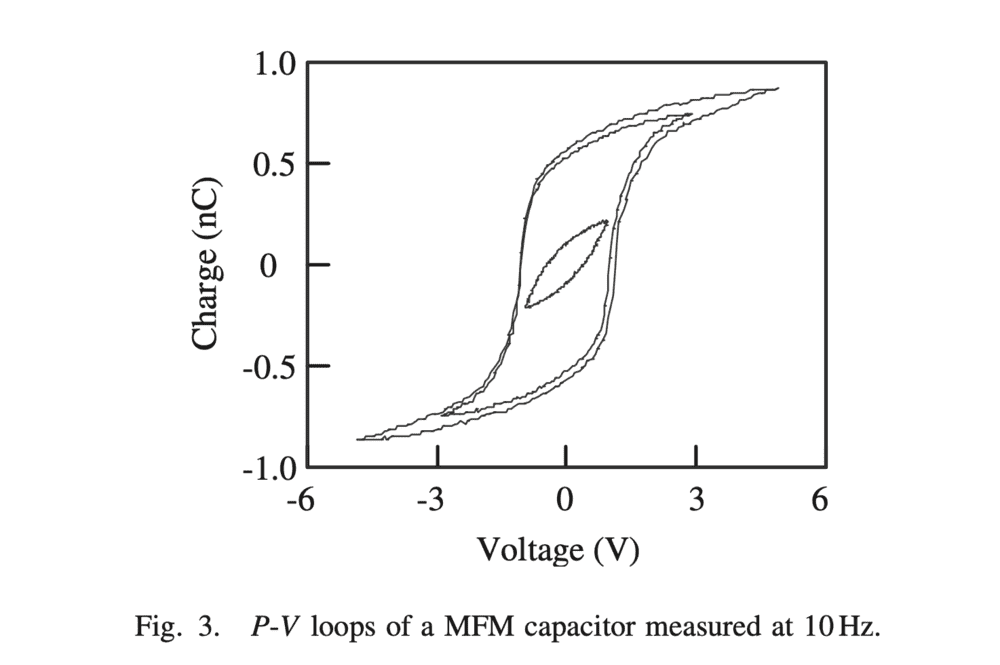
Here is a typical modern ferroelectric hysteresis loop; this example is from the paper by Yoshimura et al. "Polarization Hysteresis Loops of Ferroelectric Gate Capacitors Measured by Sawyer-Tower Circuit" published in 2003:
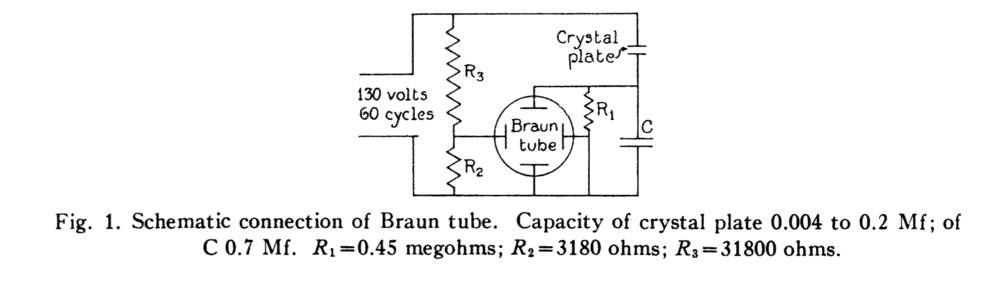
 Here is the original Sawyer-Tower Circuit:
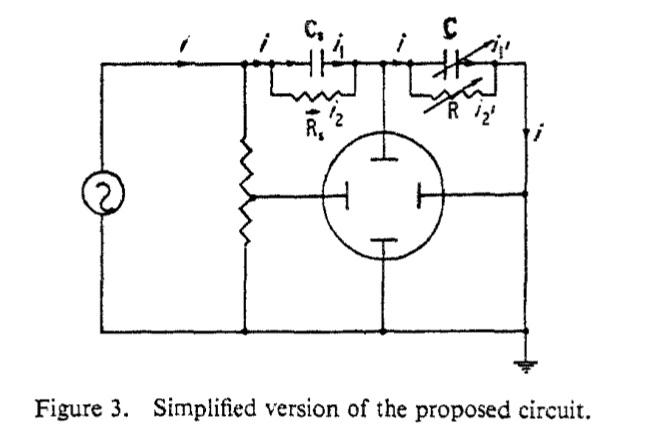
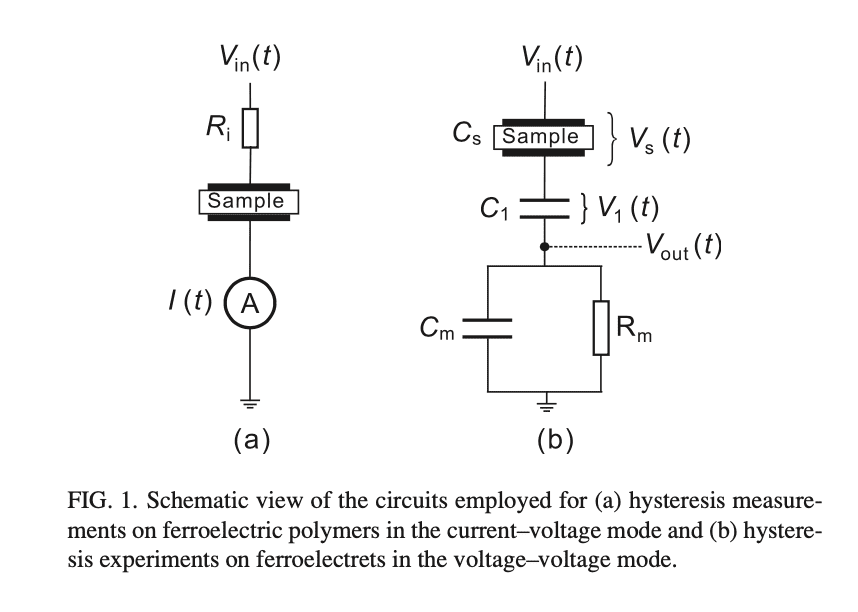
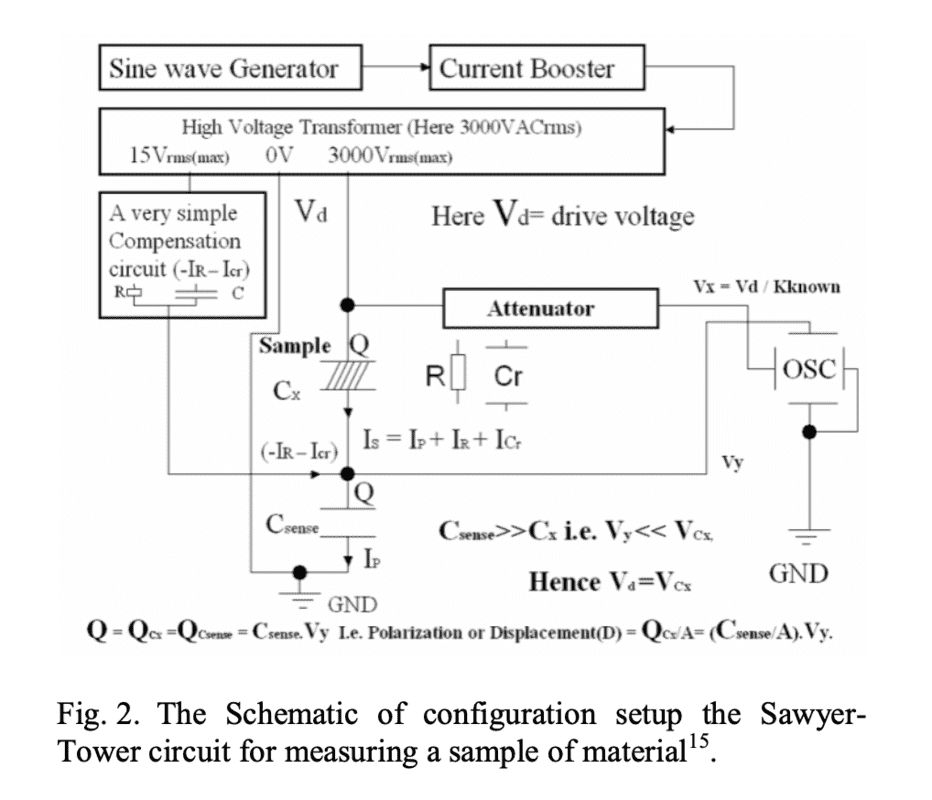
Here are a few examples from literature where mirrored loops have been reported (Sawyer-Tower circuits are frequently modified to fit the needs of the experiment) :
Sinha et al., 1965, "Modified Sawyer and Tower circuit for the investigation of ferroelectric samples"
Qiu et al., 2013, "Direct hysteresis measurements on ferroelectret films by means of a modified Sawyer-Tower circuit"
Andika et al., 2014 "The Electrical Hysteresis Loop and Polarization Value of BaZrxTi1-xO3 Multilayer Films Material at Different Annealing Temperature (x = 0.1 and 0.08) based on Sawyer Tower Circuit"
 Thanks in advance for the input!
After reading the original 1930 paper by Sawyer and Tower (link to original paper here), I noticed that their hysteresis loops are mirrored around the y-axis from many of the ferroelectric hysteresis loops reported today ( see FE examples here, here, here). Why? Has something changed in the measurement approach, or does the differing orientation imply something about the sample under test? (Sawyer and Tower were characterizing Rochelle Salt.)
Here are example hysteresis loops from Sawyer & Tower:
Here is a typical modern ferroelectric hysteresis loop; this example is from the paper by Yoshimura et al. "Polarization Hysteresis Loops of Ferroelectric Gate Capacitors Measured by Sawyer-Tower Circuit" published in 2003:
Here are a few examples from literature where mirrored loops have been reported (Sawyer-Tower circuits are frequently modified to fit the needs of the experiment) :
Sinha et al., 1965, "Modified Sawyer and Tower circuit for the investigation of ferroelectric samples"
Qiu et al., 2013, "Direct hysteresis measurements on ferroelectret films by means of a modified Sawyer-Tower circuit"
Andika et al., 2014 "The Electrical Hysteresis Loop and Polarization Value of BaZrxTi1-xO3 Multilayer Films Material at Different Annealing Temperature (x = 0.1 and 0.08) based on Sawyer Tower Circuit"
Last edited:
 The equation used to represent these measurements is J = A\frac{dP}{dt} + C\frac{dV}{dt} + \frac{V}{R} where J is the measured current, A is the area of the capacitor, C is the capacitance, V the applied voltage, R the intrinsic sample resistance (R is not constant, but a function of voltage), and P is the sample polarization. Given this relationship, how it would be possible to apply a negative voltage but measure a positive charge displacement/polarization?