Cloudz
- 4
- 2
- TL;DR
- I had an idea for a project but unsure if it would work.
So, I want to make a robot parrot. I would like the parrot to be able to open and close their wings. I had a couple of ideas for the wings, one of which I'm not sure would work.
Could this idea work? If so, how much torque would the motor/gearbox need and how would that be found? If it doesn't work, are there any tweaks that could be made to make it work?
The idea:
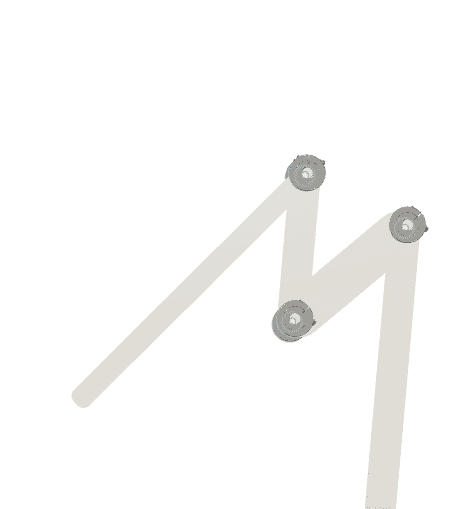
The wing would be made with varying sizes of hollow 1/16 in. thick square tubes with shafts connecting each of the tubes in a sort of zig-zag pattern. The tubes, starting at the tip of the wing, are a 5.7 in. long tube with a height of 3/8 in. (length may change), a 2.85 in. long tube with a height of 1/2 in., a 2.85 in. long tube with a height of 3/4 in., and a (currently, though subject to change) 5 in. long tube with a height of 1/2 in. There are 3 joints in total. Inside the joints of the tubes are 315° right-wound torsion springs (with a max torque of 0.33 in-lbs) that keep the wing in a semi-folded position. There would be a rope attached to the end piece of the wing and run along the inside of each tube. At the end, there would be a motor and gearbox attached to a spool for the rope. The idea is that when the spool is turned, the rope is pulled tight and the wings open, and when the rope is given some slack, the wings return to their folded shape. I'm not sure if any of this info is useful but thought it wouldn't hurt to add it.
Any help is appreciated!
Could this idea work? If so, how much torque would the motor/gearbox need and how would that be found? If it doesn't work, are there any tweaks that could be made to make it work?
The idea:
The wing would be made with varying sizes of hollow 1/16 in. thick square tubes with shafts connecting each of the tubes in a sort of zig-zag pattern. The tubes, starting at the tip of the wing, are a 5.7 in. long tube with a height of 3/8 in. (length may change), a 2.85 in. long tube with a height of 1/2 in., a 2.85 in. long tube with a height of 3/4 in., and a (currently, though subject to change) 5 in. long tube with a height of 1/2 in. There are 3 joints in total. Inside the joints of the tubes are 315° right-wound torsion springs (with a max torque of 0.33 in-lbs) that keep the wing in a semi-folded position. There would be a rope attached to the end piece of the wing and run along the inside of each tube. At the end, there would be a motor and gearbox attached to a spool for the rope. The idea is that when the spool is turned, the rope is pulled tight and the wings open, and when the rope is given some slack, the wings return to their folded shape. I'm not sure if any of this info is useful but thought it wouldn't hurt to add it.
Any help is appreciated!