Have You Considered DIY Battery Replacement for Your Camera?

  • Context: Electrical 
  • Thread starter Thread starter BillTre
  • Start date Start date
  • Tags Tags
    Battery
Click For Summary
SUMMARY

This discussion centers on the feasibility of DIY battery replacements for cameras, specifically Canon models using LP-E6N batteries. Participants explore alternatives to expensive battery purchases, such as creating a 3D-printed battery dummy that connects to a power source. Key considerations include the need for compatibility with battery contacts for power level monitoring and the challenges of providing sufficient current for camera operation. The conversation highlights the complexities of battery communication protocols and the potential for aftermarket battery issues.

PREREQUISITES
  • Understanding of Canon LP-E6N battery specifications
  • Knowledge of 3D printing techniques and materials
  • Familiarity with basic electrical wiring and power sources
  • Awareness of battery communication protocols and compatibility issues
NEXT STEPS
  • Research 3D printing designs for battery dummies specific to Canon cameras
  • Learn about Li-ion battery charging requirements and safety
  • Investigate power supply options for devices requiring 1.5V to 4.5V
  • Explore battery communication protocols used in digital cameras
USEFUL FOR

Camera enthusiasts, DIY electronics hobbyists, and individuals seeking to reduce battery waste and costs through innovative power solutions.

BillTre
Science Advisor
Gold Member
Messages
2,736
Reaction score
11,955
TL;DR
Plug in power source for battery replacement in gadgets.
I saw an advertisement for this today:
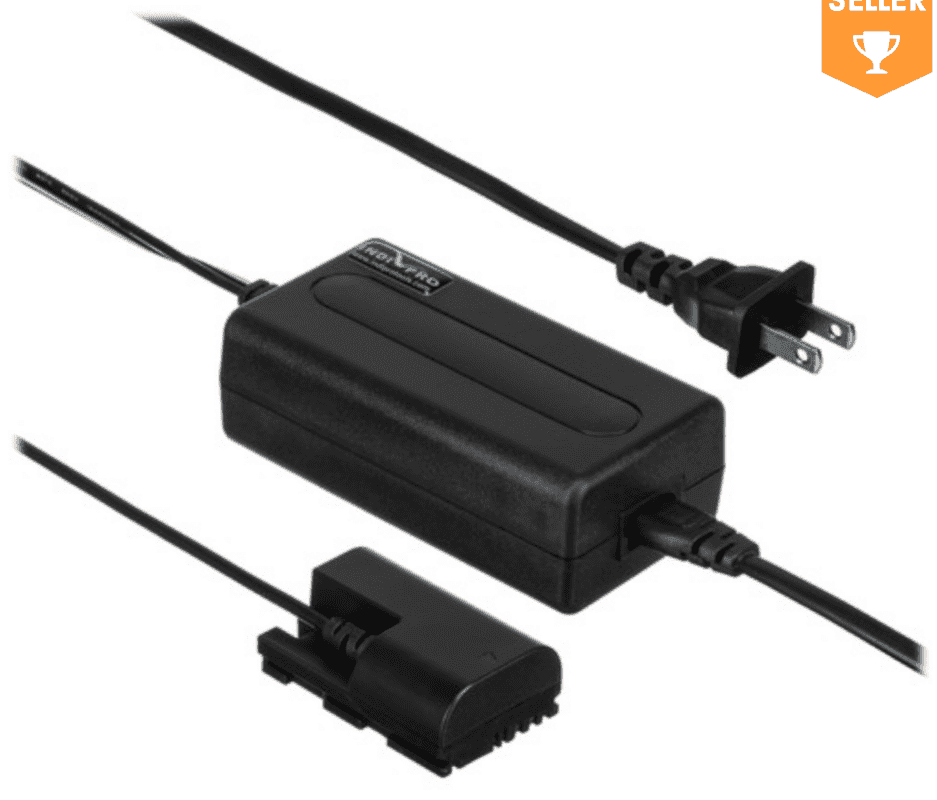
Screen Shot 2020-09-21 at 12.53.00 PM.png

in B&H (photo suppliers) for $79. Too much for me, also many digital cameras have sockets to supply plug-in power from a power source which costs less.

I was considering making something like this by 3D printing a shape to fit into the battery compartment, putting in contacts, and wiring it to an appropriate power source, and making a hole to the battery compartment for the cord (so it could be closed). (Never got to the project.)
Since this is for a canon camera, it has several contacts (I don't know why) and electrical requirements unknown to me.

I am interested in cheapper battery replacements for simpler things (like automatic fish feeders, small lights).
I really dislike using batteries for a variety of reasons and am just wondering if anyone has done this or thought about it.
 
Physics news on Phys.org
Is this 5V level power? If so, is USB communication going on over the recharging link? If so, you will need to figure out how to do that in your DIY projects, right?
 
The one pictured above is for a digital camera. I am not actively looking for that.
I am not thinking of USB communications.
The extra contacts may have something to do with reading battery power levels, but I really don't know. The camera companies usually provide plug in versions at a reasonable price. These are satisfactory for me.

Those I am interested in possibly doing would mostly be replacements for various numbers of conventional ~1.5 V batteries, in series. So 1.5, 3.0, 4.5 V etc. I can usually find cheap power sources for these when I look for them (either by ordering them or going to electronics thrift shops in town).

I would just like to reduce my battery use:
  • no replacing batteries periodically
  • no batteries leaking
  • no battery disposal
  • no replacement battery expense.
 
The auxiliary connections to the battery in question are to access each cell (This Li-ion battery has two cells...during charging they must be treated individually, hence the extra contacts. Some other batteries carry extra contacts for temperature monitoring).
In general response to your question yes one can do what you propose and I have done numerous such kluudges (before the advent of 3D printing !). Mostly be aware that sometimes batteries are asked to supply a short burst at high current and your replacement may have trouble doing that. Also batteries are very stable with no AC noise.
Enjoy.
 
  • Informative
Likes   Reactions: BillTre
I believe there is more to it. We are a Canon family with several Canon SLRs, so there is always plenty of Canon made batteries and Canon made chargers around. I can't put a random LP-E6N battery into a random LP-E6N charger, despite being made by the same company they are not always compatible (I even made some markings on them to not waste time checking). I believe there is some logic built into them and there is some kind of communication going between the battery/charger/camera, if you don't know the protocol they can be not able to recognize each other.
 
  • Informative
Likes   Reactions: BillTre
Yes I believe there are all kinds of shenanigans used particularly by the camera people to discourage aftermarket batteries. I think some of the early cell phones did similar things.
That being said the OP was asking a much simpler question...
 
  • Like
Likes   Reactions: BillTre
I believe this kind of thing goes by the name of 'battery dummy'.
 
  • Informative
  • Like
Likes   Reactions: BillTre and hutchphd
hutchphd said:
Yes I believe there are all kinds of shenanigans used particularly by the camera people to discourage aftermarket batteries. I think some of the early cell phones did similar things.
That being said the OP was asking a much simpler question...
Nevertheless, I find it quite interesting.
 
  • Like
Likes   Reactions: hutchphd

Similar threads

  • · Replies 117 ·
4
Replies
117
Views
11K
  • · Replies 13 ·
Replies
13
Views
2K
  • · Replies 41 ·
2
Replies
41
Views
7K
  • · Replies 7 ·
Replies
7
Views
4K
  • · Replies 78 ·
3
Replies
78
Views
13K