Potential Impact of Meteoroid During Lunar Eclipse on January 21, 2019

Click For Summary

Discussion Overview

The discussion revolves around the lunar eclipse that occurred on January 21, 2019, with a particular focus on an alleged meteoroid impact observed during the event. Participants share their experiences of viewing the eclipse, discuss the visibility and conditions in various locations, and speculate on the implications of the reported impact.

Discussion Character

  • Exploratory
  • Debate/contested
  • Technical explanation

Main Points Raised

  • Some participants describe their viewing experiences of the lunar eclipse, noting varying visibility and atmospheric conditions.
  • There are claims that the Moon was struck by an asteroid shortly before totality, with some participants asserting it was bright enough to be seen with the unaided eye.
  • Questions arise regarding the asymmetry observed during the eclipse, with speculation that it may be due to atmospheric refraction bending sunlight around Earth.
  • Participants express curiosity about the size of the impactor, with some suggesting it must have been larger than a small boulder to be visible from Earth.
  • One participant mentions a preliminary estimate of the impactor's mass being around 22 pounds (10 kilograms), speculating on its potential size and impact energy.
  • There is a discussion about whether lunar seismic sensors detected the impact and what that might imply about the impactor's characteristics.
  • Some participants express skepticism about the lack of reports regarding the impact, questioning how such an event could go unnoticed given the number of cameras pointed at the Moon.
  • There are references to past images and missions that might have captured similar effects during lunar eclipses.

Areas of Agreement / Disagreement

Participants do not reach a consensus on the details of the meteoroid impact, with multiple competing views regarding its visibility, size, and the implications of the event. The discussion remains unresolved regarding the specifics of the impact and its significance.

Contextual Notes

Limitations include uncertainty about the exact characteristics of the impactor, the lack of definitive reports confirming the event, and the dependence on anecdotal observations from participants.

Who May Find This Useful

Readers interested in astronomy, meteor impacts, lunar phenomena, and observational experiences during celestial events may find this discussion relevant.

Messages
23,867
Reaction score
11,317
Anyone else watching the lunar eclipse tonight? It starts at about 9:30PM EST, with totality at 11:41. It's cold and windy in PA, but at least it's mostly clear. Here's a couple of pre-eclipse photos:
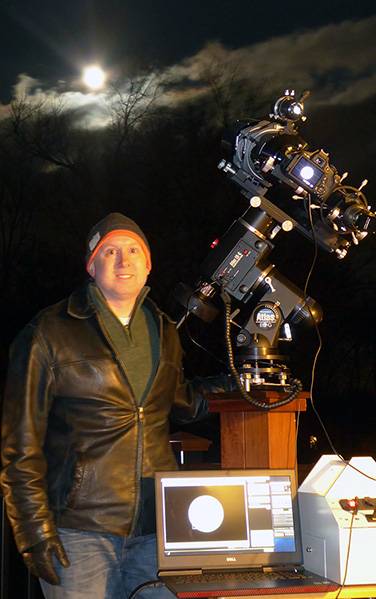
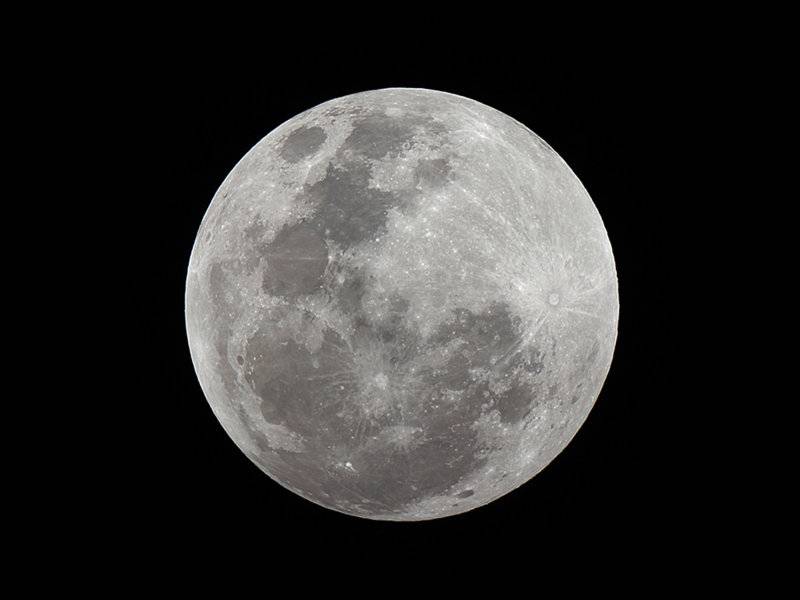
LunarEclipse-s.jpg
Pre-Eclipse-s.jpg
 

Attachments

  • LunarEclipse-s.jpg
    LunarEclipse-s.jpg
    32.6 KB · Views: 950
  • Pre-Eclipse-s.jpg
    Pre-Eclipse-s.jpg
    30.7 KB · Views: 944
Last edited:
  • Like
Likes   Reactions: Greg Bernhardt, pinball1970, Klystron and 6 others
Astronomy news on Phys.org
unfortunately, it wasn't visible from my part of the world :frown:
 
I stepped outside to take a look with unaided eyes. The moon is still bright with a bit of darkening on one side.
 
  • Like
Likes   Reactions: davenn
Cold, clear night here in Durham NC.

Nice chunk of it missing so far. :)

diogenesNY
 
  • Like
Likes   Reactions: davenn
West Michigan. Clear night; literally not a cloud to be found. Unfortunately, wind chill is -2°F.
 
Last edited:
Looks like maybe 90% total now. The uneclipsed part is still bright enough to drown out any blood-red tint in the shadow.
 
  • Like
Likes   Reactions: davenn
jtbell said:
Looks like maybe 90% total now. The uneclipsed part is still bright enough to drown out any blood-red tint in the shadow.
I can see it too in the Houston area. Taking a picture didn't work worth a flip, though. I can see a hint of dark red.
 
  • Like
Likes   Reactions: davenn
I have clouds
 
1144PM-Stretched.jpg
 

Attachments

  • 1144PM-Stretched.jpg
    1144PM-Stretched.jpg
    20.4 KB · Views: 666
  • Like
Likes   Reactions: nsaspook, davenn, lomidrevo and 7 others
  • #10
Chicago has fairly clear skies. I saw it completely eclipsed about 10 minutes ago. :smile:## \\ ## (Fifteen minutes later:) It's now almost directly overhead, so I can no longer see it out my window that faces east.
 
  • Like
Likes   Reactions: davenn
  • #11
  • Like
Likes   Reactions: russ_watters and Charles Link
  • #12
This is going better than I had hoped. I'm fighting a crazy 35mph wind, but still taking photos up to 1 second exposure. Here's the latest first pass processed.

1213AM.jpg
 

Attachments

  • 1213AM.jpg
    1213AM.jpg
    26.8 KB · Views: 906
  • Like
Likes   Reactions: Andy Resnick, diogenesNY, davenn and 8 others
  • #13
As is common for this time of the year in my part of the country, we had clouds all day.:frown:
 
  • #14
Post #12 looks like about the maximum "totality" that I saw, i.e. not uniformly reddish but with some brightness at one side. It's probably highly unlikely for the center of the Earth's shadow to pass over the center of the moon's disk, so there's almost always some asymmetry.
 
  • Like
Likes   Reactions: Charles Link
  • #16
jtbell said:
Post #12 looks like about the maximum "totality" that I saw, i.e. not uniformly reddish but with some brightness at one side.
Yes, it was taken right about maximum.
It's probably highly unlikely for the center of the Earth's shadow to pass over the center of the moon's disk, so there's almost always some asymmetry.
I was surprised to see the asymmetry. So what causes it? Is it due to atmospheric refraction bending a bit of sunlight around Earth?

[Edit; hmm, well I guess the red is too...]
 
Last edited:
  • #17
mfb said:
Looks like the Moon was hit by an asteroid shortly before totality - bright enough to be seen with the unaided eye.
Awesome! I wasn't shooting continuously, so it is unlikely I caught it, but I'll definitely pore over my pics to check.
 
  • #18
Thanks for braving the cold night so we could see those beautiful pictures Russ.

We went out just 2 minutes before totality in central Florida. The range of colors was amazing.

We have that famous big blue marble picture of Earthrise seen from Apollo 8. Did NASA ever get a shot of Earth seen from the moon at the time of eclipse? I mean lunar eclipse from Earth's vantage which is solar eclipse from Moon's vantage. Earth must look like a big red ring.
 
  • Like
Likes   Reactions: Charles Link and russ_watters
  • #19
anorlunda said:
Did NASA ever get a shot of Earth seen from the moon at the time of eclipse? I mean lunar eclipse from Earth's vantage which is solar eclipse from Moon's vantage. Earth must look like a big red ring.
I don't see any with a few minutes google -- a solar eclipse, though.
 
  • #20
Here's a composite of 1" exposures stacked and processed separately from the raw images to bring out the star field. I'm very pleasantly surprised that almost all of the 1" subframes were usable, considering the wind.

1230AM-composite-crop.jpg


The forum software seems intent on re-sizing and softening it no matter how small I make it: Full size linked from facebook.
 

Attachments

  • 1230AM-composite-crop.jpg
    1230AM-composite-crop.jpg
    28.5 KB · Views: 602
Last edited:
  • Like
Likes   Reactions: OmCheeto, Charles Link, anorlunda and 3 others
  • #21
anorlunda said:
We have that famous big blue marble picture of Earthrise seen from Apollo 8. Did NASA ever get a shot of Earth seen from the moon at the time of eclipse? I mean lunar eclipse from Earth's vantage which is solar eclipse from Moon's vantage. Earth must look like a big red ring.
JAXA, not NASA: Sort of

I still don't find any reports about an asteroid impact. An event seen by at least two independent cameras and one direct viewer - at a time where so many cameras were pointed at the Moon. How can that go without any attention, or how can that be anything else?
 
  • Like
Likes   Reactions: Charles Link, OmCheeto and scottdave
  • #22
mfb said:
I still don't find any reports about an asteroid impact. An event seen by at least two independent cameras and one direct viewer - at a time where so many cameras were pointed at the Moon. How can that go without any attention, or how can that be anything else?
I'm surprised - it's a great catch. I checked my photos and I didn't get it, unfortunately. I had it bracketed by just a couple of minutes.
 
  • #23
Scott Manley picked it up
It was clearly an asteroid. There are telescopes that routinely watch the Moon for impacts - but not during full Moon because you don't spot the impacts then. Well... there are people working on it, and LRO might find the new crater once it has been localized sufficiently.
 
  • Like
Likes   Reactions: nsaspook, Charles Link, OmCheeto and 1 other person
  • #24
100% cloud cover here...
 
  • #26
Is there any more information about the impactor? I don't even know how to guess at a range for size, but I imagine in order to be seen from Earth, it must have been larger than just a small boulder. Did any lunar seismic sensors detect the impact, I assume if not, that should be able to place a hard upper limit on it's mass.
 
  • Like
Likes   Reactions: russ_watters
  • #27
newjerseyrunner said:
...I don't even know how to guess at a range for size, but I imagine in order to be seen from Earth, it must have been larger than just a small boulder.
this from: https://gizmodo.com/holy-crap-the-moon-was-struck-by-a-meteorite-during-th-1831950105
...a preliminary guess is that the object, likely a tiny asteroid, had a mass around 22 pounds (10 kilograms).
If it was an Iron rich object, that would put it around the size of the fist of an adult man.

You might also like another thread here on the meteor strike.
https://www.physicsforums.com/threads/why-didnt-the-moon-go-fully-red-for-this-eclipse.964616/

Cheers,
Tom
 
  • Like
Likes   Reactions: newjerseyrunner, Charles Link and russ_watters
  • #28
Tom.G said:
this from: https://gizmodo.com/holy-crap-the-moon-was-struck-by-a-meteorite-during-th-1831950105
...a preliminary guess is that the object, likely a tiny asteroid, had a mass around 22 pounds (10 kilograms).
If it was an Iron rich object, that would put it around the size of the fist of an adult man.
Wow, that's a lot smaller than I would have guessed. Plugging 50km/s into an impact calculator yields 3 tons of tnt equivalent.

An image of the moon 500 pixels across is 7km/pixel resolution, so to cover more than one pixel (without blooming), the fireball would need to be 7km across. I would have guessed it was. However, I did notice it was short lived, so that implies small too.
 
  • Like
Likes   Reactions: Charles Link
  • #29
anorlunda said:
Earth must look like a big red ring.
Yep. At least twice the thickness of atmosphere for the light to pass through than for one of our best sunsets. And it would be against a totally black background too. I don't really approve too much of space tourism but I'd make an exception for that. Once you are up there in a ship, you wouldn't need to go to the Moon. The Earth's shadow is out there 24/7. All you have to do is chase it.
It makes me wonder about existing pictures from past unmanned missions? Surely you'd get the effect from a GSO at times.
 
  • Like
Likes   Reactions: Charles Link
  • #30

Attachments

  • 2019_01_21_ZM_Single_crop1024.jpg
    2019_01_21_ZM_Single_crop1024.jpg
    17.7 KB · Views: 565
  • Like
Likes   Reactions: mfb, Charles Link, OmCheeto and 2 others

Similar threads

  • · Replies 2 ·
Replies
2
Views
4K
  • · Replies 65 ·
3
Replies
65
Views
12K
  • · Replies 13 ·
Replies
13
Views
4K