CubicFlunky77
- 25
- 0
I am a 22 year-old male in the U.S. My fascination (or obsession) for math/computational neuroscience/set-theory/Analysis & Topology topics has reached nearly unprecedented levels in my life to the point of posing a detriment to my personal life (insomnia, pickiness, and periodic rage). I never took differential equations or Calc. III as far as the academic institution's agenda is concerned since I was forced into the med-school track for the conventional 'get-money-while-being-snobby-and-looking-smart" reason. Since this description does not match my life's ambition, I returned to math after reaching my Senior Year as a Bio undergrad. I feel I am on the right path, but the harder I focus on what I wish to pursue the more obsessed I become.
Ex. I thought yesterday was Monday since that was the last time I remembered studying. Then my mom recently told me that I'd been studying consistently for two consecutive weeks for well over 15 hours a day (typically from 11 a.m to 7-9 a.m.; sleeping, then repeating). When I am tired, I do go home after living in my school's math department over the aforementioned time period. As far as time goes, I have completely lost track of it. It is extremely annoying, since I feel that as soon as I start studying I have to stop after what seems to be 3 minutes to me when it has actually been several hours. The only reason I even stop is because I have to eat and sleep to keep going.
When I tell the school psychiatrists/mental health folks they seem to be more surprised at the notion of a black math major than directing their resources and attention towards alleviating the issue.
O.K. So now to my question: Is there a cause for a "mental-issue" concern when I try to solve a problem in D.Eq. such as this:
[itex]\int \frac {1}{y} dy \leftrightarrow \int \frac {1}{1 + x} dx[/itex]
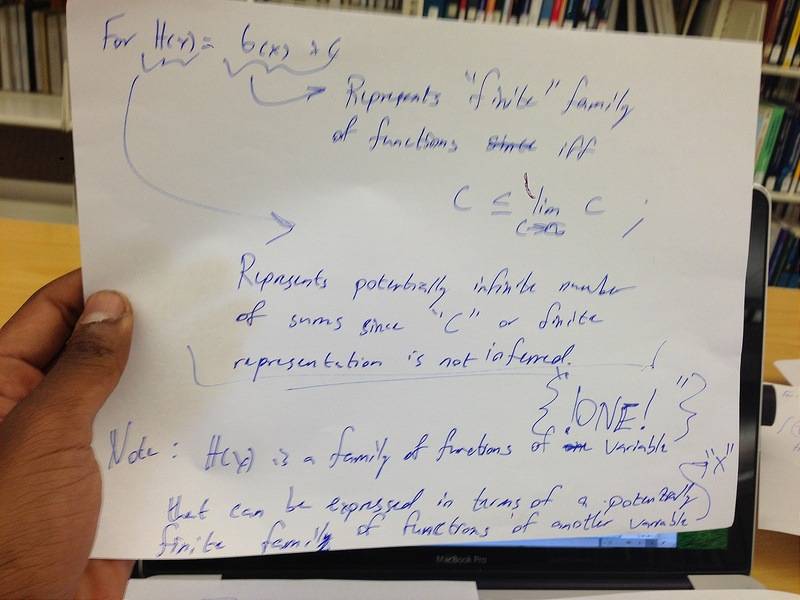
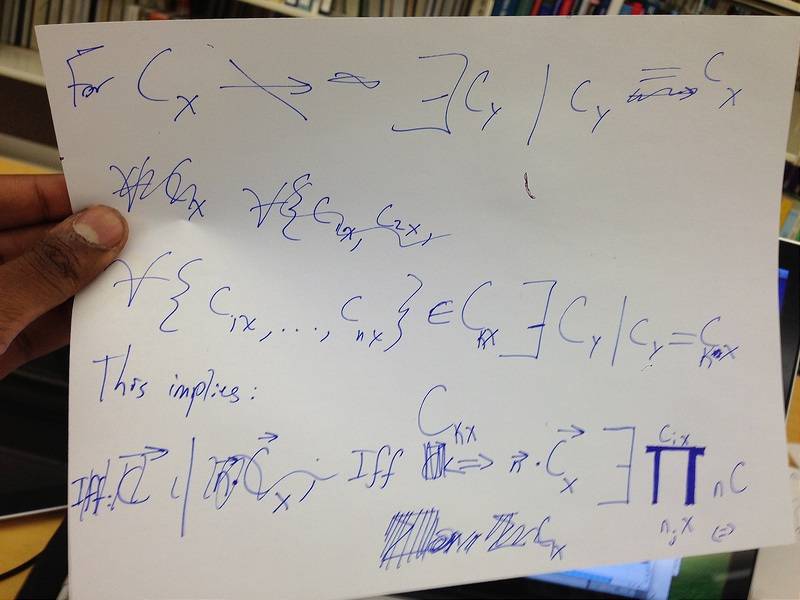
by doing this:

Ex. I thought yesterday was Monday since that was the last time I remembered studying. Then my mom recently told me that I'd been studying consistently for two consecutive weeks for well over 15 hours a day (typically from 11 a.m to 7-9 a.m.; sleeping, then repeating). When I am tired, I do go home after living in my school's math department over the aforementioned time period. As far as time goes, I have completely lost track of it. It is extremely annoying, since I feel that as soon as I start studying I have to stop after what seems to be 3 minutes to me when it has actually been several hours. The only reason I even stop is because I have to eat and sleep to keep going.
When I tell the school psychiatrists/mental health folks they seem to be more surprised at the notion of a black math major than directing their resources and attention towards alleviating the issue.
O.K. So now to my question: Is there a cause for a "mental-issue" concern when I try to solve a problem in D.Eq. such as this:
[itex]\int \frac {1}{y} dy \leftrightarrow \int \frac {1}{1 + x} dx[/itex]
by doing this: