Questions about my stratosphere photos

  • Level: High School 
  • Thread starter avidemux
  • Start date
  • Tags Tags
    Photos
6 replies · 3K views · last reply
avidemux
Messages
4
Reaction score
0
Hi all.

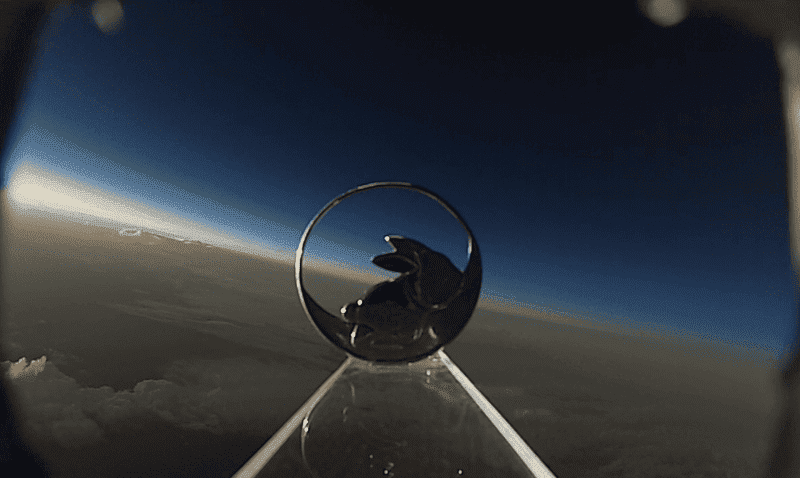
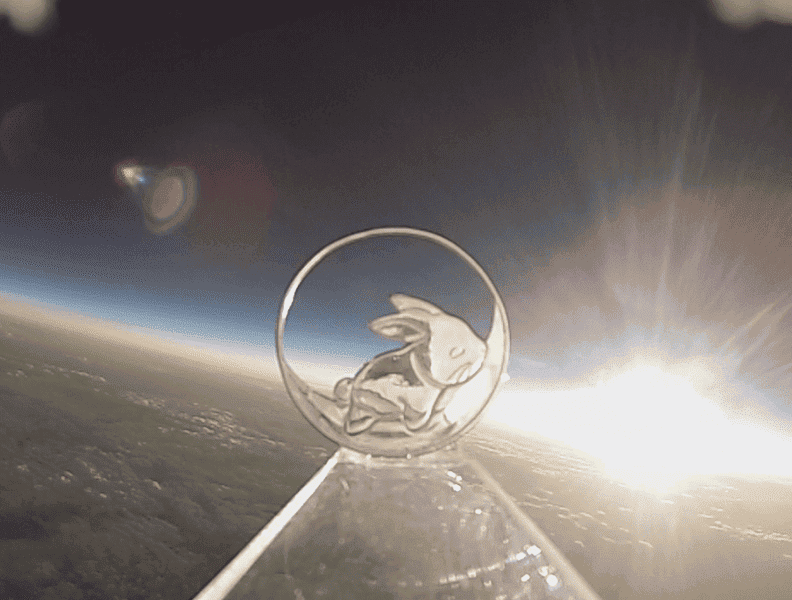
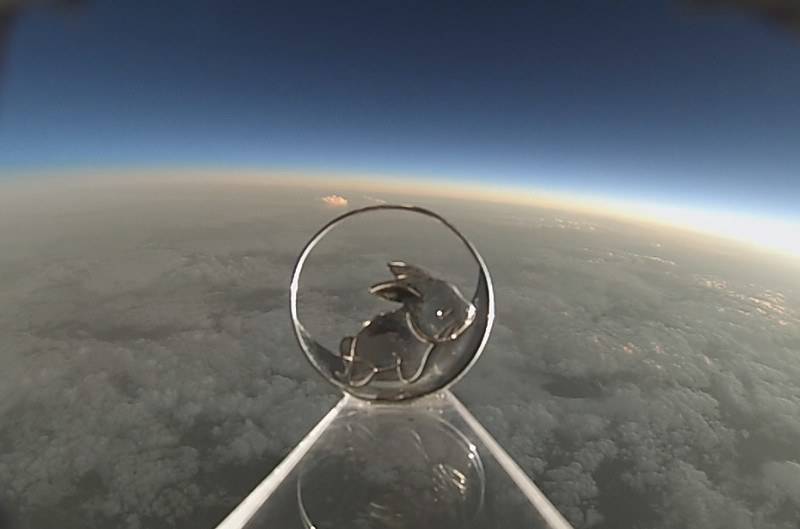
OK so these were shot with the same camera with same settings. Both are supposedly at 28 km altitude in the stratosphere. Why does in the first image (NOT MINE) the sky appear pitch black while on the rest it is slowly fades to dark blue?

Any chance when the sun is in the horizon (evening time) the sky doesn't fade to black as much when looking from the stratosphere? That's the only thing I can think which is different between the first image and the last two.
Or do you think my own payload didn't reach even >15 km altitude?

http://i.imgur.com/X4XHwoC.png
Camera view from a high-altitude balloon showing a glass or clear ring-shaped mount holding a small silver figurine, with a curved horizon, cloud layer below and a dark blue sky above.

Fisheye view from a high-altitude balloon payload looking at the horizon: a dark blue sky fading to a bright glow at the left, with cloud below and a black ring-shaped object in the foreground.

Photo from a high-altitude balloon showing a glass or clear acrylic bubble containing an embossed rabbit figure, set on a flat surface, with a bright sun flare and the curved Earth horizon with a blue atmospheric glow behind it.


more info about how these were shot: habhub.org
 
Last edited by a moderator:
lens flare from the sun being in the frame will lighten black areas, a similar effect to "light fogging" photographic film.

Also increasing the contrast can darken the sky ...
 
Attachments
  • Two side-by-side photos taken from a high-altitude balloon gondola looking down at Earth's curved horizon, with a clear glass sphere enclosing a small object near the bottom of the frame.
    increasing contrast blackens sky.jpg
    11.2 KB · Views: 575
Last edited:
B0b-A said:
lens flare from the sun being in the frame will lighten black areas
Thanks. But isn't there lens flare also in the first image where the sky is black?
 
my semi-educated assumption would be because you are fading down from the black of space to the blue of the atmosphere
Looking straight out at a high angle, the atmosphere ,what's left of it will be VERY thin.
But looking horizontally along the line of the curvature, you are looking through a much thicker layer of atmosphere and hence you can detect it easier Dave
 
avidemux said:
Thanks. But isn't there lens flare also in the first image where the sky is black?
There is flare on the right-hand-side of the Santa picture. Whether or not that flare extended across the entire frame would be dependent on the design [and cost] of the lens , (e.g. how many anti-reflective coatings the optics had).

I just occurred to me you may not be comparing like with like : If the Santa lens had a wider angle of view than your lens that could explain why more of the "sky" is black in the Santa picture. At the same altitude a wider angle-of-view sees further out into black space.
 
Last edited:
We both used the same cameras with the same lens (GoPro Hero 3)
 
I still go with what I suggested rather than anything to do with lens flare as being the significant reason :smile:

Dave