Questions about UV light and dry plastic and rubber

Click For Summary

Discussion Overview

The discussion revolves around the effects of UV light on plastic and rubber materials, particularly in the context of storage solutions like cardboard boxes. Participants explore how UV light may penetrate these boxes and the implications for the longevity of stored items.

Discussion Character

  • Exploratory
  • Debate/contested
  • Technical explanation

Main Points Raised

  • Some participants assert that UV light causes dryness and degradation of plastic and rubber, leading to issues like brittleness and crazing.
  • There is a question about whether indirect sunlight can enter a closed box and reflect UV light onto stored items.
  • One participant mentions that the effectiveness of cardboard in blocking UV light may depend on its integrity and potential cracks.
  • Some participants propose using UV detection cards to assess the UV exposure inside the box.
  • There are discussions about whether cardboard reflects or absorbs UV light, with some suggesting it provides protection against UV radiation.
  • One participant notes that other factors, such as microbes or oxygen, may also contribute to polymer degradation over time, independent of UV exposure.

Areas of Agreement / Disagreement

Participants express varying opinions on the effectiveness of cardboard in blocking UV light, and there is no consensus on the extent to which UV light may penetrate or reflect within the box. Additionally, there is acknowledgment that UV is not the only factor affecting material degradation.

Contextual Notes

Some participants highlight the need for further investigation into the specific conditions under which UV light may affect stored materials, as well as the limitations of cardboard as a protective barrier.

terminator 87
Messages
8
Reaction score
0
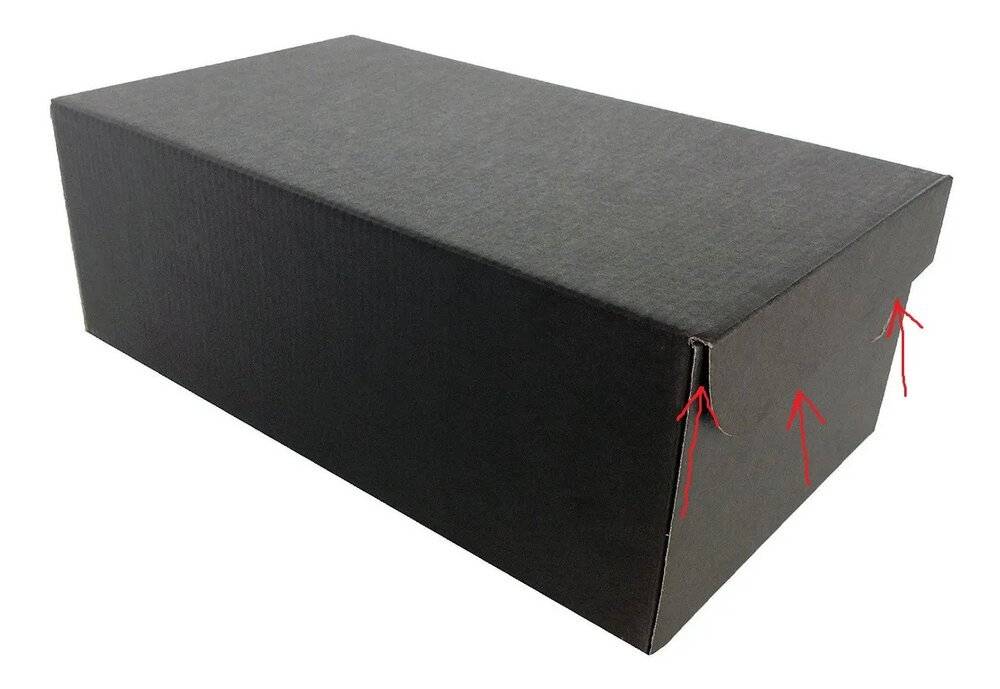
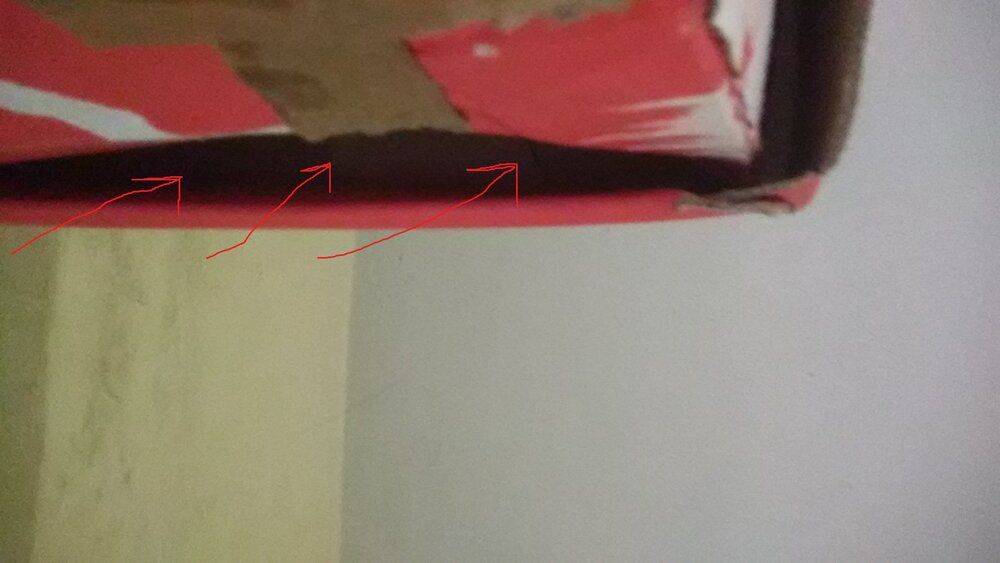
UV causes dryness of plastic and rubber and lights have UV so keeping it in the dark away from light inside boxes prevents this but notice this photo where the box where the arrows are marked the clarity q enters this region of the closed box is enough for the long term the UV of this clarity dry out plastic and rubber objects and items q are inside the box?

photo: https://ibb.co/QjD2yCK

IMG_20200808_123518.jpg

caixa-para-sapatos-preto-fosco-33x19x12-pacote-50-unidades-D_NQ_NP_779113-MLB31194899075_06201...jpg
 
Chemistry news on Phys.org
Welcome to PhysicsForums. :smile:
terminator 87 said:
UV causes dryness of plastic and rubber and lights have UV so keeping it in the dark away from light inside boxes prevents this but notice this photo where the box where the arrows are marked the clarity q enters this region of the closed box is enough for the long term the UV of this clarity dry out plastic and rubber objects and items q are inside the box?

photo: https://ibb.co/QjD2yCK

View attachment 267545
View attachment 267546
Using my Mentor superpowers, I can see that English is not your primary language. Unfortunately, your post as translated is very hard to follow, and that's aggravated by the lack of punctuation and sentence structure.

Are you asking about how the corners of that box may let some UV light into the inside and cause problems? Are you trying to find a better box? Or are you asking how to add something to improve the UV shielding of the contents of the box? Thanks.
 
I thought that storing a rubber and plastic item inside a closed shoe box would protect from UV, indirect sunlight entering the houses illuminating, that same light entering the shoe box in this space between the box body and the box cover ? does the light come in from the bottom upwards and when it collides on the box lid the UV light is reflected in all directions inside the box colliding with the plastic and rubber items that are inside the box?

IMG_20200808_123518.jpg


caixa-para-sapatos-preto-fosco-33x19x12-pacote-50-unidades-D_NQ_NP_779113-MLB31194899075_06201...jpg
 
What are you using for your UV light detector?
 
nothing
 
terminator 87 said:
UV causes dryness of plastic and rubber
I would say that UV causes plastics and rubber molecules to break down to some extent.
(Some plastics (usually blue or black) have UV inhibitors to decrease how much this can happen.)
This is most likely an interaction between UV photons and the molecules, occasionally causing them to break.
This can cause little cracks (crazing) in the plastic or breaking it down into a powdery substance, with a rougher surface. Also brittleness.

Sunlight and various artificial light sources contain some amount of UV light.
Any light from these sources leaking through holes in your box can contain a UV component.
How much or how little UV is important to this process being a problem is something that would have to be determined for your particular use and materials.
There will probably be a point where the amount of light is so small that the damage to the plastic will not matter to you.
Presumably, the amount of UV absorption accumulated over a period of time will be reflected in the amount of resulting damage.

If you want less UV to get into your boxes:
  • block the holes (tape?)
  • keep it in the dark (or a darker area)
  • filter out the UV light in the area
  • throw a light proof blanket over light leaky box
  • in labs, we would cover things with aluminum foil (with no holes)
 
  • Informative
Likes   Reactions: berkeman
  • Like
Likes   Reactions: BillTre
berkeman said:
If visible light can't reflect into the box, most likely UV light won't be able to either. You can buy some of these inexpensive UV detection cards to check that:

https://www.newport.com/f/ultraviolet-uv-sensor-cards
Interesting.
Are they single use?
 
the box is made of cardboard, does the cardboard reflect UV?
caixa-para-sapatos-preto-fosco-33x19x12-pacote-50-unidades-D_NQ_NP_779113-MLB31194899075_06201...jpg
 
  • #10
The UV will not usually be expected to penetrate intact cardboard.
The cardbaord would have to be transparent to UV wavelengths (and apparently non-transparent in visible light, if your picture is right).
It might, however, leak in through the cracks.
 
  • #11
BillTre said:
Interesting.
Are they single use?
I would guess so, kind of like the humidity sensor cards that we use in our IC packaging, but I only found these cards with a Google search, TBH.
 
  • Like
Likes   Reactions: BillTre
  • #12
cardboard reflect UV?
 
  • #13
Might reflect or absorb it.
 
  • #15
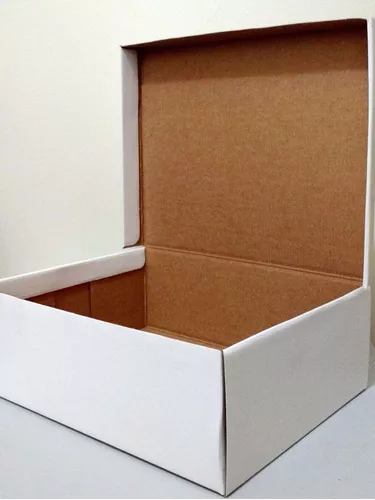
internal photo cardboard box
caixas-de-sapato-branca-embalagem-papelo-18-x-28-kit-50-D_NQ_NP_260925-MLB25518430794_042017-O.webp
 
  • #16
berkeman said:
If visible light can't reflect into the box, most likely UV light won't be able to either. You can buy some of these inexpensive UV detection cards to check that:

https://www.newport.com/f/ultraviolet-uv-sensor-cards
Might be rather challenging to use, they fluoresce under UV so you would have to climb inside the box to find out! o_O

From the referenced link:
These viewing cards contain a phosphor-coated sensor area that emits clearly visible light when illuminated by UV sources.

Cheers,
Tom
 
  • Informative
Likes   Reactions: BillTre
  • #17
Tom.G said:
Might be rather challenging to use, they fluoresce under UV so you would have to climb inside the box to find out! o_O

Either he or a camera.

Btw.: UV light is not the only possible reason for polymer degradation. After some years of storage in a carton inside a locker (and thefore well protected from UV) the soles of a pair of my shoes turned into small crumbs. I suspect microbes or oxygen to be responsible for this mess.
 
  • Like
Likes   Reactions: BillTre
  • #18
internal photo cardboard box internal color reflect UV?
caixas-de-sapato-branca-embalagem-papelo-18-x-28-kit-50-D_NQ_NP_260925-MLB25518430794_042017-O.webp
 
  • #19
Tom.G said:
Might be rather challenging to use, they fluoresce under UV so you would have to climb inside the box to find out!
Oh shoot. I thought they were like humidity-detecting cards, which change color when exposed to humidity (and retain that color change). Sigh.
 
  • #20
DrStupid said:
Btw.: UV light is not the only possible reason for polymer degradation. After some years of storage in a carton inside a locker (and thefore well protected from UV) the soles of a pair of my shoes turned into small crumbs. I suspect microbes or oxygen to be responsible for this mess.
https://en.wikipedia.org/wiki/Ozone_cracking
 
  • Like
Likes   Reactions: BillTre
  • #21
DrStupid said:
Btw.: UV light is not the only possible reason for polymer degradation.
Exactly. In that box common plastic would be fine for some decades, but the usual household rubber won't hold long (around half decade, I think).
 
  • Like
Likes   Reactions: BillTre
  • #22
cardboard box protects of UV? cardboard box reflect UV?
 
  • #23
terminator 87 said:
cardboard box protects of UV?
I don't know about reflection, but you need something at the range of x-rays to penetrate it. So yes, against UV it protects.
 

Similar threads

Replies
6
Views
2K
  • · Replies 5 ·
Replies
5
Views
2K
  • · Replies 22 ·
Replies
22
Views
8K
  • · Replies 6 ·
Replies
6
Views
3K
  • · Replies 3 ·
Replies
3
Views
1K
  • · Replies 18 ·
Replies
18
Views
5K
  • · Replies 11 ·
Replies
11
Views
1K
  • · Replies 21 ·
Replies
21
Views
4K
  • · Replies 46 ·
2
Replies
46
Views
6K
  • · Replies 1 ·
Replies
1
Views
4K