Share Animal Pictures: For Animal Lovers
- Thread starter micromass
- Start date
-
- Tags
- Animal
Join the discussion
Registration is free. Ask a follow-up in this thread, or start your own.
3,073 replies · 329K views
Physics news on Phys.org
DennisN
Gold Member
- 2,197
- 10,329
Action!
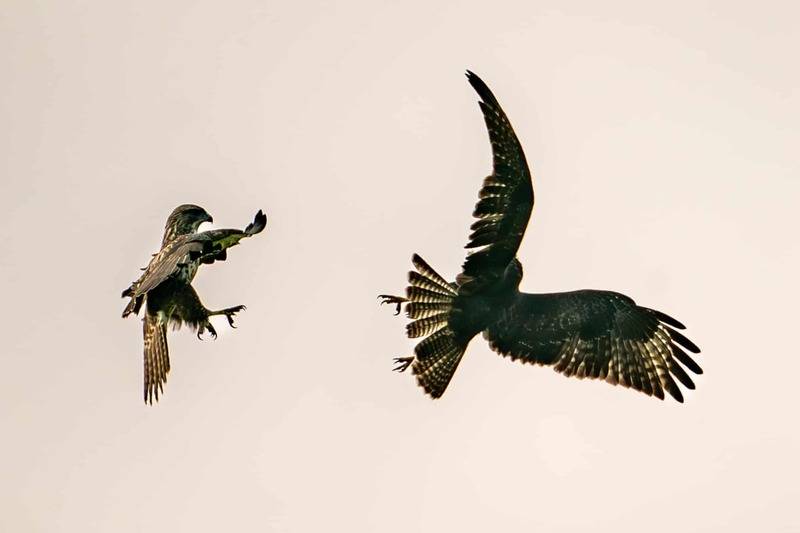
Buzzards swoop into each other over the high hills and grasslands in the Vale of White Horse, Oxfordshire, UK, Photograph: Ben Birchall/PA
From: The week in wildlife – in pictures (The Guardian)
Buzzards swoop into each other over the high hills and grasslands in the Vale of White Horse, Oxfordshire, UK, Photograph: Ben Birchall/PA
From: The week in wildlife – in pictures (The Guardian)
DennisN
Gold Member
- 2,197
- 10,329
DennisN said:From: The week in wildlife – in pictures (The Guardian)
Another one from that article... both cool and fun:
"Hey, give me a ride, will you? I can't bear walking anymore."
A bear waves its paw at a vehicle on the road to Nemrut Crater Lake in Tatvan district of Bitlis, Turkey
Photograph: Anadolu Agency/Getty Images
DennisN
Gold Member
- 2,197
- 10,329
BillTre said:
That is such a lovely clip!

- 20,819
- 28,467
Admin
- 69,784
- 25,632
Science Advisor
Gold Member
- 2,856
- 12,709
That first picture is very cool.berkeman said:
Science Advisor
Gold Member
- 2,856
- 12,709
A lot of people may not have seen this before.
This is a clip of a crab molting its old shell.
The process is it softens and thins its old shell from the inside. The old shell cracks open in predetermined locations and the crabs backs out of it. It then has a soft new shell which it inflates (by taking in a bunch of water). This expands the new shell to a larger size than the old one. The new shell then hardens in its enlarged form.
All arthropods (insects, crustaceans, spiders and scorpions, round worms, and a bunch of others) which have an outer cuticle covering do this to grow.
These are now grouped as ecdysozoans now, a relatively new taxonomic group that encompasses many separate phyla (like insects, crustaceans, etc.).
Each time they molt their body shape can change, like during a metamorphosis. Molts often separate important life stages.
If the crab had things growing on its shell which it wants there (like anemones used for defense or camouflage) it would have to transfer them or reacquire them in some way.
This is where the nice clean empty crab shells on the beach come from, as opposed to rotting dead crabs in shells that were not molted.
This is a clip of a crab molting its old shell.
The process is it softens and thins its old shell from the inside. The old shell cracks open in predetermined locations and the crabs backs out of it. It then has a soft new shell which it inflates (by taking in a bunch of water). This expands the new shell to a larger size than the old one. The new shell then hardens in its enlarged form.
All arthropods (insects, crustaceans, spiders and scorpions, round worms, and a bunch of others) which have an outer cuticle covering do this to grow.
These are now grouped as ecdysozoans now, a relatively new taxonomic group that encompasses many separate phyla (like insects, crustaceans, etc.).
Each time they molt their body shape can change, like during a metamorphosis. Molts often separate important life stages.
If the crab had things growing on its shell which it wants there (like anemones used for defense or camouflage) it would have to transfer them or reacquire them in some way.
This is where the nice clean empty crab shells on the beach come from, as opposed to rotting dead crabs in shells that were not molted.
Last edited:
Swamp Thing
- 1,076
- 844
DennisN
Gold Member
- 2,197
- 10,329
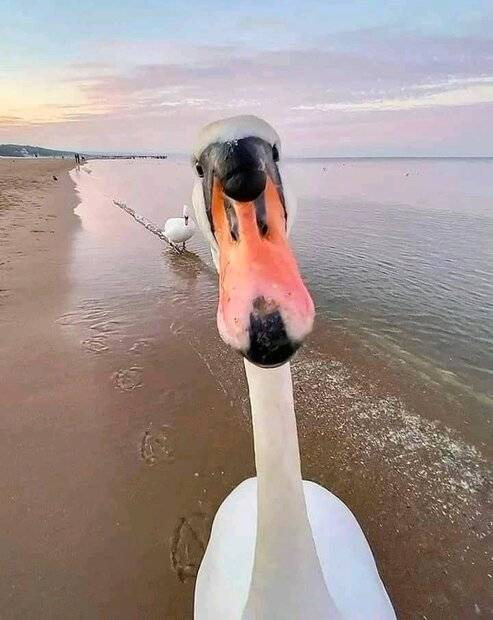
This swan got really close to the photographer: 
Haborix
- 385
- 449
and was never seen again...DennisN said:This swan got really close to the photographer:
- 20,819
- 28,467
I once was in a park and a couple of black swans approached me. One was terribly limping. Poor bird. I searched for someone responsible for the park and found a lady at the entrance.DennisN said:
Me: "Do you know that one of your swans is injured and terribly limps?"
She: "A black one?"
Me: "Yes."
She: "He limps from his birth on. And when visitors are around then he limps especially severely."
- 20,819
- 28,467
This is the other reason why I am convinced our path back into the oceans like the whales have undertaken is in general prohibited for us, and that humans should not enter the sea anywhere on Earth in particular.BillTre said:
Science Advisor
Gold Member
- 2,856
- 12,709
@fresh_42I don't understand what the reason is.fresh_42 said:This is the other reason why I am convinced our path back into the oceans like the whales have undertaken is in general prohibited for us, and that humans should not enter the sea anywhere on Earth in particular.
I have gone into the oceans many times. Only been jellyfished once.
- 20,819
- 28,467
The other reason is sharks. Both animals I don't want to meet.BillTre said:@fresh_42I don't understand what the reason is.
I have gone into the oceans many times. Only been jellyfished once.
DennisN
Gold Member
- 2,197
- 10,329
You have my fullest sympathy. I feel the same.fresh_42 said:The other reason is sharks. Both animals I don't want to meet.
I have some fear of spiders, snakes and a couple of other animals*, but sharks are in a different league - they terrify me.
And add the fact that they are master predators in an environment, water, which I'm just a dabbler in... it's pure terror.
* Why, one might wonder? My guess it's due to genetic imprint from ancient ancestors who learned to avoid certain animals, including poisonous ones. But I'm no biologist/psychologist, so I don't really know.
Science Advisor
Gold Member
- 2,856
- 12,709
Fear of particular animals can be overcome by being cautious and understanding the particular kind of animal involved.
Its called waterproofing. Its best learned early in life.
Every parent (in a non-desert environment) should make sure their kids can swim.
Everyone (physically limited excepted) should be able to swim and feel at ease in the water.DennisN said:water, which I'm just a dabbler in
Its called waterproofing. Its best learned early in life.
Every parent (in a non-desert environment) should make sure their kids can swim.
- 20,819
- 28,467
I just watched a documentary about the Twilight Zone in oceans at around 1km depth. It was very fascinating and interesting. And watching sharks and Spongebob jelly fishing on TV is not the same as risking an encounter. I would carry a gallon of vinegar with me when I had to risk any jellies, especially box jellies.DennisN said:You have my fullest sympathy. I feel the same.
I have some fear of spiders, snakes and a couple of other animals*, but sharks are in a different league - they terrify me.
Science Advisor
- 3,766
- 2,215
I was taught to swim as a very young child. I loved body-surfing.BillTre said:Everyone (physically limited excepted) should be able to swim and feel at ease in the water.
Its called waterproofing. Its best learned early in life.
But swim competence means nothing against being rammed into the sand head-first by a dumper wave (a mistake I only made once and was lucky to survive without serious injury).
Then there's the blue bottles which got me a few times as I was growing up. They're nowhere as serious as box jellies but they do sting like hell.
Oh, and then there's the shark that (unbeknownst to me) passed within a few metres of me in the surf -- somehow I hadn't heard the life guard's siren nor my mother screaming at me from the shoreline...

- 20,819
- 28,467
Admin
- 69,784
- 25,632
Some of these photos are pretty funny...
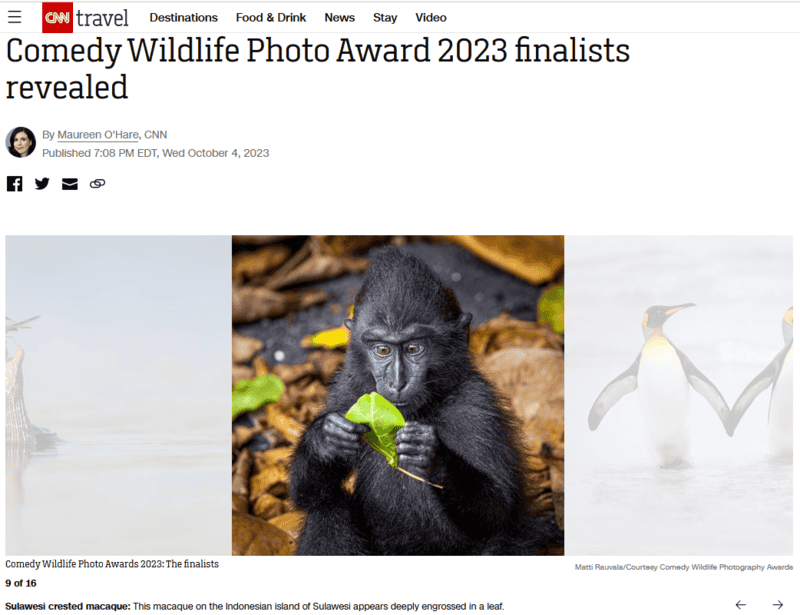
https://www.cnn.com/2023/10/04/travel/comedy-wildlife-photo-award-2023-finalists/index.html
https://www.cnn.com/2023/10/04/travel/comedy-wildlife-photo-award-2023-finalists/index.html
Science Advisor
Gold Member
- 2,408
- 5,259