Simple method for testing graphene

Click For Summary
The discussion centers on a method for testing the authenticity of graphene versus graphite by mixing it with gasoline and water, which yielded different results than expected. Users expressed skepticism about the video's claims, suggesting that the material in question may actually be graphite rather than true graphene, as evidenced by the settling behavior observed. The conversation highlights a broader issue in the graphene community regarding the quality and authenticity of commercially available graphene, with many sources reportedly selling subpar products. Techniques such as Raman spectroscopy are recommended for definitive identification of graphene, as they provide clear results distinguishing between single-layer graphene and graphite. Overall, the community emphasizes the need for reliable testing methods to verify the quality of graphene samples.
Magnetosphere
Messages
64
Reaction score
5
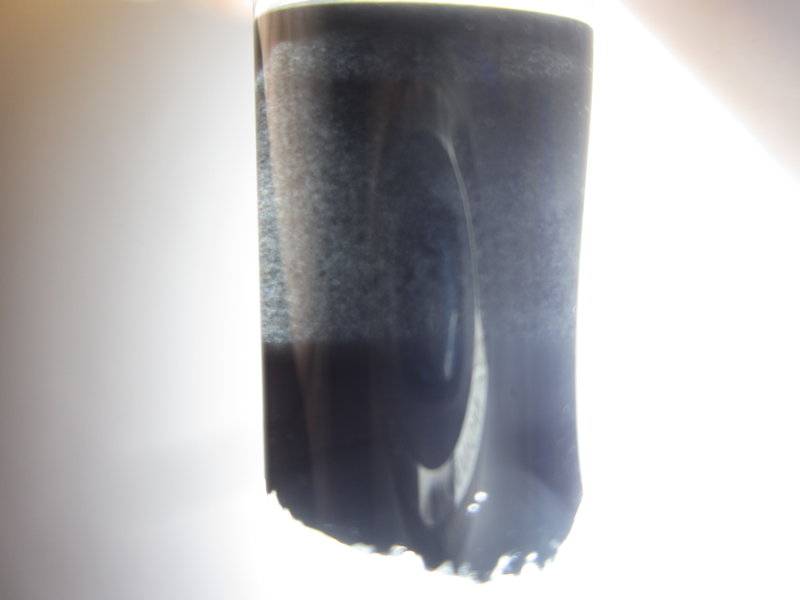
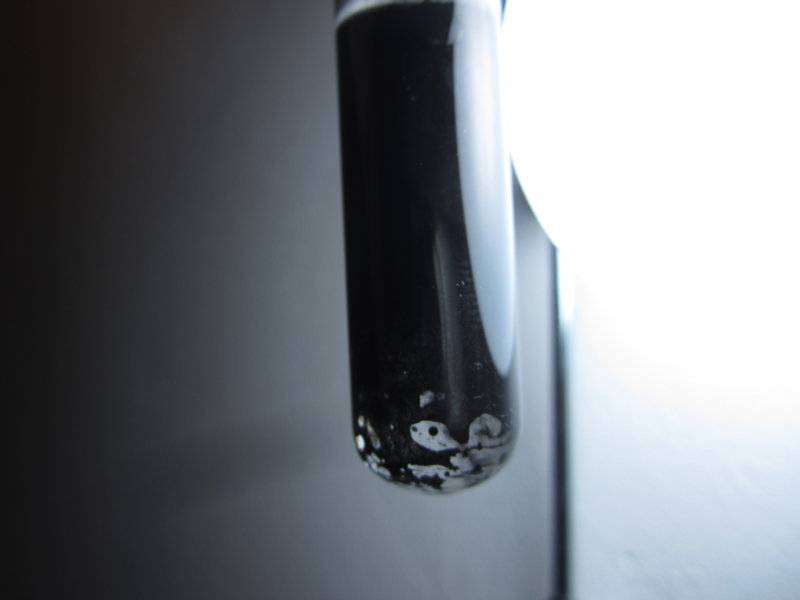
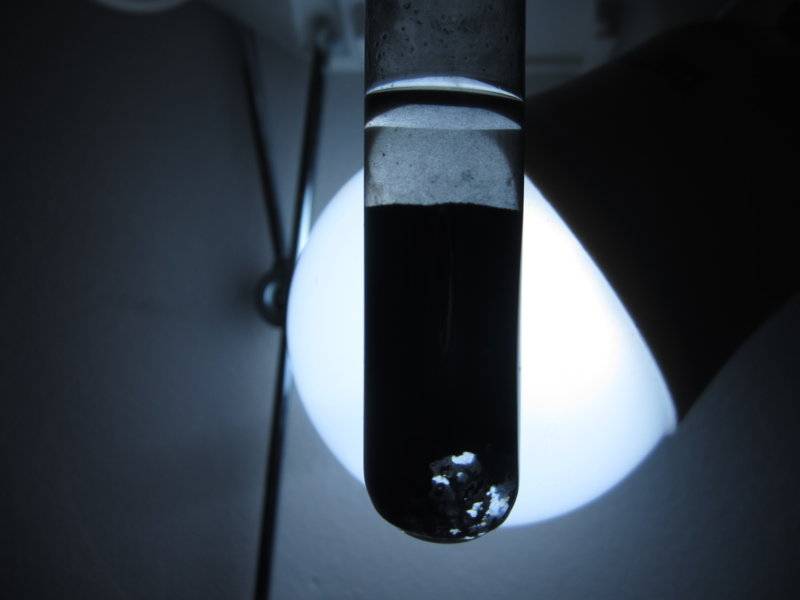
I saw this video for testing whether one has graphene or graphite and was wondering about the authenticity of the method. By mixing 50%h2o and 50%gasoline the graphene should separate/settle in between the two within a second after shaking. Here are some pictures of my own experiment before shaking and after shaking. My graphene comes from a reputable source in England. What does the community think? The gasoline settled on top of the water. VIDEO:
IMG_0338.JPG

After adding the graphene, graphene is settling in the gasoline after a minute.
IMG_0339.JPG

After shaking, graphene seems to mix but bottom of the test tube is transparent which tells that the graphene is only stuck to the wall?
IMG_0347.JPG

After 20 minutes, graphene seems to be settling in the gasoline.
 

Attachments

  • IMG_0338.JPG
    IMG_0338.JPG
    20.5 KB · Views: 1,044
  • IMG_0339.JPG
    IMG_0339.JPG
    15.9 KB · Views: 947
  • IMG_0347.JPG
    IMG_0347.JPG
    21 KB · Views: 997
Last edited:
Chemistry news on Phys.org
My experiment compared to the video gave a much different result in my opinion. amount of graphene in this experiment is about 0,1g I also suspect the air in the test tube might be responsible for a different result than the video.
 
mjc123 said:
I read an article in The Times the other week saying that nobody is actually selling true graphene, even if they claim to be. I can't find it online, but there was this: https://blogs.sciencemag.org/pipeline/archives/2018/10/11/graphene-you-dont-get-what-you-pay-for

Yes, True graphene is one layer. There are companies making a few layered graphene and that´s good enough. My question is why i get a different result than the video, either what I have is far from graphene or the method is false or I made a mistake in my experiment, something I don't see nor understand.
 
The guy in the video has no idea what he's talking about. Raman does not give mixed results; it is definitive. The easiest and cheapest way to know if you got graphene is to put it on a glass slide and observe whether you're getting the 2.3% broadband optical absorbance that is characteristic of single layer graphene. Both vials in the video look like they're full of plain old powdered graphite (Graphite is gray and shiny; graphene dispersed in a solvent is very light gray, and even then it's a mixture of few-layer and multilayer). In fact, at the end of the video, the guy says that it's probably 20-50 layers, which is really just graphite. It's not a matter of getting close with graphene: single-layer graphene has a fundamentally different electronic structure from even bilayer graphene.
 
  • Like
Likes Magnetosphere
mjc123 said:
I read an article in The Times the other week saying that nobody is actually selling true graphene, even if they claim to be. I can't find it online, but there was this: https://blogs.sciencemag.org/pipeline/archives/2018/10/11/graphene-you-dont-get-what-you-pay-for
This is a known problem in the community. Graphene oxide is generally ok, but waaaaay overpriced (you can make it yourself in a few hours with sulfuric acid and permanganate). The CVD graphene for sale is usually garbage, which is surprising because it's not overwhelmingly difficult to make (in a lab; it would be quite challenging for a hobbyist--though I'm working on some atmospheric pressure methods now that a diligent hobbyist might be able to handle). I've never made the silicon carbide-derived graphene, but it's generally of lower quality than good CVD graphene and besides, there aren't really any good commercial sources of SiC graphene.
 
  • Like
Likes Magnetosphere
TeethWhitener said:
The guy in the video has no idea what he's talking about. Raman does not give mixed results; it is definitive. The easiest and cheapest way to know if you got graphene is to put it on a glass slide and observe whether you're getting the 2.3% broadband optical absorbance that is characteristic of single layer graphene. Both vials in the video look like they're full of plain old powdered graphite (Graphite is gray and shiny; graphene dispersed in a solvent is very light gray, and even then it's a mixture of few-layer and multilayer). In fact, at the end of the video, the guy says that it's probably 20-50 layers, which is really just graphite. It's not a matter of getting close with graphene: single-layer graphene has a fundamentally different electronic structure from even bilayer graphene.
Thanks for the input, interesting information regarding raman. When I speak of graphene I guess what I mean is a few layered graphite. None the less, the method he is mentioning does produce an interesting phenomena and there is a clear difference between his "graphene" and his graphite.
 
TeethWhitener said:
This is a known problem in the community. Graphene oxide is generally ok, but waaaaay overpriced (you can make it yourself in a few hours with sulfuric acid and permanganate). The CVD graphene for sale is usually garbage, which is surprising because it's not overwhelmingly difficult to make (in a lab; it would be quite challenging for a hobbyist--though I'm working on some atmospheric pressure methods now that a diligent hobbyist might be able to handle). I've never made the silicon carbide-derived graphene, but it's generally of lower quality than good CVD graphene and besides, there aren't really any good commercial sources of SiC graphene.

Have you seen Robert Murrays videos on making graphene? He first exfoliates grafoil and then sonicates it. I have tried it myself and I got what looked like graphite "graphene" nano particles that behaved and looked much different than before sonication. Anyway, the method in the video, is it viable?
 
Magnetosphere said:
Have you seen Robert Murrays videos on making graphene? He first exfoliates grafoil and then sonicates it. I have tried it myself and I got what looked like graphite "graphene" nano particles that behaved and looked much different than before sonication. Anyway, the method in the video, is it viable?
Sonication in a well-chosen solvent is an established way of getting few-to-single layer graphene. Jonathan Coleman's group at Trinity College Dublin did the pioneering work on this about 10 years ago:
https://www.nature.com/articles/nnano.2008.215
I've done it myself: take a small amount of graphite and sonicate it for a few hours in NMP or DMF. You get a reasonable fraction of single layer graphene, but there's still a mixture. Other folks chemically intercalate species between the graphene layers to expedite exfoliation (this can be done with a number of other 2D materials as well). This usually works better, and it has the added bonus that, if you choose your intercalation conditions wisely, you can preferentially get monolayer, bilayer, trilayer, etc. Michael Strano's group at MIT did some work in this area:
https://www.nature.com/articles/nnano.2011.94
 
  • Like
Likes jim mcnamara
  • #10
Magnetosphere said:
When I speak of graphene I guess what I mean is a few layered graphite. .

Once you get to a "few layers" is it is pretty much just graphite and will have none of the interesting properties of graphene. For most applications you really do need single (mostly) layer graphene with maybe some fraction of two-layers.
There are various ways of checking if it is really is graphene, but none of them are -AFAIK- done using chemical methods; you really do need some form of specroscopy (Raman) or possible SPM (e.g. STM).
 

Similar threads

  • · Replies 5 ·
Replies
5
Views
8K
Replies
9
Views
5K
Replies
6
Views
2K
  • · Replies 32 ·
2
Replies
32
Views
9K
Replies
1
Views
3K
  • · Replies 7 ·
Replies
7
Views
2K
  • · Replies 2 ·
Replies
2
Views
15K
  • · Replies 1 ·
Replies
1
Views
4K
  • · Replies 2 ·
Replies
2
Views
5K
  • · Replies 1 ·
Replies
1
Views
4K