Solving Retaining Wall Problem with No Math/Engineering Knowledge

  • Thread starter Thread starter biggcheese
  • Start date Start date
  • Tags Tags
    Wall
Click For Summary
A user is constructing a round retaining wall on a slope using stackable bricks and seeks advice on ensuring the wall forms a proper circle. The discussion emphasizes the importance of avoiding cumulative errors by using a central rod and a level to maintain consistent spacing while laying the bricks. A garden hose can serve as a guide for the outer diameter, helping to keep the layout accurate. Proper preparation with gravel and drainage is also highlighted as crucial for the wall's longevity. Overall, practical techniques are shared to assist those without engineering knowledge in achieving a successful build.
biggcheese
Messages
2
Reaction score
0
I know nothing about math/engineering, so I apologize if this isn't the proper place to post this question. Maybe I should be in a builder's forum or something. :confused: Anyways...

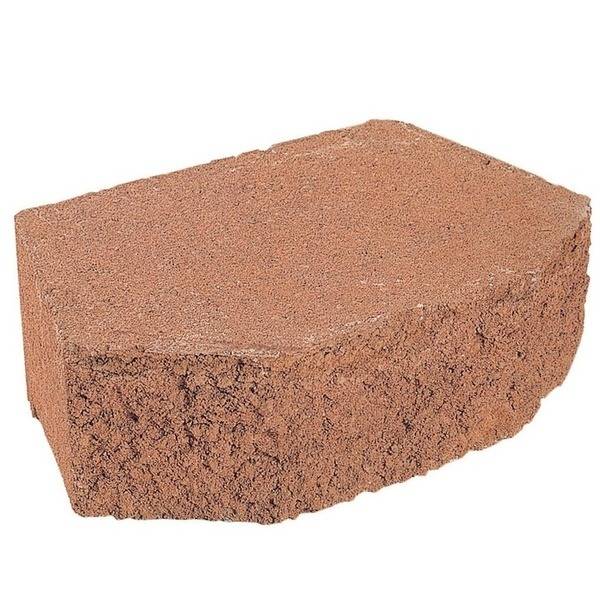
I'm building a round retaining wall on a slope at the corner of my house. I'm using stackable bricks that look like this:
000001015348.jpg


The dimensions of the brick are 12" W (at the widest point) x 4" H x 8" D. The backside of the brick is 9" W and it's 8" along the side from front to back.

Since I'm building on a slope, I have to step the bricks up 4 bricks high from the lowest point to ground level at the top, kind of like this:

http://www.wieserconcrete.com/images/evergreen_3.jpg

I want the top row to be 10' ft. in diameter and since the bricks stack with a 1" lip in the back, the bottom row will be 10'3" in diameter.

Since the bricks are conforming to a circle of my own dimensions, they will only touch at the widest point, leaving a wedge shaped gap between each brick. Given the size and shape of the bricks, how can I determine the space between the back of each brick to insure that it forms a 10'3" circle?
 
Last edited by a moderator:
Engineering news on Phys.org
biggcheese - in my first drafting class we went over cumulative error - its the idea of one error added to another and so on. After a while, a small error becomes much bigger. Simply looking at the gap at the back of the block means you're likely to end up with a problem, and you're complicating manual labor too.

Instead, drive a rod into the ground at the center of the circle you want. Drill a hole in a 2x4 to put on the rod and another hole at the radius you desire (say 5' 1.5"). Attach a small level to the 2x4 to keep it level. Then use a plum bob suspended from the hole representing the outside radius and lay out a piece of garden hose on the ground representing the outside of the circle. Now you can lay the blocks in place against the hose, first row done! And if the hose is 1" in diameter you can use it as a spacer for each consecutive layer.

KISS (Keep It Simple Sam)

Hope you prepped things well with gravel and drainage and have sand to fill the gaps between the blocks, it'll make it season much better.
 
Thanks Cliff.

Maybe I'm becoming over-cautious because I've had to redo the job twice and still didn't get it right. I like the idea of the plumb line and the hose, I think that will help a lot. I guess if I can keep the outside diameter even, the gap will take care of itself.

I'm going to lay the bricks out on the driveway and see how the circle works out there, and then I'll try laying the bricks into the slope with the level and plumb line. Thanks a lot for your help!
 
No problem. Check out the show "Ask This Old House" on PBS from time to time. They address emailed questions on topics from wallpaper or window replacement to plumbing and landscaping.

For putting in a retaining wall or even just pavers, the landscaping guy went into a lot of emphasis on prepping the foundation with gravel and compacting before laying the block. After watching it, it makes sense why landscape pavers I've put down a few years ago didn't turn out 100% either. :smile:
 
Hii I think Cliff has replied very smartly.I think too like that to solve the Bigcheese's Problem.
 
What mathematics software should engineering students use? Is it correct that much of the engineering industry relies on MATLAB, making it the tool many graduates will encounter in professional settings? How does SageMath compare? It is a free package that supports both numerical and symbolic computation and can be installed on various platforms. Could it become more widely used because it is freely available? I am an academic who has taught engineering mathematics, and taught the...

Similar threads

Replies
3
Views
2K
  • · Replies 11 ·
Replies
11
Views
11K
  • · Replies 2 ·
Replies
2
Views
2K
Replies
5
Views
3K
Replies
10
Views
3K
  • · Replies 38 ·
2
Replies
38
Views
7K
  • · Replies 26 ·
Replies
26
Views
6K
Replies
4
Views
2K
  • · Replies 5 ·
Replies
5
Views
2K
  • · Replies 6 ·
Replies
6
Views
2K