Chemistry Stability of the derivatives of cyclopropyl methyl carbocation

Click For Summary
Cyclopropyl methyl carbocation is known for its exceptional stability due to "dancing resonance," a phenomenon arising from the strain in the cyclopropyl ring and the vacant p orbital of the adjacent carbon. This stability is attributed to sigma resonance, where the cyclopropane C-C bonds interact with the empty p-orbital of the methyl cation. The discussion also touches on the cyclopropyl cyclopentane carbocation, suggesting it may exhibit similar stability, though some uncertainty remains regarding potential rearrangements. In contrast, the cyclobutyl/cyclopropyl cation is noted to be unstable and complex, with references indicating it behaves unpredictably. Overall, the stability of these carbocations is a key focus, highlighting the unique interactions within their structures.
Physics lover
Messages
249
Reaction score
25
Homework Statement
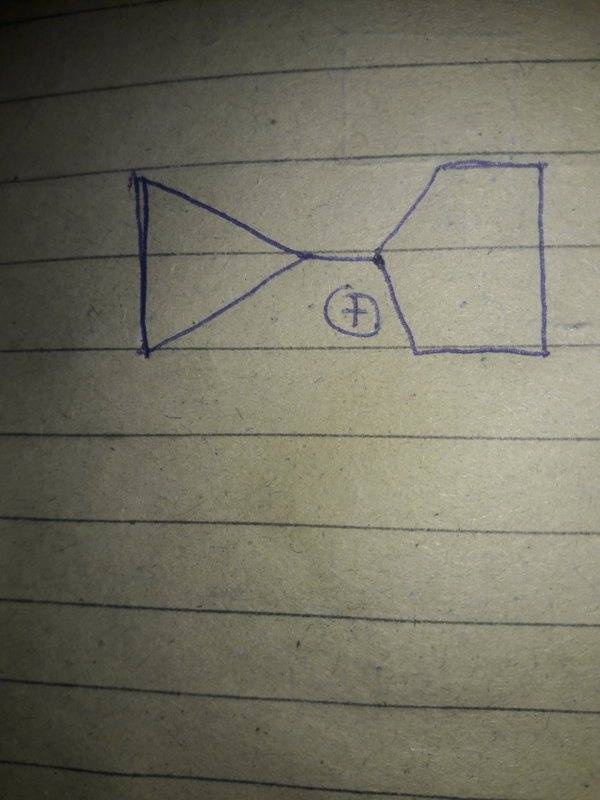
Is cyclopropyl cyclopentane carbocation also exceptionally stable or not?Give reason for you answer.
Relevant Equations
N/A
Here is an image of the structure
1587701886062-1365919611.jpg


I know that cyclopropyl methyl carbocation is exceptionally stable due to an effect so called dancing resonance which takes place because of lot of strain in cyclopropyl ring and vacant p orbital of Carbon attached with the ring.
So I think this is a similar situation as vacant p orbital of carbon which has positive charge attached with cyclopropyl ring has its vacant p orbital perpendicular to bonding orbital.So dancing resonance can take place here.So it should also be exceptionally stable.I don't know the answer.Am I correct?
 
Physics news on Phys.org
Physics lover said:
Homework Statement:: Is cyclopropyl cyclopentane carbocation also exceptionally stable or not?Give reason for you answer.
Relevant Equations:: N/A

Here is an image of the structure
View attachment 261298

I know that cyclopropyl methyl carbocation is exceptionally stable due to an effect so called dancing resonance which takes place because of lot of strain in cyclopropyl ring and vacant p orbital of Carbon attached with the ring.
So I think this is a similar situation as vacant p orbital of carbon which has positive charge attached with cyclopropyl ring has its vacant p orbital perpendicular to bonding orbital.So dancing resonance can take place here.So it should also be exceptionally stable.I don't know the answer.Am I correct?
Did anyone else tried it?
 
I think you’re probably right. I haven’t looked at the cyclopropyl cyclopentane cation specifically (i.e., there may be a weird rearrangement that I’m missing), but most substituted methylcyclopropyl cations are anomalously stable because of sigma resonance (cyclopropane C-C bonds donating into the empty p-orbital on the methyl cation). I don’t immediately see why this particular one would be different.
 
  • Like
  • Informative
Likes etotheipi and Physics lover
Poked around a little more and found a few references to that molecule specifically:
Review article by Olah, et al.
Original article cited by above
It behaves as expected (enhanced stability, bisected geometry, etc).

Edit: the cyclobutyl/cyclopropyl cation, on the other hand, is apparently a big mess.
 
TeethWhitener said:
Poked around a little more and found a few references to that molecule specifically:
Review article by Olah, et al.
Original article cited by above
It behaves as expected (enhanced stability, bisected geometry, etc).

Edit: the cyclobutyl/cyclopropyl cation, on the other hand, is apparently a big mess.
Thanks for that article.But I didn't understood why cyclobutyl/cyclopropyl cation is a mess.
 

Similar threads

  • · Replies 2 ·
Replies
2
Views
2K
  • · Replies 1 ·
Replies
1
Views
5K
  • · Replies 3 ·
Replies
3
Views
2K
  • · Replies 5 ·
Replies
5
Views
10K
  • · Replies 1 ·
Replies
1
Views
2K
  • · Replies 3 ·
Replies
3
Views
8K
  • · Replies 21 ·
Replies
21
Views
5K
  • · Replies 11 ·
Replies
11
Views
11K
  • · Replies 6 ·
Replies
6
Views
4K
  • · Replies 3 ·
Replies
3
Views
5K