Statics, Finding Reaction forces for A and H

6 replies · 4K views · last reply
Stedevin
Messages
3
Reaction score
1
Homework Statement
1. Find the reaction forces from the walls at points A and H.
Relevant Equations
Sum of the forces and moments are equal to zero.
Structural diagram of a multi-member frame: beam ABCD with a sinusoidal distributed load f(x) over A to B, point moment M at C, bent bar EDFG with a 30 degree bend at D, a 45 degree inclined bar GH, a rope at F with force P at E, dimensions 6 m, 2 m, 2 m, 1 m, 4 m, 4 m and 5 m, and supports at A, H and G.

I would like some help with the first part of this problem. I have calculated the distributed load to be 3.82kN down as the integral of f(x) from 0 to 6 gave me that value. I found it to be 3m to the right of A as well.
Definite integral from 0 to 6 of sin(πx/6) dx, written as an expression with no evaluated result shown.
Typeset expression: (-6 cos(pi)) / pi minus (-6 cos(0)) / pi, followed by an equals sign with the result left blank.
Handwritten value 3.82 kN, with kN underlined in red.


As such based on an analysis beam ABCD I calculated A(y) to be 3.67kN based on the sum of the moments at D and D(y) to be 0.15kN based on the sum of the forces in the y-direction of beam ABCD.


It is at this point I am stuck. I tried to use my calculation of D(y) on beam EDFG to determine a pair of equations to find D(x) and F(T) based on the moment about G of beam EDFG. As well as the sum of the moment about H of the whole system. However, I could not make this work.
Any idea of how to move forward?
 
Attachments
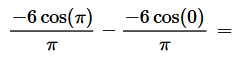
  • Equation: (-6 cos(pi)) / pi - (-6 cos(0)) / pi =
    1733693641486.png
    3.5 KB · Views: 117
@Lnewqban I have I haven't submitted them here because I have really messy handwriting and my drawing aren't very good.

Right now I'm just having trouble with transitioning from member ABCD to EDFG. I have the vertical force D(y) =0.15kN for joint D but I can't find the equations even with the free body diagrams for ABCD, EDFG, and GH. As mentioned in my post I tried using the sum of the moment for point G of individual armature EDFG and pairing that with the equation for the sum of the moment about H for the whole system. However I couldn't get that to work out. Any answer I got from that system of equations was incorrect with basic equations such as the sum of the forces in the x-direction wouldn't be equal to 0.
 
@Lnewqban Here is a recreation more or less of my FBD in paint. Sorry for the low quality I just don't have any software.
Entire System:

Free-body diagram of a rigid frame: a horizontal member with reactions A(x) and A(y) at the left end, a downward force F(x) and a moment M marked in red, and a bent member on the right with force F(T) pointing up, reactions H(x) and H(y) at the right end, and a force P pointing left.

Member ABCD:
Free-body diagram of a horizontal beam drawn in black, with a downward force F(x) near the left third, an upward reaction A(y) and a horizontal reaction A(x) at the left end, a moment M shown as a red curved arrow at the right, and a horizontal reaction D(x) with a vertical reaction D(y) at the right end.

Member EDFG:
Free-body diagram of a bent structural member with arrows labelled D(x), D(y), F(T), G(x), G(y) and P, showing applied forces and reactions at joints.

Member GH:
Free-body diagram of a bent rigid member drawn in black, with force arrows labeled G(x) and G(y) at the upper-left end, H(y) pointing upward and H(x) pointing left at the lower-right end.
 
Stedevin said:
@Lnewqban I have I haven't submitted them here because I have really messy handwriting...
For posting equations, we prefer that you use the LaTeX software.
When you're typing any post here, you can see a link to our tutorial in the lower left corner of the typing box named LaTeX Guide.
This is a good place to start for getting familiar with LaTeX.
 
Consider F as a fixed pivot (restricting any vertical movement of point F), and member GH working under pure compression load (otherwise, it would swing about pivot H).
Note that member AD is restricting any horizontal movement of point D of member EG.