Thermodynamic Steam Trap; Pressure needed to Drive

Click For Summary
SUMMARY

A typical thermodynamic steam trap requires a differential pressure of at least 100 mmHg (0.13 bar) to effectively discharge condensate, even when draining from a vacuum of 310 mmHg abs to a receiving vessel at 210 mmHg abs. The discussion highlights that while a 100 mmHg delta P is sufficient for a small 1/2" trap discharging approximately 100 to 250 liters per hour, considerations regarding elevation differences are crucial. For low-temperature applications, float or inverted-bucket traps are recommended over thermostatic types due to their more reliable performance under these conditions. Consulting with representatives from Armstrong or Sarco is advised for specific requirements and specifications.

PREREQUISITES
  • Understanding of thermodynamic steam traps and their operational principles
  • Knowledge of differential pressure calculations in steam systems
  • Familiarity with vacuum systems and their pressure measurements
  • Basic concepts of condensate drainage and flow rates
NEXT STEPS
  • Research the specifications of Armstrong and Sarco steam traps for differential pressure requirements
  • Learn about the performance characteristics of float and inverted-bucket steam traps
  • Investigate the impact of elevation differences on condensate drainage in steam systems
  • Explore the advantages and disadvantages of various steam trap types in low-temperature applications
USEFUL FOR

Engineers, maintenance personnel, and system designers involved in steam system management, particularly those focused on condensate drainage and pressure management in vacuum applications.

rollingstein
Messages
644
Reaction score
16
How much of a differential pressure does a typical thermodynamic steam trap need to discharge condensate?

i.e. Say one needs to drain condensate from a shell under vacuum 310 mmHg abs, would a thermodynamic steam trap work correctly if I connected the discharge pipe to a vessel maintained at 210 mmHg abs i.e. A differential pressure of 100 mmHg i.e. 0.13 bar.

This is a small 1/2" trap & the expected condensate isn't much. Approx. 100 to 250 Litres / hour. The discharge piping is very short (say 6 feet long) since the vessel is very close to the trap.

An image of the trap type just for context.
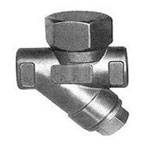
f-s-thermodynamic-steam-trap_1.jpg
 
Last edited:
Engineering news on Phys.org
Not much delta-P is needed; however, you're indicating a higher pressure in the receiving vessel?
 
insightful said:
Not much delta-P is needed; however, you're indicating a higher pressure in the receiving vessel?

Arrgh! My bad. Messed up my spreadsheet. I've corrected the numbers now.

And indeed I'm having a lower pressure in the receiving vessel. i.e. A higher vacuum in the receiving vessel.

So, you think with just a 100 mmHg delta P the typical steam trap would drain condensate correctly? That would be awesome for my purposes. I was worried about having to mess around with the more complex and expensive "pumping steam traps".

zzzz576.gif
 
Last edited:
Well, 100mmHg is only about 4.5 ft of head so you'd have to make sure your elevation differences don't cause a problem. As usual, the final answer should come from your Armstrong or Sarco rep.
 
insightful said:
As usual, the final answer should come from your Armstrong or Sarco rep.

Any idea if they note the differential head needed on the trap spec sheets? I couldn't find it on any I have on file. Just wondering.

Also, among the various trap types any idea which one can do with the least head requirement? Are there big variations? Or not really.
 
rollingstein said:
Any idea if they note the differential head needed on the trap spec sheets? I couldn't find it on any I have on file. Just wondering.

Also, among the various trap types any idea which one can do with the least head requirement? Are there big variations? Or not really.
I'm going to back-peddle. Your vacuum application and subsequent low temperatures might not work with thermostatic types. Float or inverted-bucket types are more positive-acting for these conditions. Yeah, the web sites talk about "up to" capacities but no curves. Talk to a rep.
 

Similar threads

Replies
1
Views
2K
Replies
25
Views
4K
  • · Replies 3 ·
Replies
3
Views
3K
  • · Replies 11 ·
Replies
11
Views
4K
  • · Replies 10 ·
Replies
10
Views
11K
  • · Replies 7 ·
Replies
7
Views
3K
  • · Replies 26 ·
Replies
26
Views
4K
  • · Replies 3 ·
Replies
3
Views
2K
Replies
2
Views
3K
Replies
1
Views
4K