Two mirrors to focus sunrays into a tiny spot -- possible?

Click For Summary
SUMMARY

The discussion centers on the feasibility of using two parabolic mirrors to focus sunlight into a small area for melting sand, inspired by Markus Kayser's Solar Sinter Project. Participants agree that while a fresnel lens is effective, a parabolic mirror setup can also achieve sufficient temperatures for melting sand. Key considerations include the need for sun tracking, proper insulation with refractory materials, and the potential dangers of high temperatures. Participants suggest using old telescopes or microwave dishes as viable reflective surfaces for this DIY project.

PREREQUISITES
  • Understanding of parabolic and concave mirror principles
  • Familiarity with solar energy concentration techniques
  • Knowledge of refractory materials for insulation
  • Experience with DIY projects involving optics and reflective surfaces
NEXT STEPS
  • Research the construction and use of parabolic mirrors for solar applications
  • Learn about sun tracking mechanisms for solar concentrators
  • Explore the properties and applications of refractory materials
  • Investigate DIY solar mirror projects using reflective materials like Mylar
USEFUL FOR

This discussion is beneficial for DIY enthusiasts, solar energy hobbyists, and anyone interested in experimental physics or solar thermal applications.

Nenad K
Messages
1
Reaction score
0
TL;DR
i would like to know if it is possible to use two parabolic or concave mirrors to reflect sunrays into tiny spot, to melt, for example, sand
Hi guys, i am Nenad Komjenović from Bosnia and Herzegovina, I am just a regular guy, who likes geeky stuff and i don't know physics, so i wanted to ask you guys for an opinion. I was inspired by the "Markus Kayser - Solar Sinter Project" Youtube video, in which the guy used fresnel lens to melt the sand :

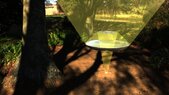
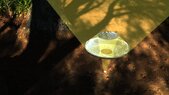
I attached two images i made, just to illustrate the idea. on the bottom there is concave ( or parabolic ? ) mirror that has a hole in the bottom so the rays that are reflected to mirror on the top can pass trough and reach the ground. Sorry for my terminology and my English, i am not an english native speaker nor a physicist haha
 

Attachments

  • 1.jpg
    1.jpg
    42.3 KB · Views: 170
  • 2.jpg
    2.jpg
    47.7 KB · Views: 191
Science news on Phys.org
Yes, that should be possible. The melting temperature of sand is much lower than the temperature of the sun. So in principle you could focus sunlight enough to melt sand.
 
Baluncore said:
as the image can be distorted.
The project win the video looks like good fun - 3D printing with a twist.

Distortion would not necessarily be a problem as long as the temperature on the focal spot is adequate. Some good insulation would be necessary (appropriate refractory material). The actual details are quite important - how much local power is needed? His printing system relies on the insulation of the surrounding sand to allow his target spot actually to melt. A good insulating / refractory container could allow you melt a test sample easier.

I looked at the video and it seems to me that he chose a fresnel lens which is probably the only thing big enough to provide enough power for his project. If you are just after enough power to melt some sand then you could probably get away with a smaller focussing device. I think there would be no need to go for your proposal ( basically a Cassegrain system?). A Cassegrain reflector pair of adequate size could be harder to come by than a straight parabolic one. There are many old Newtonian telescopes around that will never work for astronomy again but you could probably get a 300mm diameter (parabolic) reflector from eBay pretty cheaply. That should yield something like 90W, which would be less power than his fresnel lens (several hundred Watts. A good plane mirror secondary reflector could direct the beam to fire down into a tray of sand.

I'd be inclined to locate an old Overhead Projector and try the lens in that. That guy knew what he was doing!
 
Optical perfection at IR wavelengths is not required. I would try an old parabolic microwave dish, coated with a layer of aluminium foil. A pressed or spun aluminium dish could be polished. The accuracy of a microwave dish will be close enough for the size of the oven or crucible placed at the focal point.
 
Baluncore said:
Optical perfection at IR wavelengths is not required. I would try an old parabolic microwave dish, coated with a layer of aluminium foil. A pressed or spun aluminium dish could be polished. The accuracy of a microwave dish will be close enough for the size of the oven or crucible placed at the focal point.
I used an 'expensive' 700mm paraboloid from a ,microwave link and coated it with kitchen foil. The foil was well rolled onto the surface and produced a minimum sized solar image of perhaps a cm at the focus. It would boil a blackened can of water very fast but, of course, I didn't need a small spot / high temperature. Squeezing enough Watts into a suitable small area for melting could be demanding. It was a school demonstration and I didn't develop it further. I would imagine that total area and insolation would be critical for enough power input to melt sand. That video is at a very sunny location so that sort of justifies my opinion.

This is definitely a fun project for a DIYer who's prepared to try many different approaches. In the UK, you'd have to wait a long time to get serious levels of sunlight, I reckon. The numbers definitely count in this one.
 
Nenad K said:
TL;DR Summary: i would like to know if it is possible to use two parabolic or concave mirrors to reflect sunrays into tiny spot (...)
Please just remember that the device can be potentially dangerous; the larger the area of the first (bigger) mirror is, the more power the device will utilize.

If the device will be able to melt sand, it will also easily be able to ignite paper, wood etc, and burn flesh. :wink:

(see also https://en.wikipedia.org/wiki/Solar_mirror)

Edit: I have seen DIY videos on youtube where people have built quite powerful solar mirrors (parabolic) by attaching various reflective materials (e.g. Mylar blankets) on satellite dishes (which were parabolic).
 
Last edited: