Understanding induction proof of pigeonhole principle

Mathmellow
Messages
7
Reaction score
0
I am struggling to understand the induction proof of the pigeonhole principle in my textbook. The theorem and the proof, from Biggs Discrete Mathematics, is pasted below, and I will explain further (see bold text) what I am having trouble with.

Theorem. Let m be a natural number. Then the following statement is true for every natural number n: if there is an injection from $$\Bbb{N}_n$$ to $$\Bbb{N}_m$$, then $$n\leq m$$.

Proof. We use the principle of induction.
The statement is true when $$n=1$$, since $$1\leq m$$ for any natural number m.
The induction hypothesis is that the statement is true when n takes a specific value $$k\ge 1$$. We have to deduce that it is true when $$n=k+1$$.
Suppose that $$j:\Bbb{N}_{k+1}\to\Bbb{N}_m$$ is an injection. Since $$k+1\geq 2$$, it follows (from the definition of an injection) that m cannot be 1. So $$m=s+1$$, for some natural number s. In order to show that $$k+1\leq m=s+1$$, we construct an injection $$j^*:\Bbb{N}_k\to\Bbb{N}_s$$, and use the induction hypothesis to conclude that $$k\leq s$$.
There are two cases.

Case 1: Suppose that $$j(x)\neq s+1$$ for all $$x\in \Bbb{N}_k$$. Then we let $$j^*$$ be the injection defined by $$j^*(x)=j(x)$$, for all $$x\in\Bbb{N}_k$$.
What do they mean by this step? What are they accomplishing by defining the injection $$j^*(x)=j(x)$$, and what exactly do they mean by $$j(x)\neq s+1$$?

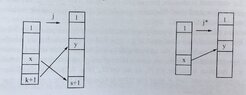
Case 2: (See figure below) Suppose that there is an $$x\in\Bbb{N}_k$$ such that $$j(x)=s+1$$.
Then $$j(k+1)=y$$, where (since j is an injection) $$y\neq s+1$$. In this case define $$j^*$$ as follows: $$j^*(x)=y,\quad j^*(z)=j(z) (z\neq x)$$.
It is easy to check that $$j^*$$ is an injection.
View attachment 8180
Again, I am having problems understanding this case. I would appreciate if someone could explain this, as well as the previous step more thoroughly.
Thanks in advance!
 

Attachments

  • IMG_5444.JPG
    IMG_5444.JPG
    11.7 KB · Views: 182
on Phys.org
Mathmellow said:
what exactly do they mean by $j(x)\ne s+1$?
Well, to be honest, this question is strange. In mathematics, any two objects, including numbers, are either equal or not equal. In this case, $j(x)$ and $s+1$ are either the same number, or they are two different numbers. So one has the right two consider two cases in a proof: $j(x)=s+1$ and $j(x)\ne s+1$. In both cases one has to prove the same thing. It is similar to the following reasoning: If it rains tomorrow, I won't go to the park. If it doesn't rain, I won't go to the park, either. Therefore, I won't go there, period. To be more precise we are not considering a specific $x$, but rather the following cases: (1) $j(x)\ne s+1$ for all $1\le x\le k$ and (2) $j(x)= s+1$ for some $1\le x\le k$. I assume you understand all this.

If $j(x)\ne s+1$ for all $1\le x\le k$, then we have the right to appeal to the induction hypothesis for the initial portion of the function $j$, i.e., for $j$ restricted to the set $\mathbb{N}_k=\{1,\ldots,k\}$. That is, we throw away the value of $j$ at $k+1$. In the proof this portion is denoted by $j^*$. On the domain $\mathbb{N}_k$ the values of $j$ lie in $\mathbb{N}_s$. Indeed, they lie in $\mathbb{N}_m=\mathbb{N}_{s+1}$, but the value $s+1$ is never taken: that's the assumption in the first sentence of this paragraph. The restriction of $j$ to $\mathbb{N}_k$ is still an injection, so the induction hypothesis concludes that $k\le s$, which implies $k+1\le s+1=m$.

I have a small complaint about the way the induction statement is apparently stated in the book. By induction statement I mean the property of $n$ that is being proved by induction. Judging by the theorem, the statement is
\[
\forall j:\mathbb{N}_n\to \mathbb{N}_m.\,j\text{ is an injection}\implies n\le m.
\]
It looks like $m$ is a parameter here, i.e., $m$ is fixed for the duration of the proof. This is not the case. The correct induction statement is
\[
\forall m\,\forall j:\mathbb{N}_n\to \mathbb{N}_m.\,j\text{ is an injection}\implies n\le m.
\]
That is, if in the induction step we have to conclude that $k+1\le m$ if $j:\mathbb{N}_{k+1}\to \mathbb{N}_m$ is an injection, we can manufacture an injection $j^*:\mathbb{N}_k\to \mathbb{N}_s$ for any $s$, not necessarily for $s=m$, and the induction hypothesis guarantees that $k\le s$. This is what we have done above when we took the restriction $j^*$ of $j$ to $\mathbb{N}_k$: we have $j^*:\mathbb{N}_k\to \mathbb{N}_s$ where $m=s+1$. By the hypothesis $k\le s$, so $k+1\le s+1=m$, as required.

Let's get back to the second case. If $j(x)= s+1=m$ for some $1\le x\le k$, then we can't apply the induction hypothesis to the restriction $j^*$ of $j$ to $\mathbb{N}_k$. Or, rather, we can, and $j^*$ is still an injection, but it maps $\mathbb{N}_k$ to $\mathbb{N}_m$. Therefore the induction hypothesis is only able to guarantee that $k\le m$. We can't conclude from there that $k+1\le m$. So we consider a different $j^*$:
\[
j^*(z)=
\begin{cases}
j(k+1),&z=x\\
j(z),&z\ne x
\end{cases}.
\]
Since $j$ is an injection, $j(k+1)\ne j(x)=s+1$ since $x\le k$. So $j(k+1)\le s$ (it cannot be greater that $s+1$ because $j:\mathbb{N}_{k+1}\to \mathbb{N}_{s+1}$, and it cannot be $s+1$ because $j(x)=s+1$). Similarly $j(z)\le s$ for $z\ne x$. Thus, $j^*:\mathbb{N}_k\to \mathbb{N}_s$ and $j^*$ is an injection. By induction hypothesis $k\le s$.
 
Evgeny.Makarov said:
To be more precise we are not considering a specific $x$, but rather the following cases: (1) $j(x)\ne s+1$ for all $1\le x\le k$ and (2) $j(x)= s+1$ for some $1\le x\le k$. I assume you understand all this.
Yes, of course. Thank you for the clarification though.

Evgeny.Makarov said:
If $j(x)\ne s+1$ for all $1\le x\le k$, then we have the right to appeal to the induction hypothesis for the initial portion of the function $j$, i.e., for $j$ restricted to the set $\mathbb{N}_k=\{1,\ldots,k\}$. That is, we throw away the value of $j$ at $k+1$. In the proof this portion is denoted by $j^*$. On the domain $\mathbb{N}_k$ the values of $j$ lie in $\mathbb{N}_s$. Indeed, they lie in $\mathbb{N}_m=\mathbb{N}_{s+1}$, but the value $s+1$ is never taken: that's the assumption in the first sentence of this paragraph. The restriction of $j$ to $\mathbb{N}_k$ is still an injection, so the induction hypothesis concludes that $k\le s$, which implies $k+1\le s+1=m$.
This just became so much clearer, I really did not understand what the point of $j^*$ really was.
Evgeny.Makarov said:
The correct induction statement is
\[
\forall m\,\forall j:\mathbb{N}_n\to \mathbb{N}_m.\,j\text{ is an injection}\implies n\le m.
\]
That is, if in the induction step we have to conclude that $k+1\le m$ if $j:\mathbb{N}_{k+1}\to \mathbb{N}_m$ is an injection, we can manufacture an injection $j^*:\mathbb{N}_k\to \mathbb{N}_s$ for any $s$, not necessarily for $s=m$, and the induction hypothesis guarantees that $k\le s$. This is what we have done above when we took the restriction $j^*$ of $j$ to $\mathbb{N}_k$: we have $j^*:\mathbb{N}_k\to \mathbb{N}_s$ where $m=s+1$. By the hypothesis $k\le s$, so $k+1\le s+1=m$, as required.
So if I understand you correctly, the proof would have been simpler if they had used this statement? Was it a mistake the author made?
Evgeny.Makarov said:
So we consider a different $j^*$:
\[
j^*(z)=
\begin{cases}
j(k+1),&z=x\\
j(z),&z\ne x
\end{cases}.
\]
Since $j$ is an injection, $j(k+1)\ne j(x)=s+1$ since $x\le k$. So $j(k+1)\le s$ (it cannot be greater that $s+1$ because $j:\mathbb{N}_{k+1}\to \mathbb{N}_{s+1}$, and it cannot be $s+1$ because $j(x)=s+1$). Similarly $j(z)\le s$ for $z\ne x$. Thus, $j^*:\mathbb{N}_k\to \mathbb{N}_s$ and $j^*$ is an injection. By induction hypothesis $k\le s$.
Thank you so much! The way you wrote this is so much clearer than my textbook. I think I finally understand this proof completely, I am not very familiar with induction proofs where functions are involved like this.
 
Mathmellow said:
So if I understand you correctly, the proof would have been simpler if they had used this statement?
The author never wrote the induction statement explicitly (at least the proof in post #1 does not have it), but he made a distinction between $m$ and $n$ as follows: "Let $m\in\mathbb{N}$. Then for every $n\in\mathbb{N}$...". This suggests that $m$ is supposed to be fixed throughout the proof and we are proving $P(n)$ for all $n$ where $P(n)$ is
\[
\forall j:\mathbb{N}_n\to \mathbb{N}_m.\,j\text{ is an injection}\implies n\le m.
\]
It's not that the proof is more complicated with such $P(n)$; the problem is that the induction does not go through. The induction statement must start with $\forall m$.

In general if one proves $\forall m\forall n\,Q(m,n)$ by induction on $n$, it is better to prove $\forall m\,Q(m,n)$ for all $n$ rather than fix $m$ and prove $Q(m,n)$ for all $n$ and that specific $m$. In the first approach the induction step is
\[
(\forall m\,Q(m,n))\to\forall m\,Q(m,n+1),
\]
and in the second one it is
\[
Q(m,n)\to Q(m,n+1).
\]
While there is less to prove with $Q(m,n+1)$ compared to $\forall m\,Q(m,n)$, the induction hypothesis is also weaker: for example, it does not allow using $Q(m-1,n)$ or $Q(m+1,n)$. However, this is a subtle point that many students and instructors skip over, and this is OK. It becomes important, for example, when one studies formal proofs in mathematical logic.
 
I will definitely keep this in mind, I have a course in formal logic that I am planning to take so it will probably come in handy.

Thank you for taking your time to respond to my questions! :D
 

Similar threads

  • · Replies 19 ·
Replies
19
Views
4K
  • · Replies 29 ·
Replies
29
Views
8K
  • · Replies 1 ·
Replies
1
Views
2K
Replies
2
Views
2K
  • · Replies 3 ·
Replies
3
Views
2K
  • · Replies 19 ·
Replies
19
Views
3K
  • · Replies 6 ·
Replies
6
Views
2K
  • · Replies 2 ·
Replies
2
Views
4K
  • · Replies 5 ·
Replies
5
Views
3K
  • · Replies 1 ·
Replies
1
Views
3K