Using nitric acid to dissolve brass

  • Thread starter Thread starter butterchimkin
  • Start date Start date
Click For Summary
SUMMARY

This discussion centers on using nitric acid to dissolve a stuck brass fuel/air mixture screw in an aluminum carburetor. The user, a motorcycle mechanic, sought advice after mechanical methods failed. Recommendations included safety precautions such as wearing gloves and goggles, using a glass pipette for acid transfer, and having water and baking soda ready for neutralization. The discussion also highlighted that while nitric acid can dissolve brass, it may react with aluminum oxide, complicating the process.

PREREQUISITES
  • Understanding of nitric acid handling and safety procedures
  • Basic knowledge of chemical reactions involving acids and metals
  • Familiarity with motorcycle carburetor components
  • Experience with mechanical extraction techniques
NEXT STEPS
  • Research nitric acid safety and disposal regulations in your area
  • Learn about the chemical properties of aluminum and brass interactions
  • Explore mechanical extraction techniques for small screws and pins
  • Investigate alternative methods for loosening stuck components, such as heat application
USEFUL FOR

This discussion is beneficial for motorcycle mechanics, DIY enthusiasts, and anyone dealing with stuck metal components in automotive applications, particularly those involving chemical solutions for removal.

butterchimkin
Messages
3
Reaction score
0
TL;DR
Safety advice for handling nitric acid.
Hello everyone. I’m a motorcycle mechanic working on a carburetor, and I was looking for advice.

To see pictures, scroll down.

I recently was working on a motorcycle, and there is a very fine brass needle called a fuel/air mixture screw that was tightened too much, and lodged in a tight airway.

The carburetor is made of aluminum. The airway is very tight, and there have been many mechanical solutions that I have tried, and none worked. I saw a solution that someone had using nitric acid to dissolve it on a motorcycle forum, and it worked for him.

I was wondering what are the safety procedures to doing something like this. How do I handle the acid, and how do I dispose of it once it’s done with?

Below I’ll attach links to the forum, and to the nitric acid that I ordered. My experience with chemistry is limited to a couple of classes in college.

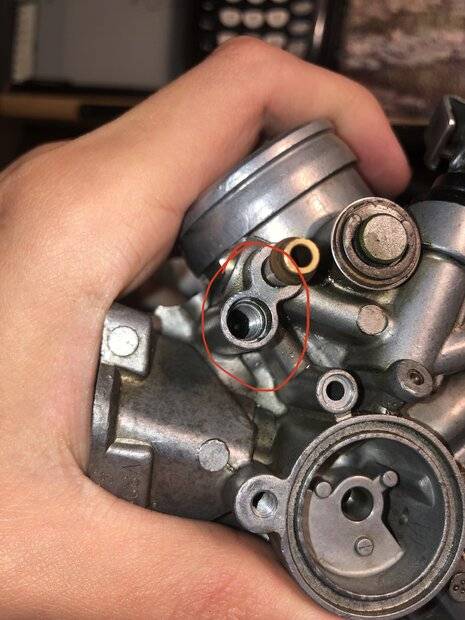
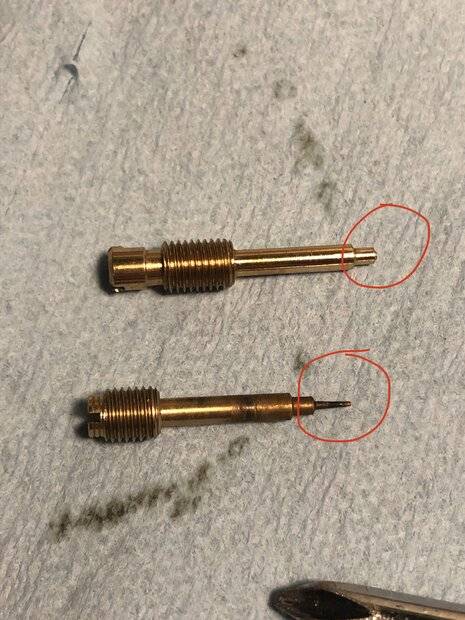
Here are pictures of the needle tip that broke off, and the passage that it’s in (which decreases in diameter about half).
IMG_4491.jpeg

IMG_4489.jpeg


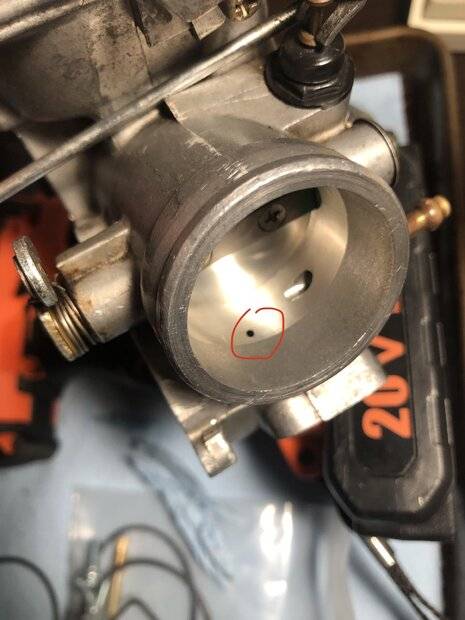
Here is the other side of the hole, which has a hard right turn into the brass needle about a quarter of an inch down.
IMG_4493.jpeg


Any advice is appreciated, thank you.
 
Chemistry news on Phys.org
One other thought I had was to use the liquid wrench and then use compressed air to push it back out of the hole if you can get the air into the space.

I've seen the mechanics trick of removing a stuck screw by drilling a small hole and using a screw extraction tool the extract it. However, I think in this case the pin is too small to do this and Im not sure using superglue to a rod and pressing it onto the pin would help but I mention it here in case you want to try.

 
Last edited:
Gloves, glasses, apron and do it outside (fumes are nasty). Transfer the acid with a glass pipette, have huge amounts of water to wash it out ready. I would put just a few drops on the dry part (dry to not dilute the acid), wait till I see it reacts (bubbling, if the bubbles are brown, that's great, if they are not, it is not brass that is getting dissolved), wash the acid out, dry the carburetor (even with a paper towel) and check if the needle can be removed. Repeat. Note: that's what I would try, it doesn't mean it will work, it doesn't mean it won't destroy the carburetor, it doesn't mean anything else but "that's the best procedure I can think of".

Disposal regulations can make the thing a nightmare, but they depend on where you live.

It is not as easy as "nitric acid doesn't dissolve aluminum" - in general it does. But aluminum in an oxidizing environment gets quickly covered with oxide which is highly resistant both chemically (at least to acids) and mechanically (think anodizing).
 
  • Informative
  • Like
Likes   Reactions: Nik_2213, symbolipoint, dlgoff and 5 others
You might also want to have some baking soda on hand, which can neutralize the acid. It will bubble and maybe splash as CO2 is made. You'll get Sodium Nitrate as the product. I would still use water too though.

NaHCO₃ + HNO₃ → NaNO₃ + H₂O + CO₂
 
  • Like
  • Informative
Likes   Reactions: Nik_2213, symbolipoint, jedishrfu and 1 other person
@butterchimkin, before attacking the carb with nitric acid I would see if a small drill bit could push the needle tip back out. I have a set of indexed drill bits, the smallest of which is #60, or 0.040". If the needle tip is larger than this, a gentle tap might dislodge the broken tip.
 
  • Like
Likes   Reactions: DaveE, Rive, Tom.G and 1 other person

Similar threads

  • · Replies 3 ·
Replies
3
Views
3K
  • · Replies 1 ·
Replies
1
Views
2K
  • · Replies 6 ·
Replies
6
Views
7K