Weirdest/things that blew your mind when you learned them
- Level: Graduate
- Thread starter s00mb
- Start date
-
- Tags
- Mind
Join the discussion
Registration is free. Start your own thread to ask a follow-up.
143 replies · 17K views
Mathematics news on Phys.org
DennisN
Gold Member
- 2,199
- 10,339
I actually have experienced that, but only once, even though I have cuddled a lot with my different cats through the years. I noticed the effect in the dark when I was touching one of my cats. There were small sparks appearing between my fingers and the fur of the cat. It was a very weird and very cool experience. I can't say why I experienced it only at that particular time.Keith_McClary said:
Keith_McClary
- 752
- 1,507
James Propp's blogIs there a way to pack more than 4 disks of diameter 1 into a 2-by-2 square?
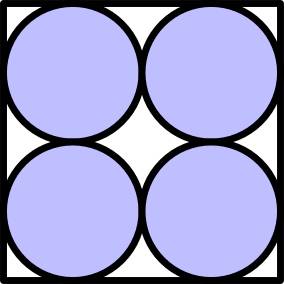
Obviously not. But is there a way to pack more than 4000 disks of diameter 1 into a 2-by-2000 rectangle?
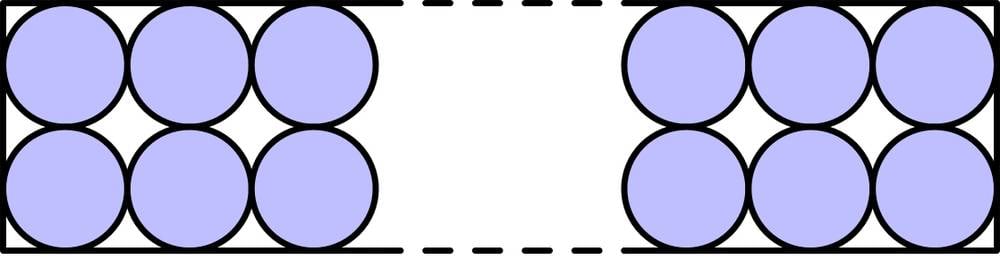
Again, obviously not — except that there is a way! (See my essay “Believe It, Then Don’t” for details.)
GJ Philp
For me it was when I read that Alfred North Whitehead took 600 pages to prove that 1 + 1 = 2, in his enlightenment-era maths text. The it blew again when Kurt Godel showed that nothing in maths can be proven, using his clever incompleteness theorem...s00mb said:Hi, I figured I'd make a thread about this. What really blew your mind when you learned it or what continues to blow your mind when you think about it? I like learning really obscure mind blowing things so I figured I'd ask others about this to get some new ideas. For me it was things like uncountable/different "sizes" of infinity in real analysis, time relativity (it still blows my mind knowing most people go their entire lives not knowing time is not absolute) and currently things like fractional calculus. I think finding out you can take any order derivatives "Abusing" gamma functions and using certain integrals was ingenious. What is yours?
Science Advisor
Gold Member
- 2,630
- 2,244
This is not even remotely what Gödel’s incompleteness theorem says. Why would you think that proving that nothing can be proven makes any sense whatsoever?GJ Philp said:For me it was when I read that Alfred North Whitehead took 600 pages to prove that 1 + 1 = 2, in his enlightenment-era maths text. The it blew again when Kurt Godel showed that nothing in maths can be proven, using his clever incompleteness theorem...
Science Advisor
Gold Member
- 2,630
- 2,244
Tomatoes and potatoes are also New World crops. In fact, tomatoes weren't a part of Italian cuisine at all until the late 1700s.Klystron said:After living and working in south Asia for years, I was astonished to learn that hot peppers (Capsicum) are indigenous to Central America and spread to Asia with the Columbian Exchange.
Hot peppers seem so essential to local cuisines and grow in such great variety in Asian agricultural regions such as the central basin in Thailand; one assumes chile peppers to be indigenous to the region or to have arrived with traders thousands, not hundreds, of years past. Live and learn, and enjoy those peppers.
sysprog
- 2,617
- 1,793
@Wes Tausend :  'escapement'
'escapement'
sysprog
- 2,617
- 1,793
Didn't Ludwig Wittgenstein (a guy whom Russell and Whitehead were ok with) explain numbers as definitional implying that 2+2=4 and show the proof and yeah he did it's in his TractatusTeethWhitener said:This is not even remotely what Gödel’s incompleteness theorem says. Why would you think that proving that nothing can be proven makes any sense whatsoever?
TaurusSteve
- 24
- 16
This! I'm learning new things every day!DennisN said:Same here.
Also, whenever I try to think of the stupendously large size of the Universe it blows my mind.
BWV
- 1,690
- 2,023
Having only a superficial understanding of both, how biology is so much more complex than any of the physical sciences.
sysprog
- 2,617
- 1,793
In my view, biology is part of physical sciences, just as org chem is part of p chem, and p chem is part of physics.BWV said:Having only a superficial understanding of both, how biology is so much more complex than any of the physical sciences.
Science Advisor
Gold Member
- 2,858
- 12,744
True.sysprog said:In my view, biology is part of physical sciences, just as org chem is part of p chem, and p chem is part of physics.
And each level generates greater complexity through interactions among the elements that exist in the other levels that they are built upon.
The complexity however is mostly studied at the level at which it is found.
Physicists study the complexity of physics, chemists study the complexity of chemistry, biology studies the complexity of biology, etc...
Keith_McClary
- 752
- 1,507
sysprog said:In my view, biology is part of physical sciences, just as org chem is part of p chem, and p chem is part of physics.
https://xkcd.com/435/
sysprog
- 2,617
- 1,793
Well, biology, physics, chemistry, whatever; I'm a boy person (old enough to have started to be in my 60s), and I think that (fully-grown) girls rule, wherefore, whatever they say, right?
BWV
- 1,690
- 2,023
Also the 90-95% population declines in the Americas from the introduction of European diseases. Most native Americans who died in this never saw a European, and when the Europeans did move inland, they thought they had found a pristine wilderness which in fact was just a result of the collapse of the indigenous populations that had actively managed the land for centuries.
sysprog
- 2,617
- 1,793
Really? They "managed the land for centuries"? That looks like 'noble savage' nonsense to me -- after they resorted to crossing the ice-age land bridge they maybe were hungry and didn't forget to extinctionate the wooly mammoth while they were on their way to the Southern end of the so-called 'Americas' -- what is now called Peru.BWV said:Also the 90-95% population declines in the Americas from the introduction of European diseases. Most native Americans who died in this never saw a European, and when the Europeans did move inland, they thought they had found a pristine wilderness which in fact was just a result of the collapse of the indigenous populations that had actively managed the land for centuries.
Keith_McClary
- 752
- 1,507
https://en.wikipedia.org/wiki/Fuegianssysprog said:Southern end of the so-called 'Americas' -- what is now called Peru.
BWV
- 1,690
- 2,023
It’s science, nothing else. Looks like you maybe are the one with an agendasysprog said:Really? They "managed the land for centuries"? That looks like 'noble savage' nonsense to me -- after they resorted to crossing the ice-age land bridge they maybe were hungry and didn't forget to extinctionate the wooly mammoth while they were on their way to the Southern end of the so-called 'Americas' -- what is now called Peru.
https://www.theatlantic.com/magazine/archive/2002/03/the-pristine-myth/303062/
https://www.sciencedaily.com/releases/2011/03/110321134617.htm
Mentor
- 11,171
- 4,018
By simply using Euler's formula how easily the formula for capacitors, inductors, resonance etc is explained. Then came the granddaddy of them all - Noether's Theorem - that is just so beautiful, but strange, and the most convincing evidence I know of that god (however you conceive of him/her) exists. At first I was amazed at Godel's Theorem, but later understood it was just Cantors diagonal argument in disguise - a tricky use of it - yes - but it's still the crux:
http://www.math.hawaii.edu/~dale/godel/godel.html
Thanks
Bill
http://www.math.hawaii.edu/~dale/godel/godel.html
Thanks
Bill
- 2,009
- 989
That phase velocity can travel much faster than the "thing" (wave, particle beam, etc) that created it - for example, an electron beam trace on a Cathode Ray Tube can "travel" faster than light! Yet nothing is violated.
Gyroscopic precession took me awhile to wrap my head around.
Gyroscopic precession took me awhile to wrap my head around.
Science Advisor
Homework Helper
- 3,448
- 3,757
scottdave said:Gyroscopic precession took me awhile to wrap my head around.
(Source: https://xkcd.com/332/)
NTL2009
- 637
- 393
scottdave said:... Gyroscopic precession took me awhile to wrap my head around.
I'm not a physicist, and until this moment I hadn't realized that I never really thought about the why/how of a gyroscope. I've only understood that it does what it does (like gravity).
I'm afraid I might hurt my brain if I tried, so I'll go on with life just admiring it. If one day, one of my grand-kids ask "Why", maybe I'll have him/her post here!
Science Advisor
Homework Helper
- 3,448
- 3,757
Years ago I bought a book on Lagrangian mechanics specifically because I was interested in wrapping my head around gyroscopes. It didn't necessarily work, but it did get me to appreciate Lagrangian mechanics.NTL2009 said:I'm not a physicist, and until this moment I hadn't realized that I never really thought about the why/how of a gyroscope. I've only understood that it does what it does (like gravity).
I'm afraid I might hurt my brain if I tried, so I'll go on with life just admiring it. If one day, one of my grand-kids ask "Why", maybe I'll have him/her post here!
sysprog
- 2,617
- 1,793
You're right; I forgot about Chile, too . . .Keith_McClary said:
osilmag
Gold Member
- 262
- 65
Time Dilation
Swamp Thing
- 1,076
- 848
A few years ago I read a book on prime numbers by Marcus du Sautoy. That's where I learned one of the most amazing ideas I've ever come across -- that the zeros of the Riemann Zeta Function contain information that you can use to list out all the prime numbers.
sysprog
- 2,617
- 1,793
Those methods are even more inefficient than the sieve of Eratosthenes.Swamp Thing said:A few years ago I read a book on prime numbers by Marcus du Sautoy. That's where I learned one of the most amazing ideas I've ever come across -- that the zeros of the Riemann Zeta Function contain information that you can use to list out all the prime numbers.
Klystron
Gold Member
- 1,265
- 1,981
sysprog said:Those methods are even more inefficient than the sieve of Eratosthenes.
True when one measures computation complexity. Teaching sieve techniques to students gives insight into the processes of multiplication and division using only an integer list, simple counting and elimination.
In most basic form the students take prime number 7, count seven places and eliminate 14, already marked as a multiple of 2, progress to 21, etc.; learning common factors, multiplication and division plus counting skills. Rather profound for a simple exercise.
Good for you. I try to read books about mathematics whenever I encounter them. As history books need accurate maps, math books require formulas, functions and graphs for understanding. Last few years I have read two fascinating books on solving/proving Fermat's Last Theorem, two about the number zero, and several books about integers including an exhaustive history of numerical symbols.Swamp Thing said:A few years ago I read a book on prime numbers by Marcus du Sautoy. That's where I learned one of the most amazing ideas I've ever come across -- that the zeros of the Riemann Zeta Function contain information that you can use to list out all the prime numbers.