Discussion Overview
The discussion revolves around various methods of factoring polynomials, including both basic and more advanced techniques. Participants explore different approaches, express their preferences, and seek additional resources for practice problems related to polynomial factorization.
Discussion Character
- Exploratory
- Technical explanation
- Homework-related
Main Points Raised
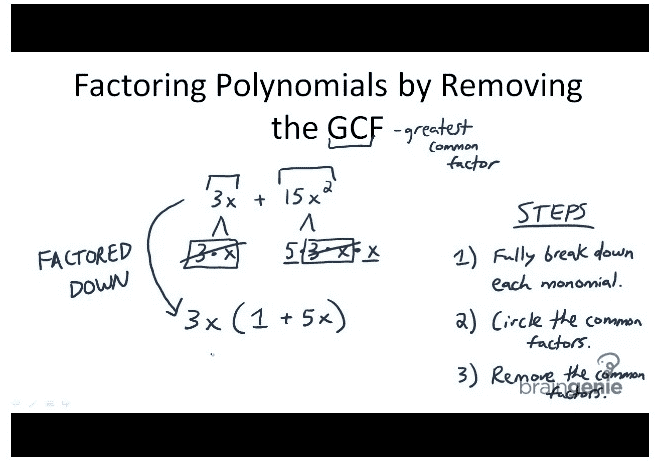
- Some participants list methods of factoring, including common factors, regrouping terms, identities, and specific forms like (x + a)(x + b).
- One participant suggests that for practical factorization, finding roots first is essential, mentioning iterative methods such as Laguerre's method.
- A participant introduces the Rational Root Theorem as a useful tool for splitting polynomials with integer coefficients.
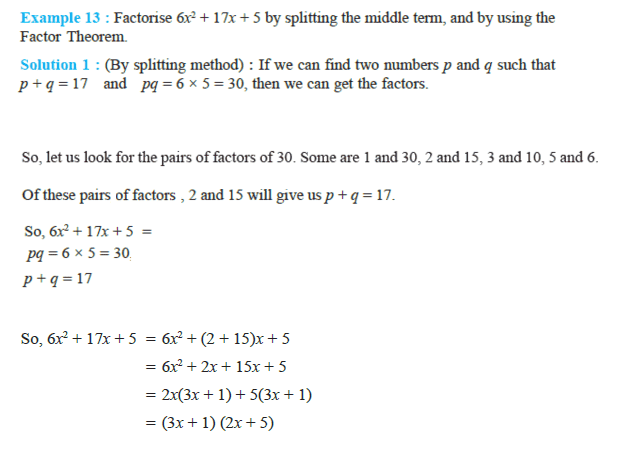
- Another participant expresses a preference for explanations that emphasize "pairs of factors" when discussing factorization.
- Some participants note the complexity of factoring cubic polynomials and mention specific cases where nice factorizations exist.
- Several participants express a desire for more examples and practice problems related to factoring, particularly for cubic polynomials.
Areas of Agreement / Disagreement
Participants generally agree on the existence of multiple methods for factoring polynomials, but there is no consensus on which methods are most effective or comprehensive. The discussion remains open-ended regarding the best approaches and resources for learning.
Contextual Notes
Some participants mention limitations in available resources, particularly regarding the factorization of cubic polynomials, indicating that these methods may be considered more advanced.
Who May Find This Useful
Students and educators interested in polynomial factorization techniques, as well as those seeking additional practice problems and resources.