- 30,297
- 7,446
I found this on a dusty shelf in an Air B&B cottage. It looks 'mechanical' so do any of you Mech Engs recognise it? It looks like it could be some sort of tensometer ??
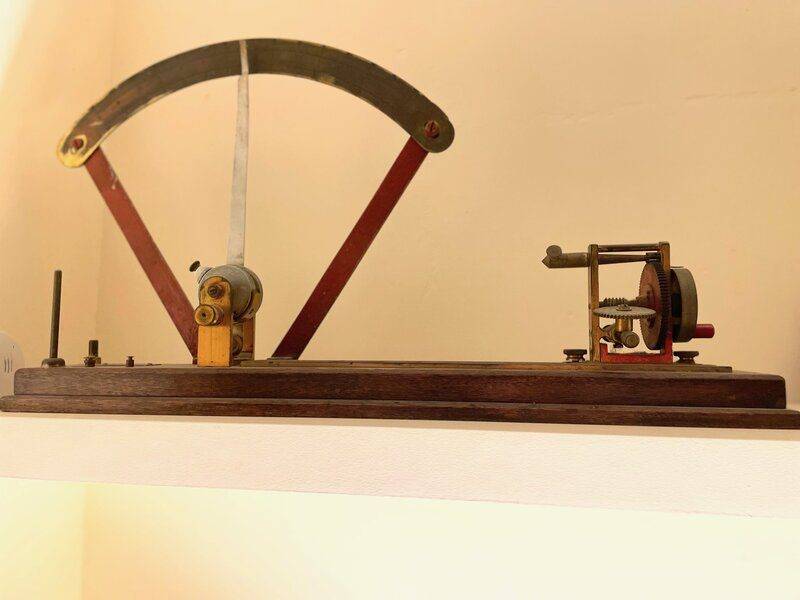
The mechanical device found in the Air B&B cottage is identified as a "Hand Yarn Twist Tester," specifically designed for measuring the number of twists in spun yarn. It operates by clamping the yarn and applying a constant tension while the spindle is turned to reverse the twist, allowing for precise measurement of twist per length. The device features a gear mechanism with a 20:1 ratio and a worm gear with a 60:1 reduction, indicating its intricate design. The discussion highlights the importance of identifying the correct terminology and industry context for accurate identification of such instruments.
PREREQUISITESThis discussion is beneficial for textile engineers, mechanical engineers, and anyone involved in yarn production or testing, as well as collectors of antique measuring instruments.
Can you read anything on the scale?sophiecentaur said:I found this on a dusty shelf in an Air B&B cottage. It looks 'mechanical' so do any of you Mech Engs recognise it? It looks like it could be some sort of tensometer ??
View attachment 315199
But it also has a worm gear with something like a 60 to 1 reduction, possibly for a counter.DaveC426913 said:The bottom device is more mysterious and has a ratio more like 1:20-ish with the crank,
I think we have a winner with thatBaluncore said:Maybe it was used for winding under-thread, with a preset tension, onto the bobbin of a sewing machine.
Well dang mah hide! Like I said, there's always someone who knows the answer to any question I choose. Thanks a lot @Baluncore .Baluncore said:"Hand Yarn Twist Tester", made in China ...
https://www.ebay.com.au/itm/325117213756?
https://www.ebay.com.au/itm/164749199309?
https://textilelearner.net/twist-measurement-of-yarn/
The OP instrument does not test tension, it measures the small change in length of a spun yarn as it is twisted. Procedure: The spindle counter dials are set to zero. The yarn to be tested is clamped at the spindle and at the length gauge, with a weight beyond the length gauge, to apply a constant tension. The spindle is then turned to remove the twist, which lengthens the yarn, but turning is continued until the length gauge shows the yarn length has reduced again to the same reading as initially set, (but with the twist now reversed). Half that spindle turns counter reading is the number of twists per length tested. No magnifying glass is needed to examine the yarn to determine the average point of zero twist at different positions along the sample.
Not really. On my own, I've been searching for antiques related to torsion wiresBaluncore said:The prize should go to @Rive
