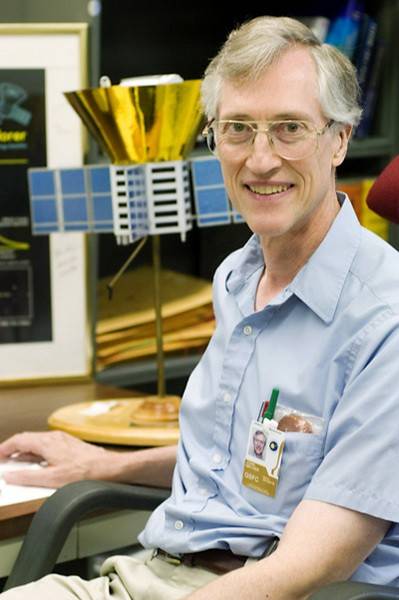
Discussion Overview
The discussion centers on opinions regarding John C. Mather, a prominent astrophysicist known for his work on the Cosmic Background Explorer (COBE) and the James Webb Space Telescope. Participants explore his reputation in the field of astrophysics, comparing him to other figures such as Neil deGrasse Tyson, and consider the nature of leadership and collaboration in scientific research.
Discussion Character
- Debate/contested
- Conceptual clarification
- Exploratory
Main Points Raised
- Some participants assert that Mather is regarded as one of the top astrophysicists globally, questioning the validity of the term "top dog" in the context of scientific collaboration.
- One participant admires Mather and emphasizes the importance of teamwork in observational cosmology, suggesting that leadership in science is often collegial rather than hierarchical.
- A participant shares Mather's autobiography, describing him as modest and sociable, with a passion for hands-on science, although they admit to not having direct contact with him.
- There are mentions of Mather's unorthodox ideas, which some participants argue are characteristic of great thinkers.
- Some participants compare Mather to Neil deGrasse Tyson, questioning whether Mather's status as a leading astrophysicist rivals Tyson's public persona.
- One participant argues that Tyson does not engage in significant research in astrophysics, noting his limited publication record and suggesting that his role as a public outreach figure limits his research contributions.
- Another participant acknowledges Tyson's contributions to science communication, comparing him to historical figures like Carl Sagan and Isaac Asimov, while noting that these roles are valuable despite not being traditional research positions.
Areas of Agreement / Disagreement
Participants express differing views on Mather's status in the astrophysics community and the comparison to Tyson. While some admire Mather's contributions and approach, others challenge the framing of his reputation and the implications of comparing him to Tyson. The discussion remains unresolved regarding the hierarchy of influence and recognition in the field.
Contextual Notes
Participants' opinions are influenced by personal perceptions and experiences, with some relying on Mather's biography and others on the public roles of scientists like Tyson. There is no consensus on the definitions of "top astrophysicist" or the criteria for comparison between Mather and Tyson.