What makes Euler's Identity puzzling in complex number calculations?

  • Context: Undergrad 
  • Thread starter Thread starter Quarky nerd
  • Start date Start date
  • Tags Tags
    Identity
Click For Summary

Discussion Overview

The discussion revolves around the puzzling aspects of Euler's Identity in the context of complex number calculations. Participants explore the implications of using fractional exponents and the resulting complexities in deducing relationships involving complex numbers, particularly focusing on the expression e^(iΘ) and its consequences.

Discussion Character

  • Exploratory
  • Technical explanation
  • Debate/contested

Main Points Raised

  • One participant presents a series of deductions involving Euler's formula and expresses confusion over the validity of their conclusions, particularly regarding the expression e^(2/3)iπ.
  • Another participant points out potential issues with introducing a denominator in the exponent, questioning the validity of certain equalities and suggesting that e^(2/3)πi could equal -1/2 + (√3/2)i.
  • A later reply clarifies that the expression (e^(2πi/3))^3 = 1 does not imply that e^(2/3)πi = 1, drawing parallels to the square root of -1 not equating to 1.
  • Questions are raised about the nature of extraneous solutions in mathematical contexts, with participants seeking to understand the underlying reasons for these occurrences.

Areas of Agreement / Disagreement

Participants express differing views on the implications of fractional exponents in complex number calculations. There is no consensus on the correct interpretation of the deductions presented, and the discussion remains unresolved regarding the nature of extraneous solutions and their relation to the initial problem.

Contextual Notes

Participants reference specific mathematical expressions and relationships without fully resolving the assumptions or definitions involved, leading to potential ambiguities in their claims.

Quarky nerd
Messages
10
Reaction score
0
fig 1

Given:
5LgiS_EU09s8UP911Ko28KLQVMC-RVkNA8izH6Cyba7MX48oMODerFJoh7hyvl07rRE5lCGrbEqVOLOHWUGlyDzOYr7ZuhCT.png


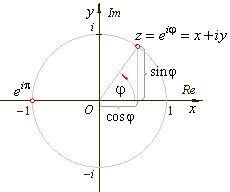
e= cosΘ + i sinΘ (radians)

eπi=-1

Deduced

e2πi=(-1)2

e2πi=1

e(2/3)πi=11/3

e(2/3)iπ=1

e(2/3)iπ=cos(2i/3)+i sin(2i/3)

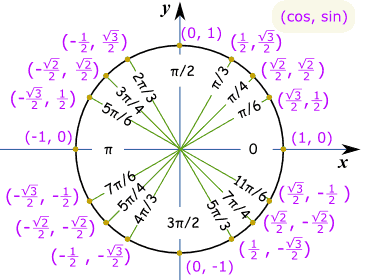
e(2/3)iπ=-1/2+i(3/2)

-1/2+i(31/2/2)=1

where n is greater than or equal to 1 or n=a/b where a is greater than or equal to 1 and b is odd
726a0xR7EIDHt-17t443594r2qWP8KCc98Da6ood-H5sIaZPKhu4-NSENIPLdcu4NPgQaZDCxbdChyb59mEmk3GAlWSpgBYz.png


1n=1


(-1/2+i(3/2))n=1However this is absurd and I
have no idea what's wrong
(sorry about the formating it was better in docs)
 

Attachments

  • 5LgiS_EU09s8UP911Ko28KLQVMC-RVkNA8izH6Cyba7MX48oMODerFJoh7hyvl07rRE5lCGrbEqVOLOHWUGlyDzOYr7ZuhCT.png
    5LgiS_EU09s8UP911Ko28KLQVMC-RVkNA8izH6Cyba7MX48oMODerFJoh7hyvl07rRE5lCGrbEqVOLOHWUGlyDzOYr7ZuhCT.png
    1.5 KB · Views: 1,184
  • 726a0xR7EIDHt-17t443594r2qWP8KCc98Da6ood-H5sIaZPKhu4-NSENIPLdcu4NPgQaZDCxbdChyb59mEmk3GAlWSpgBYz.png
    726a0xR7EIDHt-17t443594r2qWP8KCc98Da6ood-H5sIaZPKhu4-NSENIPLdcu4NPgQaZDCxbdChyb59mEmk3GAlWSpgBYz.png
    10.7 KB · Views: 1,231
Last edited:
Physics news on Phys.org
As soon as you put a denominator into the exponent, you run into trouble.
For example, ##1^1=1##. But does ##1^{1/2}=1##? It could equal -1.

Also, Look at your third "deduced" line.
Where did it come from? ##e^{(2/3)πi}=31## ?

In any case, ##e^{(2/3)πi)} = -1/2 + (\sqrt{3}/2)i##
 
Quarky nerd said:
fig 1

Given:View attachment 238257

e= cosΘ + i sinΘ (radians)

eπi=-1

Deduced

e2πi=(-1)2

e2πi=1

e(2/3)πi=31

e(2/3)iπ=1

e(2/3)iπ=cos(2i/3)+i sin(2i/3)

e(2/3)iπ=-1/2+i(3/2)

-1/2+i(31/2/2)=1

where n is greater than or equal to 1 or n=a/b where a is greater than or equal to 1 and b is oddView attachment 238258

1n=1


(-1/2+i(3/2))n=1However this is absurd and I
have no idea what's wrong
(sorry about the formating it was better in docs)

What you have really shown is that:

##(e^{2\pi i/3})^3 = 1##

In other words:

##(\cos(2\pi /3) + i \sin(2\pi /3))^3 = 1##

And, in fact, there are three complex numbers ##z##, where ##z^3 = 1##.

But, this doesn't mean that in this case ##z = 1^{1/3} = 1##.

In the same way that ##-1 \ne \sqrt{1} = 1##, although we do have ##(-1)^2 = 1##

And, in general, we have:

##(z^n)^{1/n} \ne z##

Where ##\ne## here means is not necessarily equal to.
 
why does this happen?
 
.Scott said:
As soon as you put a denominator into the exponent, you run into trouble.
For example, ##1^1=1##. But does ##1^{1/2}=1##? It could equal -1.

Also, Look at your third "deduced" line.
Where did it come from? ##e^{(2/3)πi}=31## ?

In any case, ##e^{(2/3)πi)} = -1/2 + (\sqrt{3}/2)i##
sorry that was meant to be one root three
 
Quarky nerd said:
why does this happen?

Why does what happen?
 
might this be the same reason that extraneous solutions exist?
 
Quarky nerd said:
might this be the same reason that extraneous solutions exist?

Extraneous solutions to what?
 

Similar threads

  • · Replies 3 ·
Replies
3
Views
1K
  • · Replies 6 ·
Replies
6
Views
2K
  • · Replies 22 ·
Replies
22
Views
2K
Replies
27
Views
5K
  • · Replies 1 ·
Replies
1
Views
5K
  • · Replies 11 ·
Replies
11
Views
1K
Replies
39
Views
6K
Replies
1
Views
1K
  • · Replies 1 ·
Replies
1
Views
3K
  • · Replies 14 ·
Replies
14
Views
3K