What will be the % of Enol form of this compound?

  • Thread starter Thread starter utsav55
  • Start date Start date
  • Tags Tags
    Form
Click For Summary
SUMMARY

The discussion centers on determining the percentage of the enol form of a compound, with participants debating between 1% and 99%. The consensus leans towards 99% due to the stability provided by aromaticity in the enol form. The relationship between Gibbs free energy and chemical equilibrium is highlighted, emphasizing that small energy differences can significantly affect the composition of tautomeric forms. Aromatic stabilization energies for benzene, estimated between 20 to 40 kcal/mol, further support the predominance of the enol form.

PREREQUISITES
  • Understanding of keto-enol tautomerism
  • Familiarity with Gibbs free energy and chemical equilibrium
  • Knowledge of aromatic compounds and their stability
  • Basic concepts of stereoisomerism
NEXT STEPS
  • Study the principles of keto-enol tautomerism in organic chemistry
  • Learn about Gibbs free energy calculations and their implications in chemical reactions
  • Explore the concept of aromatic stabilization energies in detail
  • Investigate stereoisomerism and its effects on compound stability
USEFUL FOR

Chemistry students, organic chemists, and anyone interested in understanding tautomerism and the stability of chemical compounds.

utsav55
Messages
14
Reaction score
0
What will be the % of Enol form of this compound?

99% or 1%? Also give reason.
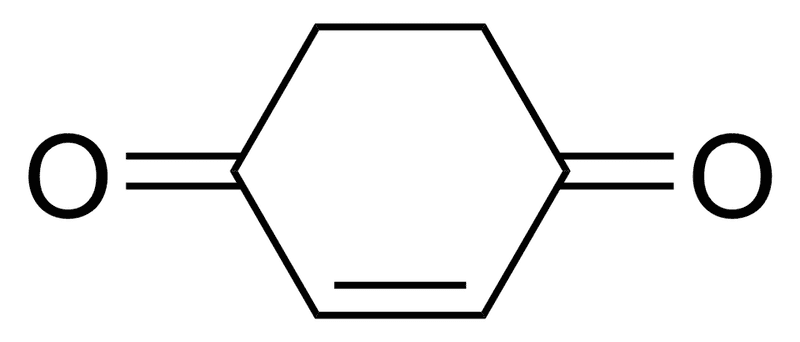
a1pdg9.png


Thanks
 
Chemistry news on Phys.org
Try to draw enol form(s).

If it is a homework question (and it surely looks like one), you have asked in the wrong forum.

--
methods
 
It is not homework, its a doubt.

I think, it is 1% as Keto form is Aromatic and hence more stable, but the answer is 99%.
 
What is the definition of aromatic, in this case?
 
I was going to say 99+% because in the enol form, you have the formation of the aromatic structure.
 
That's why I asked to draw enolic form, it should be obvious :smile:

--
methods
 
When calculating the percent of a certain species in solution obtained in a completely reversible reaction (like keto-enol tautomerism) it is useful to remember the relationship between the Gibbs free energy of the process and chemical equilibrium.

Namely

DeltaG = -RT ln(K)

This equation shows us that small differences in energy can have profound changes in percent composition. For stereoisomers (gauche- and anti-, for example) of substituted cyclohexanes, free energy differences of only 2kcal/mol results in >95% of the more stable isomer. A difference of only 4kcal/mol results in >99%.

Aromatic stabilization energies for benzene are on the order of 20 to 40 kcal/mol...
 

Similar threads

  • · Replies 1 ·
Replies
1
Views
1K
  • · Replies 4 ·
Replies
4
Views
8K
  • · Replies 3 ·
Replies
3
Views
1K
  • · Replies 4 ·
Replies
4
Views
2K
Replies
1
Views
2K
  • · Replies 2 ·
Replies
2
Views
2K
  • · Replies 3 ·
Replies
3
Views
2K
  • · Replies 5 ·
Replies
5
Views
2K
  • · Replies 2 ·
Replies
2
Views
2K
Replies
5
Views
3K