SUMMARY
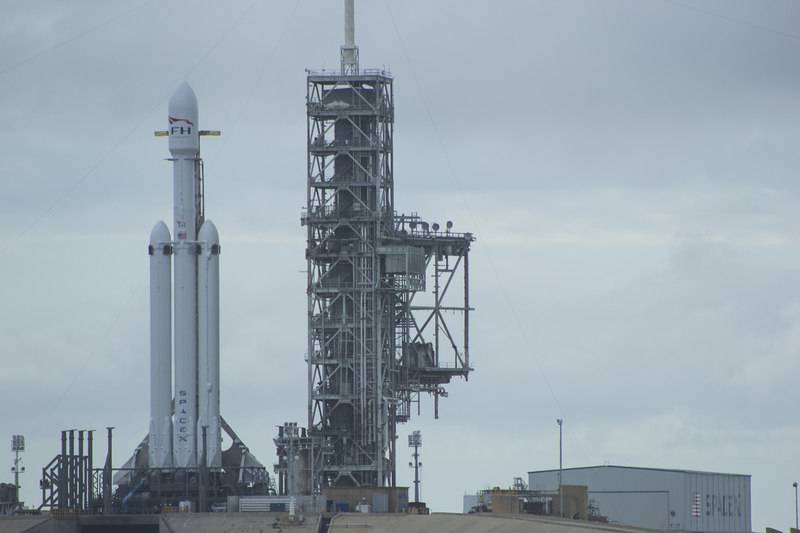
In 2018, SpaceX successfully launched the Falcon Heavy rocket, carrying Elon Musk's Tesla Roadster into space. The Falcon Heavy, with a payload capacity of 63,800 kg, is the most powerful operational rocket, surpassing the Delta IV Heavy. The launch occurred on February 6, 2018, and featured simultaneous landings of the two side boosters, showcasing SpaceX's reusable rocket technology. Additionally, the BepiColombo mission, a collaboration between the European and Japanese space agencies, is set to launch towards Mercury in November 2018, with arrival expected in late 2025.
PREREQUISITES
- Understanding of rocket payload capacities, specifically Falcon Heavy's 63,800 kg limit.
- Familiarity with reusable rocket technology and its implications for space travel.
- Knowledge of interplanetary mission planning, particularly the BepiColombo mission to Mercury.
- Awareness of the significance of the Event Horizon Telescope and its contributions to astrophysics.
NEXT STEPS
- Research the Falcon Heavy's specifications and its impact on the commercial space industry.
- Learn about the BepiColombo mission's objectives and the technology used for its Mercury orbit insertion.
- Explore the advancements in reusable rocket technology and their effects on launch costs.
- Investigate the Event Horizon Telescope's findings and its role in modern astrophysics.
USEFUL FOR
Aerospace engineers, space enthusiasts, and anyone interested in the future of space exploration and the technological advancements in rocket science.