SUMMARY
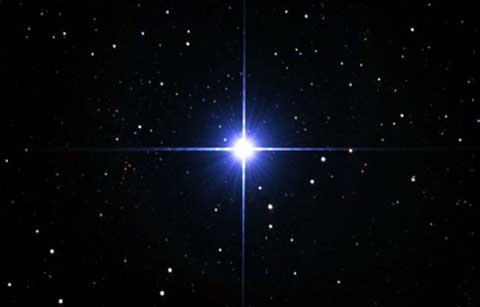
Stars twinkle due to atmospheric turbulence, which refracts light from distant stars as it passes through varying layers of the Earth's atmosphere. This effect is more pronounced in brighter stars, while planets, being closer, appear as steady points of light without twinkling. The discussion also highlights that diffraction spikes observed in star images are caused by the optical design of telescopes, particularly the arrangement of the secondary mirror and the number of blades in the diaphragm. Understanding these phenomena is essential for astronomers and astrophotographers.
PREREQUISITES
- Understanding of atmospheric turbulence and its effects on light
- Basic knowledge of optical systems in telescopes
- Familiarity with diffraction and its role in astronomy
- Knowledge of planetary angular size and distance from Earth
NEXT STEPS
- Research "atmospheric turbulence and scintillation" in astronomy
- Learn about "optical design in telescopes" and its impact on image quality
- Explore "diffraction patterns in astrophotography" for better imaging techniques
- Study "planetary angular size calculations" to differentiate between stars and planets
USEFUL FOR
Astronomers, astrophotographers, and anyone interested in understanding the optical phenomena affecting star visibility and imaging techniques in astronomy.