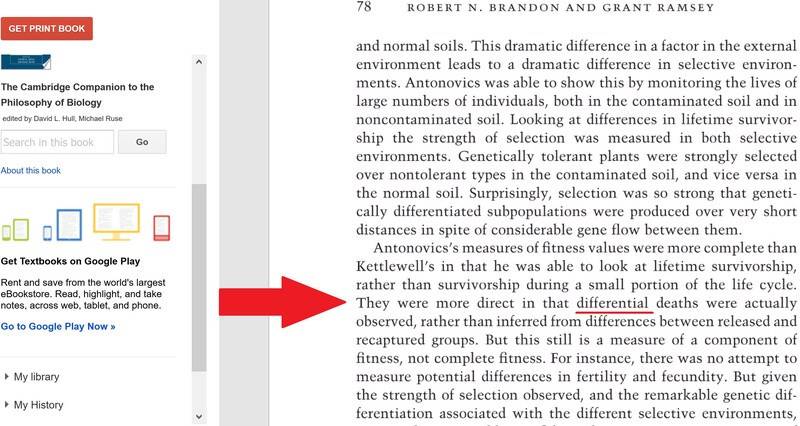
Why do these biology textbooks write 'differential' as an adjective?

Click For Summary
SUMMARY

The discussion centers on the usage of the term "differential" as an adjective in various biology textbooks, specifically in the context of comparing quantities. Texts such as the "Handbook of the Biology of Aging" and "The Cambridge Companion to the Philosophy of Biology" utilize "differential" to imply a specific, quantifiable difference between two measures under varying conditions. The term is argued to be more precise than "different," as it suggests a relationship to changes in independent parameters, which is essential in scientific discourse. The conversation highlights the importance of clarity in scientific language, particularly in distinguishing between "differential" and "different."

PREREQUISITES
  • Understanding of basic biological concepts and terminology.
  • Familiarity with differential equations and their applications in biology.
  • Knowledge of scientific writing conventions.
  • Ability to interpret academic texts and citations.
NEXT STEPS
  • Research the application of differential equations in biological contexts.
  • Explore the differences between "differential" and "different" in scientific literature.
  • Study the implications of language precision in scientific communication.
  • Review examples of "differential" usage in various academic texts.
USEFUL FOR

Students, educators, and professionals in the fields of biology, philosophy of science, and scientific writing who seek to enhance their understanding of terminology and improve clarity in communication.

12john
Messages
12
Reaction score
1
Homework Statement
I don't understand the differences between 'differential' and 'different' as adjectives in the quotations below.
Relevant Equations
N/A.
Are these books using 'differential' correctly? Why not just write 'different'?

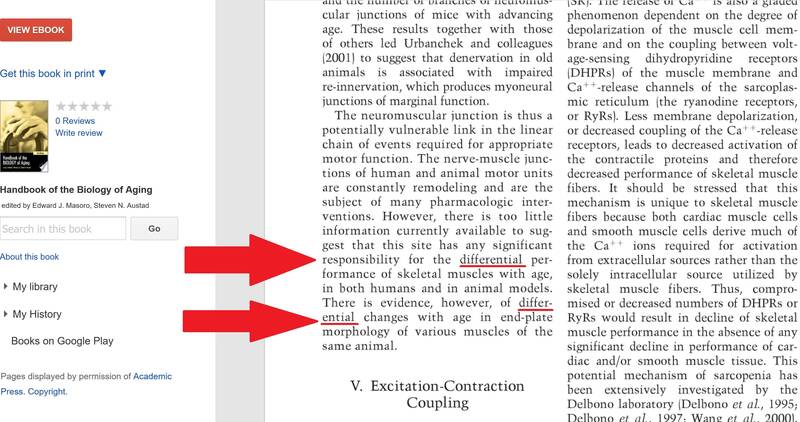
1. Handbook of the Biology of Aging edited by Edward J. Masoro, Steven N. Austad. p 480.
hlywo.jpg

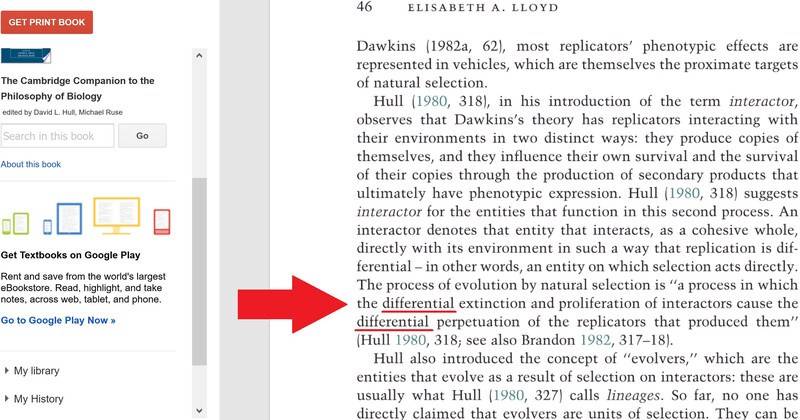
2. The Cambridge Companion to the Philosophy of Biology edited by David L. Hull, Michael Ruse. p 46.
rSuzJ.jpg

3. p 78.
8s8Rn.jpg

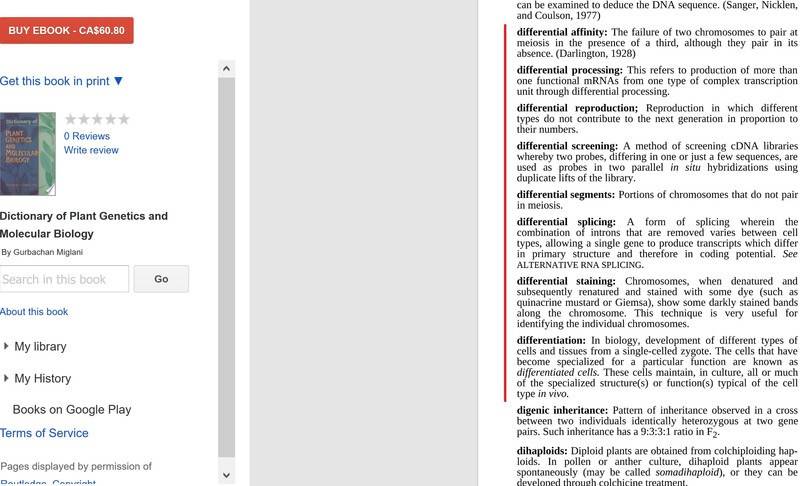
4. Dictionary of Plant Genetics and Molecular Biology by Gurbachan Miglani. Anyone know the page #?
NBvFk.jpg
 
  • Like
Likes   Reactions: Delta2
Physics news on Phys.org
I assume for some quantity Q, the author would like to mention dQ or ##\triangle Q## which means theoretically infinite small change and would satisfy some differential equation.
 
  • Skeptical
Likes   Reactions: pbuk
I believe the usage of differential implies that the noted difference can be correlated to changes in an otherwise independent parameter. Hence the term difference is less specific.
 
Last edited:
  • Like
Likes   Reactions: DaveE, berkeman and jim mcnamara
It looks to me like a way to use less words.
The last case: "differential deaths were actually observed ... between the released and recaptured groups" seems to mean the same thing as "the difference in deaths were actually observed ... between the released and recaptured groups".

Saves a word or two, might also sound better to some people (philosophers?).
Could be like a style of writing.
 
@hutchphd gave a pretty darn good explanation.
For a chart and explanation:
See: https://www.difference.wiki/difference-vs-differential/

...and getting a good clear definition for the way scientists use ordinary words is a big help. Scientists are unaware they do NOT communicate to everyone else at all well many times, the word "believe" as used by @hutchphd above can be an example.

Helen Quinn in Science a while back, on whence the confusion:

https://ned.ipac.caltech.edu/level5/March07/Quinn/Quinn.html
 
  • Informative
Likes   Reactions: berkeman
12john said:
Homework Statement:: I don't understand the differences between 'differential' and 'different' as adjectives in the quotations below.
Relevant Equations:: N/A.

Are these books using 'differential' correctly? Why not just write 'different'?
I can understand the first two usages of differential.

But not for the last, ie " differential deaths"

The third and fourth usage "differential extinction causes ... differential perpetuation ... " is confusing, but that author is using a quote from another source, so that may be problematic, unless one has access to the source to query the context.
 
In all cases, "differential X" means the difference between two measures of X that come from different circumstances. One may read of "differential pay scales" for different groups of workers (often in reference to an unjustified difference).
Whether it is to be considered a genuine adjective or an adjectival noun here is moot. E.g. one can also write of a "pay differential", making differential the noun and pay an adjectival noun.
 
  • Like
Likes   Reactions: hutchphd
BillTre said:
The last case: "differential deaths were actually observed ... between the released and recaptured groups" seems to mean the same thing as "the difference in deaths were actually observed ... between the released and recaptured groups".
The use of differential here implies that the authors are referring to the number of deaths. The phrase difference in deaths could be interpreted as referring to the manner by which death occurred.
 
I think differential relates to the comparison of the magnitude of a parameter associated with similar objects or processes. It has it's basis in subtraction of comparable things.

Different is simply an expression of lack of sameness; i.e. not comparable.

It doesn't make sense to speak of a differential of different things.

Hammers are different than apples. A group of apples can have differential rates of decay. OTOH, hammers and apples can have a differential rate of cooling, because the common thing is temperature. So, context also matters. "Differential" should include a qualifier to indicate what's being compared, that's usually not necessary with "different".
 
  • Like
Likes   Reactions: berkeman

Similar threads

Replies
9
Views
2K
  • · Replies 7 ·
Replies
7
Views
10K
  • · Replies 13 ·
Replies
13
Views
10K
  • · Replies 29 ·
Replies
29
Views
5K