Why Are Greek Letters in PChem Different from Textbook Versions?

  • Thread starter Thread starter glassslippers
  • Start date Start date
  • Tags Tags
    Textbook
Click For Summary
SUMMARY

The discussion centers on the discrepancies between the lowercase Greek letter sigma as written by a professor and its standard representations found in textbooks and online resources. The professor's version resembles a number 6 with a curl, while the textbook version appears more like an 'o' with a horizontal line on top. Participants highlight that there is an alternate form of sigma, known as varsigma, used in word-final positions, but the professor's version does not match this either. The consensus suggests that while the professor's insistence on using his version may stem from concerns about academic perception in graduate school, it is ultimately not a widely recognized or accepted form of the letter.

PREREQUISITES
  • Understanding of Greek alphabet characters, specifically sigma (σ) and varsigma (ς).
  • Familiarity with academic standards in physical chemistry (PChem).
  • Knowledge of notation conventions in scientific writing.
  • Awareness of the cultural aspects of academic environments, particularly in graduate studies.
NEXT STEPS
  • Research the standard representations of Greek letters in scientific literature.
  • Explore the implications of notation differences in academic settings.
  • Learn about the use of varsigma in different contexts within mathematics and physics.
  • Investigate common challenges faced by students regarding notation in graduate school.
USEFUL FOR

Students in physical chemistry, educators teaching Greek notation, and anyone interested in the nuances of academic writing standards in science.

glassslippers
Messages
1
Reaction score
0
Hi,
So my PChem professor writes lowercase sigma similar to a number 6 with a curl on the top...(picture attached) To me this looks nothing like the sigma used in my textbook, computer or anywhere online I can find (similar to an o with a horizontal line on top). He insists we use his version of the figure because when we go to grad school we will be "looked down on" if we don't use proper Greek figures. I have no problem with his figure, if it is the correct one. Can anyone explain the discrepancy?
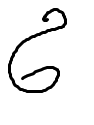
00sigma.PNG
 
Chemistry news on Phys.org
That's no sigma.
 
Maybe your professor has the palsy in his hand.
 
Last edited:
  • Like
Likes   Reactions: Medicol
Yes, I think that 's right (sigma σ), his tip was just upped and curved too much.
 
I can see how a sigma ended up like that but I would never guessed it to be a sigma had I not read your post.
 
Unfortunately, bullying and social exclusion due to imperfectly written greek letters is a common problem in grad school. So, while it shouldn't be necessary, I recommend you do as your professor tells you and write the sigmas properly so you won't be singled out.
 
Looks like a (funky) delta to me.
glassslippers said:
He insists we use his version of the figure because when we go to grad school we will be "looked down on" if we don't use proper Greek figures.
Okay, I can understand catching some flak for using unconventional notations/symbols. But if he is earnestly suggesting that his specific style is what you should use, I'm honestly quite skeptical.
 

Similar threads

  • · Replies 8 ·
Replies
8
Views
4K
  • Sticky
  • · Replies 0 ·
Replies
0
Views
4K
  • · Replies 5 ·
Replies
5
Views
18K
  • · Replies 2 ·
Replies
2
Views
3K
  • · Replies 3 ·
Replies
3
Views
2K
  • · Replies 3 ·
Replies
3
Views
2K
  • · Replies 2 ·
Replies
2
Views
2K
  • · Replies 1 ·
Replies
1
Views
2K
  • · Replies 8 ·
Replies
8
Views
2K
  • · Replies 14 ·
Replies
14
Views
2K