Onto set mapping is the surjective set mapping, and into injective?

  • Context: High School 
  • Thread starter Thread starter mcastillo356
  • Start date Start date
Join the discussion
Ask a follow-up here, or get your own question answered by working scientists, mathematicians and engineers — people, not an autocomplete.
Real named experts · corrections over time · the nuance an AI answer skips
26 replies · 3K views
mcastillo356
Gold Member
Messages
666
Reaction score
365
TL;DR
I'm almost sure, but need to check it with the forum. It's about the first chapter of "Introduction to topology and modern analysis" I am reading online.
The textbook is being fine. I asked the forum for some introduction to topology, and decided to start with Simmon`s. This naive question is due to ignorance of the words into and onto, which I don't distinguish in Spanish. A quick browsing sugests I'm right.
 
on Phys.org
Say, we have ##f\, : \,A\longrightarrow B.##

##f## is onto if it is surjective, i.e., ##\forall\,b\in B\,\exists\,a\in A\, : \,b=f(a).##
##f## is into if it is injective, i.e., ##f(a)=f(a')\Longrightarrow a=a'.##

However, the English language is not always very exact when it comes to "in", "to", or "into". I have seen examples where into just meant ##f(A)\subseteq B## without the requirement of being injective. So, onto equals surjective is always true, into equals injective depends on the author. At least to my experience.

In German, we would use "auf" = "onto" = surjective, "in"="into"=injective, and "nach"="to"= ##f(A)\subseteq B.##
 
Reply
  • Like
Likes   Reactions: mcastillo356
fresh_42 said:
Say, we have ##f\, : \,A\longrightarrow B.##

##f## is onto if it is surjective, i.e., ##\forall\,b\in B\,\exists\,a\in A\, : \,b=f(a).##
##f## is into if it is injective, i.e., ##f(a)=f(a')\Longrightarrow a=a'.##
Yes.
fresh_42 said:
However, the English language is not always very exact when it comes to "in", "to", or "into". I have seen examples where into just meant ##f(A)\subseteq B## without the requirement of being injective. So, onto equals surjective is always true, into equals injective depends on the author. At least to my experience.
Simmons is being precise. Into means inyective.
fresh_42 said:
In German, we would use "auf" = "onto" = surjective, "in"="into"=injective, and "nach"="to"= ##f(A)\subseteq B.##
That's accurate, indeed.
Thanks, @fresh_42 !
 
mcastillo356 said:
The textbook is being fine. I asked the forum for some introduction to topology, and decided to start with Simmon`s. This naive question is due to ignorance of the words into and onto, which I don't distinguish in Spanish. A quick browsing sugests I'm right.
To be on the set means occupying the whole set in a particular way and the word “onto” follows the definition of a surjective function at all.
To be in the set means occupying the part of the set but it does not mean that every element of the part of the set is occupied only once and this is the main reason for confusion. The word “into” does not completely follow the definition of an injective function.
 
Reply
  • Like
  • Informative
Likes   Reactions: PeroK and mcastillo356
I'm working on the Schroether-Bernstein theorem, this is, the next step in the textbook "Introduction to topology and modern analysis", by Simmons. We assume that ##f:\,X\rightarrow{Y}## is a one-to-one mapping of ##X## into ##Y##, and that ##g:\,Y\rightarrow{X}## is a one-to-one mapping of ##Y## into ##X##. Our task is to produce a mapping ##F:\,X\rightarrow{Y}## which is one-to-one onto.
Apologies for my reaction to the previous post.
 
Reply
  • Like
Likes   Reactions: Gavran
You need to understand the words. As I see it, Simmons uses the following terms:

##f\, : \,X\longrightarrow Y## mapping

##X## is the domain of ##f.##

##f(X)## is the range of ##f.##

##f## maps ##X## into ##Y## means ##f(X)\subseteq Y.##

##f## maps ##X## onto ##Y## means ##f(X)= Y,## surjective.

##f## maps ##X## one-to-one into ##Y## means ##x\neq x' \Longrightarrow f(x)\neq f(x'),## injective.

##f## maps ##X## one-to-one onto ##Y## means ##f## is injective, and surjective, i.e., bijective.

So we have two injective embeddings ##f\, : \,X\hookrightarrow Y## and ##g\, : \,Y\hookrightarrow X## and want to define a bijection ##F\, : \,X \longrightarrow Y,## i.e. a mapping that is also surjective.
 
Reply
  • Like
Likes   Reactions: mcastillo356
PeroK said:
For example, ##X = Y = \mathbb R## and ##f = g## are both the exponential function. Then how to construct ##F##?
In this case you take the identity map. 😉
 
PeroK said:
For example, ##X = Y = \mathbb R## and ##f = g## are both the exponential function. Then how to construct ##F##?
No idea. I can only attempt at it: ##F## could be the identity function? @martinbn says so.
Another doubt: The Axiom of Choice is needed?
 
fresh_42 said:
No. What do you get from ##g\circ f##?
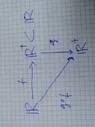
##\mathbb{R}^+##?


Real.webp
 
Last edited:
mcastillo356 said:
##\mathbb{R}^+##?


View attachment 365430
No. We have ##f\, : \,X\longrightarrow Y## and ##g\, : \,Y\longrightarrow X.## No real numbers anywhere.

I had ##F=f\circ g\circ f## in mind, but I'm not sure whether this is necessary. Try to figure out what you need, when you assume the existence of an element ##y\in Y## that is not in the range of ##f.##
 
Reply
  • Like
Likes   Reactions: mcastillo356
fresh_42 said:
I don't know, I haven't solved it. The idea was born from the fact that the problem statement introduced ##F.## I thought ##f## would already do since ##fg## should be a permutation.
I suspect the proof is non trivial!
 
mcastillo356 said:
I'm working on the Schroether-Bernstein theorem, this is, the next step in the textbook "Introduction to topology and modern analysis", by Simmons. We assume that ##f:\,X\rightarrow{Y}## is a one-to-one mapping of ##X## into ##Y##, and that ##g:\,Y\rightarrow{X}## is a one-to-one mapping of ##Y## into ##X##. Our task is to produce a mapping ##F:\,X\rightarrow{Y}## which is one-to-one onto.
You already have the proof of the theorem on page 29 of the book. By the way, the more common statement of the Schroeder-Bernstein theorem is this: if there are injections f : A → B and g : B → A, then there is a bijection h : A → B.
 
Gavran said:
You already have the proof of the theorem on page 29 of the book. By the way, the more common statement of the Schroeder-Bernstein theorem is this: if there are injections f : A → B and g : B → A, then there is a bijection h : A → B.
Working hard on it.
 
Lemma 2 is difficult to me

Why ##A=A_{0}\sim{B_{1}}\sim{A_{2}}\sim{B_{3}}\sim{A_{4}}\sim{\cdots}##?

Attempt
##A=A_{0}##, ##B_{1}=f(A_{0})##, and so on. Why is this a consequence of injectivity?


Attempt
A set mapping is injective if

$$\forall{a,\,b}\in{X}\quad{f{(a)}=f{(b)}\Rightarrow{a=b}}$$

##A=A_{0}##, ##B_{1}=f(A_{0})##, and so on follows from the definition of injectivity.
 
Last edited:
Gavran said:
By the way, the more common statement of the Schroeder-Bernstein theorem is this: if there are injections f : A → B and g : B → A, then there is a bijection h : A → B.
The first statement of the theorem was published in 1887 by Georg Cantor.
If M and N are two such sets that components M' and N' can be separated from them, of which it can be shown that |M|=|N'| and |M'|=|N|, then M and N are equivalent sets.
 
Reply
  • Informative
Likes   Reactions: mcastillo356
fresh_42 said:
Here is another source, in case this is easier.
https://web.williams.edu/Mathematics/lg5/CanBer.pdf
Lemma 5 and Lemma 6 seem easy, but I've had to think about set partitions and equivalence relations.

Attempt

For any equivalence relation on a set ##X##, the set of its equivalence classes is a partition of ##X##. Conversely, from any partition ##P## of ##X##, we can define an equivalence relation on ##X## by setting ##x\sim{y}## precisely when ##x## and ##y## are in the same part in ##P##.

A bijection is an equivalence relation.

Lemma 5

$$A=\bar{A}\cup{\tilde{A}}$$

$$B=\bar{B}\cup{\tilde{B}}$$

Equivalence relation:

$$\tilde{A}=A_o^*\sim{B_1^*}\sim{A_2^*}\sim{B_3^*}\sim{A_4^*}\sim{\cdots}$$

$$\tilde{B}=B_0^*\sim{A_1^*}\sim{B_2^*}\sim{A_3^*}\sim{B_4^*}\sim{\cdots}$$

Set partition:

$$A\simeq{\tilde{A}}=\displaystyle\bigcup_{n\geq{0}}A_n^*\sim\displaystyle\bigcup_{n\geq{0}}B_n^*=\tilde{B}\simeq{B}$$

$$\bar{A}=\displaystyle\bigcap_{n\geq{0}}A_n$$

$$\bar{B}=\displaystyle\bigcap_{n\geq{0}}B_n$$
 
Reply
  • Like
Likes   Reactions: Gavran