Relational event horizons?

  • Context: Undergrad 
  • Thread starter Thread starter scakpinar
  • Start date Start date
Click For Summary
SUMMARY

The discussion centers on the misunderstanding of event horizons in black holes and their observer-independent nature. Participants clarify that the event horizon is a physical boundary that does not depend on an observer's position or motion, contrasting it with misleading intuitive analogies. The invariant speed of light in local inertial frames is emphasized, debunking the notion that different observers perceive the event horizon differently. The conversation highlights the necessity of rigorous mathematical understanding in grasping concepts in general relativity, as popular science sources often provide inadequate explanations.

PREREQUISITES
  • Understanding of general relativity concepts, particularly event horizons.
  • Familiarity with local inertial frames and the invariant speed of light.
  • Basic knowledge of spacetime curvature and its implications.
  • Ability to interpret mathematical formulations in physics.
NEXT STEPS
  • Study "General Relativity from A to B" by Robert Geroch for a foundational understanding of general relativity.
  • Learn about local inertial frames and their significance in general relativity.
  • Explore the mathematical formulations of black holes and event horizons in peer-reviewed papers.
  • Investigate the differences between special relativity and general relativity, focusing on spacetime curvature.
USEFUL FOR

This discussion is beneficial for students of physics, particularly those interested in general relativity, theoretical physicists, and anyone seeking to deepen their understanding of black holes and event horizons.

scakpinar
Messages
2
Reaction score
4
TL;DR
I am confused about why event horizons and the time direction cannot be observer dependent near black holes.
Hello everyone,

I have no formal training in theoretical physics or advanced mathematics. I have been trying to build intuition about general relativity, especially black holes and event horizons, by reading popular and semi-technical sources.

While reading that time and space effectively exchange roles inside a black hole, I tried to form an intuitive picture of how this can be understood physically. In the process, I found myself considering a way of thinking in which the accessibility of events near the horizon seems to depend on the observer’s position and motion.

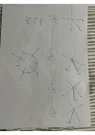
My intuition keeps getting stuck on the following point: as different observers use different local frames, the same position-time graph of a light ray appears differently when projected onto their local coordinates. This line of thinking also seemed to account for effects such as the apparent ‘freezing’ of light near a black hole, or the way its coordinate speed can appear to approach zero for a distant observer. In the same way, it appeared to offer an intuitive explanation for why infalling objects seem to take an infinite time to cross the event horizon when viewed from afar. Within this picture, the fact that light cannot escape from the event horizon also seemed to be related to its coordinate velocity approaching zero relative to the observer. This makes it tempting to think that what counts as “beyond the horizon” might appear different to different observers even though chatgpt says the global event horizon is defined in an observer-independent way. It also seems to suggest that light and observers moving forward in time in their own local frames may, due to gravitational effects, have their time direction appear to tilt in an increasingly distorted manner to a different direction and eventually possibly backward when described from the perspective of a distant observer.

This analogy also helps me intuitively grasp gravitational time dilation without using mathematics, as well as why an object ‘entering’ a black hole event horizon—where even light cannot escape—does not experience or notice passing through any special region at the moment of crossing.

Honestly, I cannot see where this intuition must fail. I tried to argue this point with ChatGPT, but I could not get a satisfying explanation of *why* this picture cannot work, only that it does not.


Could someone explain, at a conceptual or minimal-math level, where this intuition breaks down? In particular, why can the event horizon not be observer-relative, and why can the time direction not tilt in the way suggested by this intuition?

If it helps, I am attaching a photo of a diagram illustrating this intuition. Thank you for your patience.
 

Attachments

  • IMG.webp
    IMG.webp
    17 KB · Views: 2
Physics news on Phys.org
scakpinar said:
TL;DR: I am confused about why event horizons and the time direction cannot be observer dependent near black holes.

While reading that time and space effectively exchange roles inside a black hole, I tried to form an intuitive picture of how this can be understood physically
It's rubbish, in short. That's why it doesn't make sense.
scakpinar said:
Within this picture, the fact that light cannot escape from the event horizon also seemed to be related to its coordinate velocity approaching zero relative to the observer.
This is analogous to saying that a hill is steep because the contour lines on the map are close together. It's backwards. The hill is steep whether anyone draws a map or not.

The coordinate velocity of light can be made to be any speed at any point just by picking different coordinates. Thus trying to reason from coordinate velocity is a recipe for disaster, because you will frequently get misled by peculiar behaviour of your coordinates - particularly if you try to use something like Schwarzschild coordinates that do not cover the event horizon at all.

The event horizon is the boundary between regions that can signal to the outside and regions that cannot. This is an invariant fact; it is no more observer dependent or coordinate dependent than where the top of a hill is. The top of a hill is the boundary between regions where a ball will roll one way or the other; the event horizon is the boundary between regions where light must end up at the singularity and regions where it may reach infinity. You can't choose either - they're physical facts.
 
  • Like
Likes   Reactions: PeroK, scakpinar, FactChecker and 2 others
scakpinar said:
I have been trying to build intuition about general relativity, especially black holes and event horizons, by reading popular and semi-technical sources.
This is going to be difficult if not impossible. You really need to be looking at textbooks or peer-reviewed papers. Particularly for a subject like this, where even "semi-technical" sources are going to say a lot of things that aren't helpful. For example:

scakpinar said:
While reading that time and space effectively exchange roles inside a black hole
Which is not true. But it is a common statement in pop science or semi-technical sources.

@Ibix gives a good response that will give you a start on what actual textbooks and peer reviewed papers say, i.e., on learning the actual physics.

scakpinar said:
I tried to argue this point with ChatGPT
Please note that such sources are not acceptable as references here. Nor is it generally advised to use them at all if you actually want to understand the physics.
 
  • Like
Likes   Reactions: scakpinar
scakpinar said:
TL;DR: I am confused about why event horizons and the time direction cannot be observer dependent near black holes.

Could someone explain, at a conceptual or minimal-math level, where this intuition breaks down?
I am not completely sure about what intuition you want to address here. Is it this:
scakpinar said:
as different observers use different local frames, the same position-time graph of a light ray appears differently when projected onto their local coordinates
In local inertial coordinates the speed of light is invariant. So I think that is probably the main conceptual break down.
 
  • Like
Likes   Reactions: scakpinar
I have another point to make:
Modern physics is very much guided by the mathematics, often in direct opposition to the "intuition" of Newtonian physics. Einstein famously disagreed with the mathematically derived consequences of quantum mechanics, yet they have been experimentally verified. Even current physicists struggle to find "intuition".
"Explanations" that are simple enough to be intuitive are often grossly misleading. If you are very serious about learning the subject, my advice is to learn the correct explanation thoroughly enough that it becomes your "intuition".

PS. I am too old and dull to follow my own advice. ;-)
 
  • Like
Likes   Reactions: martinbn, PeroK, scakpinar and 1 other person
Dale said:
In local inertial coordinates the speed of light is invariant. So I think that is probably the main conceptual break down.
No, I did not assume that the speed of light is variable in local coordinates. I only thought that the observer’s velocity relative to the black hole event horizon, or the effects of gravitational sources outside this black hole acting on the observer, together with the expansion of space, could prevent light from reaching the observer even from points outside the event horizon of the black hole in question.

Even if we accept that light passing sufficiently close to a black hole could reach all observers, if the expansion of the universe is ignored, I considered that when the distance between the observer and the black hole is at a critical scale due to cosmic expansion, the radius of space around the black hole from which light can never reach the observer would increase. This is because, due to the curvature of spacetime around the black hole, light is forced to travel a longer path in spacetime.

While light located at the same distance but not within a gravitational field could reach the observer, light coming from around the ‘local’ event horizon of the black hole would not be able to do so, and I thought that the Schwarzschild radius—inside which even light cannot escape—would appear larger to the observer.
Ibix said:
Schwarzschild coordinates that do not cover the event horizon at all.

Ibix said:
the event horizon is the boundary between regions where light must end up at the singularity and regions where it may reach infinity. You can't choose either - they're physical facts.
So it is not about just an observer, every possible observer inside cosmic horizon, this helps.
FactChecker said:
I have another point to make:
Modern physics is very much guided by the mathematics, often in direct opposition to the "intuition" of Newtonian physics. Einstein famously disagreed with the mathematically derived consequences of quantum mechanics, yet they have been experimentally verified. Even current physicists struggle to find "intuition".
"Explanations" that are simple enough to be intuitive are often grossly misleading. If you are very serious about learning the subject, my advice is to learn the correct explanation thoroughly enough that it becomes your "intuition".

PS. I am too old and dull to follow my own advice. ;-)
Being less ambitious about learning this topic feels like the more rational option for me, as I don’t realistically expect to master the necessary mathematics involved. Thanks for all your answers
Being less ambitious about learning this topic feels like the more rational option for me, as I don't realistically expect to master the necessary mathematics involved. Still, it feels good to think about it time to time, thanks for all your answers.
 
scakpinar said:
Being less ambitious about learning this topic feels like the more rational option for me, as I don't realistically expect to master the necessary mathematics involved.
Whoever then has the effrontery to study physics while neglecting mathematics should know from the start that he will never make his entry through the portals of wisdom.

Roger Bacon (1220-1292)
 
  • Like
Likes   Reactions: martinbn and FactChecker
IMO, there are some good books that attempt to motivate the concepts of SR and GR with minimal mathematics. They are "Relativity Visualized" by Lewis Carroll Epstein, and "How to Teach Relativity To Your Dog" by Chad Orzel. (Please don't be offended by the second title. I enjoyed reading it.)

The problem is that you can never proceed from them to answer the types of questions of your post. They are not a solid enough foundation for that. I am not aware of any text that would give you a solid foundation for GR without a lot of work on the mathematics. (SR is significantly easier, mathematically)
 
  • Like
Likes   Reactions: PeroK
My favourite popular book is Geroch's "General Relativity from A to B".
 
  • Like
  • Informative
Likes   Reactions: robphy and FactChecker
  • #10
scakpinar said:
No, I did not assume that the speed of light is variable in local coordinates. I only thought that the observer’s velocity relative to the black hole event horizon, or the effects of gravitational sources outside this black hole acting on the observer, together with the expansion of space, could prevent light from reaching the observer even from points outside the event horizon of the black hole in question.
The thing is that the event horizon is a lightlike surface. That means that in any local inertial frame the event horizon moves outward at the speed of light. And because it is the speed of light, all local inertial frames agree. All local observers agree that the horizon’s velocity relative to them is ##c##.

This is something that you may not have been taught yet, since it is not often covered by pop-sci sources. Because the speed of light is invariant in all inertial frames and because the event horizon is lightlike your intuitive mistake is that:

as different observers use different local frames, the same position-time graph of a light ray appears differently when projected onto their local coordinates

This doesn't work. The speed of light is invariant in local inertial frames and therefore so is the event horizon.
 
Last edited:
  • Like
Likes   Reactions: A.T. and PeterDonis
  • #11
scakpinar said:
Even if we accept that light passing sufficiently close to a black hole could reach all observers ...
In flat spacetime (Special Relativity) it's conventional to talk about "observers" or "inertial observers". This often means observations (or measurements) made according to some global, inertial reference frame.

In curved spacetime (General Relativity) there are no global, inertial reference frames. An inertial reference frame is valid only over a region of spacetime that is effectively flat. From that point of view, a local inertial observer cannot talk about a black hole at all. There is no effective intuition in that sense.

Instead, you must make the distinction between raw observations and local measurements (e.g. the wavelength of a light pulse and the local time it is received) and a physical model, where some global system of coordinates is used. The physical model may describe the path of a light pulse, for example.

As an example, you might send a probe towards a black hole and the probe may omit a light pulse back to you every second (according to a clock on the probe). The physical model allows you to calculate when you receive each light pulse and its wavelength. You cannot, however, carry out this calculation using an inertial reference frame.

In this sense, an observer is only a local concept and an observer cannot say anything about the physical model, other than what happens or what signals are received locally. Such an observer cannot sensibly talk about the speed of something somewhere else. Unless they put aside their local frame and make use of a global system of coordinates.

Making this distinction between local events and a global physical model is not vital until you tackle General Relativity. In order to understand GR, you have to throw away a lot of tools (mathematical and intuitive) that may have served you well in the past. For example, in curved spacetime the concept of a position vector is no longer possible. And, a position vector is one of the most useful concepts in flat spacetime. It's a tough thing to lose - as is all the intuition that goes with it.

As long as you are thinking about curved spacetime using tools (mathematical and intuitive) that are only applicable in flat spacetime, then you will be unable to make any progress.
 
  • Like
Likes   Reactions: PeterDonis, FactChecker and Dale
  • #12
My $.02. Intuition is great, but - it's just not reliable. The only way to know if your intuition is correct or not is to look at the facts. Using your intution to try and guess at the facts is just not going to be reliable.

We don't actually have a lot of facts relevant to your questions about black holes, though we do have some measurements of accretion disks, things orbiting near black holes. That said, we don't have any measurements from things crossing the event horizon, and if GR is correct, we never will, because we'll never get a signal back from anything beyond the event horizon. So in some sense, even the best available information we have is a bit speculative, because we're unable to make measurements to confirm it.

That said, we do have some theoretical models of how we think black holes should work. One caveat here - the usual discussion of "black holes" is a discussion about a simplified theoretical model of a black hole called the Schwarzschild black hole that is pretty much known to be unlikely to be correct in the interior region, due to known mathematical issues regarind the stability of the solution. We can't tell for sure, because we can't make any measurements there :(. We can say that our theroies do match the measurments we are able to make, though, said measurments being made of the exterior region, so the model is good to use for those purposes, but really not so good to talk about what happens inside.

The best way to gain enough understanding so that one's intuiton has at least a chance of being right is to dive into the math and study textbooks, but that may not be feasible without the correct background, and getting the correct background is not a trivial task at all. And even with the correct background, there is a significant amount of work to be done, though I'd say the work needed to get the background is the greatest part for serious study.

Without the background AND the time to study actual textooks, one will be stuck with reading popularizations. There are still various levels there. For black holes, my favorite popularization would be any of Kip Thorne's books, the most relevant of which would be "Black holes and timewarps: Einstein's outrageous legacy". As a textbook author himself, Thorne's popularizations are (n my opinion) a cut above the rest. The introductory chapter does have a journey into a black hole, which may be of interest. My favorite textbook, which has a chatty and informal style (but also the math) is by Misner, Thorne (the same one as the populraization) and Wheeler, and is called "Gravitation". Some parts of the textbook might be understandable even without the math, but that's iffy, it's easy to get wrong ideas even from a good textbook source like "Gravitation" if one doesn't have the actual math background needed to follow all the details.

Thorne's book "interstellar" might also be interesting reading.
 
  • Informative
  • Like
Likes   Reactions: scakpinar and FactChecker

Similar threads

  • · Replies 40 ·
2
Replies
40
Views
3K
  • · Replies 51 ·
2
Replies
51
Views
5K
  • · Replies 73 ·
3
Replies
73
Views
2K
  • · Replies 20 ·
Replies
20
Views
2K
  • · Replies 5 ·
Replies
5
Views
1K
  • · Replies 7 ·
Replies
7
Views
2K
  • · Replies 41 ·
2
Replies
41
Views
2K
  • · Replies 46 ·
2
Replies
46
Views
8K
  • · Replies 1 ·
Replies
1
Views
1K
  • · Replies 29 ·
Replies
29
Views
3K