Random Photos

  • Thread starter Thread starter Point Conception
  • Start date Start date
  • Tags Tags
    Photos Random
Click For Summary

Discussion Overview

The thread features a collection of random photos shared by participants, encompassing various subjects such as landscapes, wildlife, and personal experiences. The discussion includes comments on the photos, questions about techniques, and reflections on the memories associated with the images.

Discussion Character

  • Exploratory
  • Technical explanation
  • Conceptual clarification
  • Debate/contested

Main Points Raised

  • Participants share a variety of photos, including landscapes from Central Park, autumn scenery, and wildlife encounters.
  • Some participants inquire about the techniques used to capture certain images, such as whether a photo was taken from a drone or a window.
  • There are discussions about specific details in photos, such as the appearance of clouds and shadows in mountain images.
  • One participant shares a story about a pet cat and relates it to the theme of unpredictability in experiments.
  • Another participant mentions a photo contest and reflects on past submissions and votes received.
  • There is a mention of a specific fungus or mold growing on a branch, with one participant speculating on its identity.

Areas of Agreement / Disagreement

Participants generally share their photos and experiences without reaching a consensus on specific technical aspects or interpretations of the images. Multiple viewpoints and interpretations are present throughout the discussion.

Contextual Notes

Some discussions involve assumptions about photographic techniques and the conditions under which photos were taken, which are not fully explored or resolved.

Who May Find This Useful

Individuals interested in photography, nature, and personal storytelling may find the shared experiences and insights valuable.

  • #3,661
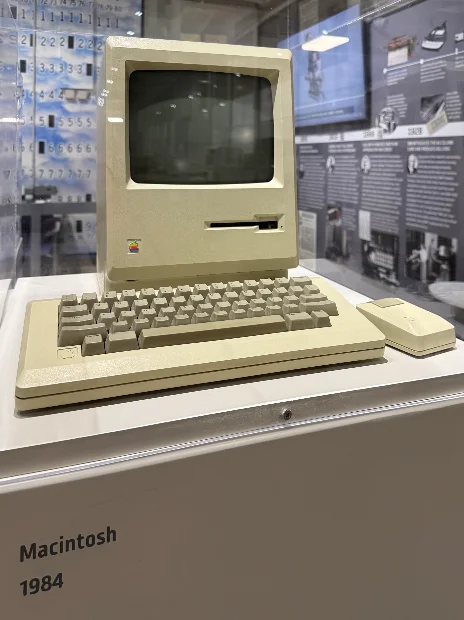
Early electronic calculators and microcomputers:
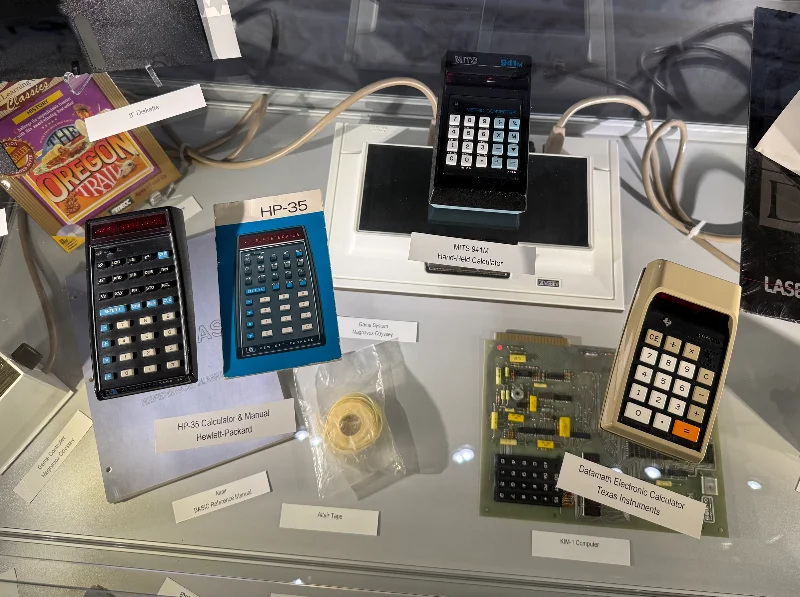
IMG_8220.webp


IMG_8217.webp


IMG_8248.webp


Apple I computers in "original condition" are apparently scarce enough that they're identified by their owners.

IMG_8221.webp


IMG_8222.webp
 
  • Like
  • Love
Likes   Reactions: pinball1970, DennisN, collinsmark and 4 others
Physics news on Phys.org
  • #3,662
Borg said:
Looking south from Pier 57 in New York.

View attachment 371628
We're having an interesting trip. I don't have a picture but my wife spotted Kurt Russell and Goldy Hawn walking on the sidewalk in the opposite direction a few blocks from our hotel.
 
  • Wow
  • Like
Likes   Reactions: pinball1970 and BillTre
  • #3,663
You gotta give this series a chance. It's incredibly funnny.

Skærmbillede (155).webp


-- "Jeffrey, that man is a loser and will never amount to anything! I'm not gonna arrest him because a jail cell wont do anything to him he hasn't already done to himself. Let this be a teaching moment for you."

EDIT: I hope this is subtle enough to get through moderation! :smile:
 
Last edited:
  • #3,664
jtbell said:
Early electronic calculators and microcomputers:
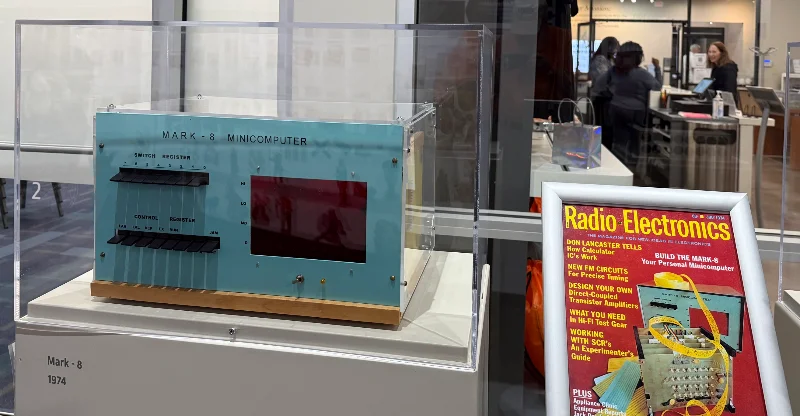
View attachment 371645

View attachment 371649

View attachment 371648

Apple I computers in "original condition" are apparently scarce enough that they're identified by their owners.

View attachment 371646

View attachment 371647
My first computer:

https://www.msx.org/wiki/images/6/6a/Hx22ch1.jpg
jtbell said:
Early electronic calculators and microcomputers:
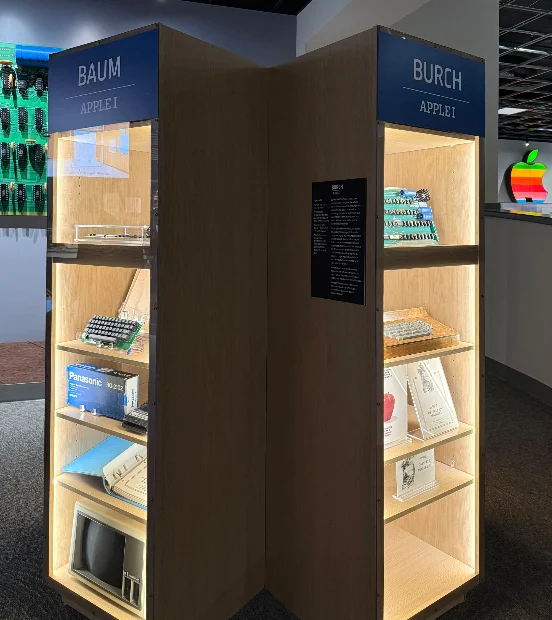
View attachment 371645

View attachment 371649

View attachment 371648

Apple I computers in "original condition" are apparently scarce enough that they're identified by their owners.
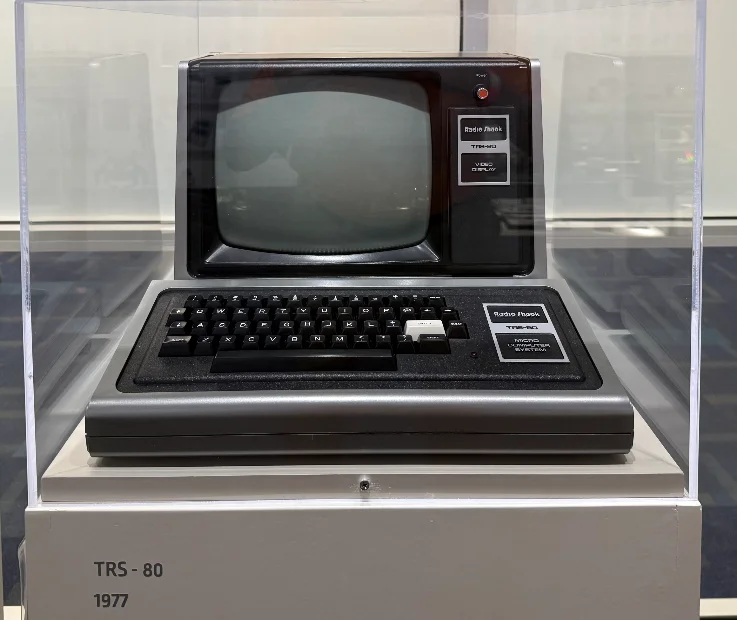
View attachment 371646

View attachment 371647
My first computer. I still have a photo of the screen after the computer spent 48 hours "drawing" mandelbrot (calculating millions of pixels but only painting blocks as it was connected to an 80s TV.)


Hx22ch1.webp
 
  • Love
  • Like
Likes   Reactions: pinball1970 and DennisN
  • #3,665
Here's the art gallery at the Mimms Museum:

IMG_8223.webp


"Cybernetic Lobster Telephone"

IMG_8224.webp
 
  • Like
Likes   Reactions: Point Conception, pinball1970, DennisN and 3 others
  • #3,666
The Vessel at the end of the High Line.
20260515_104124.webp
 

Attachments

  • 20260515_103803.webp
    20260515_103803.webp
    82.2 KB · Views: 1
  • Like
  • Wow
Likes   Reactions: Point Conception, pinball1970, DennisN and 2 others
  • #3,667
Borg said:
The Vessel at the end of the High Line.
View attachment 371683
Wow, I almost tihnk someone put something in my drink just looking at that thing!
 
  • #3,668
A couple of spring shots from April:

Park.webp

Springtime in the park.


Common Spikerush.webp

Common spikerush in a pond.


Tulipa 'Palmyra'.webp

A lovely looking tulip, Tulipa 'Palmyra'.


Star Magnolia.webp

A star magnolia tree in the city.

Common Daisy.webp

A common daisy (the photo was quite heavily edited to get a partly black background).

Lens used (all photos): Canon nFD 50mm f/1.4.
 
  • Like
  • Love
Likes   Reactions: Point Conception, pinball1970, sbrothy and 3 others
  • #3,669
jtbell said:
Early electronic calculators and microcomputers:

The post by @jtbell with old hardware, including an old Hewlett-Packard calculator, prompted me to pull out these two old devices I have at home for a photo shoot:

(HP = Hewlett-Packard)

1. Item #1: A HP 27 calculator, made by Hewlett-Packard between 1976 and 1978, so it is ca 49 years old :smile:. I used this in upper secondary school and I really loved it, so I'm never going to get rid of it. This calculator, and the next one, originally belonged to my father who later gave them to me.

HP 27 Calculator (1, case).webp

HP 27 original case.


HP 27 Calculator (2, front).webp

HP 27. More info here on Wikipedia and here on the Museum of HP Calculators.


HP 27 Calculator (3, side).webp

HP 27, side view.


HP 27 Calculator (4, back).webp

HP 27, back. Apparently it was made in Singapore.


2. Item #2: A HP 22 calculator, made between 1975 and 1978, so it is ca 49 years old too. :smile:

HP 22 Calculator (1, front).webp

A quite dusty old HP 22.


HP 22 Calculator (2, side).webp

HP 22, side view.

(all shot with Canon nFD 50mm f/3.5 Macro)
 
Last edited:
  • Like
  • Wow
Likes   Reactions: Point Conception, jtbell, collinsmark and 3 others
  • #3,670
DennisN said:
The post by @jtbell with old hardware, including an old Hewlett-Packard calculator, prompted me to pull out these two old devices I have at home for a photo shoot:

(HP = Hewlett-Packard)

1. Item #1: A HP 27 calculator, made by Hewlett-Packard between 1976 and 1978, so it
is ca 49 years old :smile:. I used this in upper secondary school and I really loved it,
so I'm never going to get rid of it. This calculator, and the next one, originally belonged
to my father who later gave them to me.

View attachment 371715
HP 27 Original case.


View attachment 371716
HP 27. More info here on Wikipedia and here on the Museum of HP Calculators.


View attachment 371717
HP 27, side view.


View attachment 371718
HP 27, back. Apparently it was made in Singapore.


2. Item #2: A HP 22 calculator, made between 1975 and 1978, so it is ca 49 years old too. :smile:

View attachment 371719
A quite dusty old HP 22.


View attachment 371720
HP 22, side view.

(all shot with Canon nFD 50mm f/3.5 Macro)
I remember my stepdad giving me a Texas-Instruments "brick" which could be "programmed" to play various games. That must have been before the MSX. The youth today have no idea what they've missed. Mainframes with 8-inch floppy disks, magnetic tape and whatnot! :smile:

EDIT: And yeah, lets not forget punch cards.

ard-for-an-old-ibm-computer-a-comparison-708937324.webp
 
  • Like
Likes   Reactions: pinball1970 and DennisN
  • #3,671
So beautiful:

punchCards-square.jpg?utm_source=commons.wikimedia.webp


That's kinda where it all started. You heard the story of how the magnetic stripe on cards where created yeah? An IBM employee brought the problem of attaching the stripe to the card home to his wife who immediately ironed it on. Technique was subsequently used for years.

The Magnetic Stripe
 
  • Like
  • Informative
Likes   Reactions: jack action, BillTre, pinball1970 and 1 other person
  • #3,672
DennisN said:
The post by @jtbell with old hardware, including an old Hewlett-Packard calculator, prompted me to pull out these two old devices I have at home for a photo shoot:

(HP = Hewlett-Packard)

1. Item #1: A HP 27 calculator, made by Hewlett-Packard between 1976 and 1978, so it
is ca 49 years old :smile:. I used this in upper secondary school and I really loved it,
so I'm never going to get rid of it. This calculator, and the next one, originally belonged
to my father who later gave them to me.

View attachment 371715
HP 27 Original case.


View attachment 371716
HP 27. More info here on Wikipedia and here on the Museum of HP Calculators.


View attachment 371717
HP 27, side view.


View attachment 371718
HP 27, back. Apparently it was made in Singapore.


2. Item #2: A HP 22 calculator, made between 1975 and 1978, so it is ca 49 years old too. :smile:

View attachment 371719
A quite dusty old HP 22.


View attachment 371720
HP 22, side view.

(all shot with Canon nFD 50mm f/3.5 Macro)
Some classics! Here are a few more.

IMG_20260516_133908_648~2.webp


IMG_20260516_134207_963~2.webp


IMG_20260516_133958_786~2.webp
 
  • Like
  • Love
Likes   Reactions: Point Conception, collinsmark, sbrothy and 3 others
  • #3,673
Racing green. He was actually driving off slowly as I took this, it sounded nowhere near as pretty as it looked!

IMG_20260516_134236_571~2.webp


IMG_20260516_133925_783~2.webp


IMG_20260516_134034_646~2.webp


Would have been nice to have seen one of the older Jags

IMG_20260516_133913_626~2.webp


Not bad for a Saturday afternoon in Hyde.

IMG_20260516_134104_666~2.webp
 
  • Like
  • Love
Likes   Reactions: Point Conception, collinsmark, sbrothy and 4 others
  • #3,674
pinball1970 said:
Racing green

pinball1970 said:
Would have been nice to have seen one of the older Jags

My dad used to have racing green Jaguar, actually. I think it was a Jaguar XJ (possibly X300).
I remember it was the most comfortable car I had ever taken a ride in at that point.
And I drove it sometimes too, it was really wonderful to drive :smile:.
 
Last edited:
  • Like
Likes   Reactions: pinball1970 and BillTre
  • #3,675
pinball1970 said:
Racing green. He was actually driving off slowly as I took this, it sounded nowhere near as pretty as it looked!

View attachment 371726

Quite a contrast with the BMW in the background!
 
  • Like
Likes   Reactions: pinball1970
  • #3,676
sbrothy said:
So beautiful:

punchCards-square.jpg?utm_source=commons.wikimedia.webp
Unless you actually had to use them. The 2nd worst way to program a computer.
 
  • Haha
Likes   Reactions: DennisN and sbrothy
  • #3,677
In my first job with IBM, as a vacation student in 1973, I had some free time and I worked out how to use overpunching on the IBM 029 card punch to create patterns, which could then be duplicated by copying the card. An unofficial version of the IBM logo one was popular (I still have a copy):
P1033821_lower_res.webp

But management banned copying it because rows with all holes punched tended to jam the mechanism!
 
  • Like
Likes   Reactions: DennisN, jtbell, pinball1970 and 4 others
  • #3,678
DaveE said:
Unless you actually had to use them. The 2nd worst way to program a computer.
So true!

EDIT: Wait, what's the worst? Actual machine code? Editing an already compiled binary using a hex-editor? Please don't say assembly. That would be a walk in the park compared!
 
  • #3,679
Jonathan Scott said:
In my first job with IBM, as a vacation student in 1973, I had some free time and I worked out how to use overpunching on the IBM 029 card punch to create patterns, which could then be duplicated by copying the card. An unofficial version of the IBM logo one was popular (I still have a copy):
View attachment 371735
But management banned copying it because rows with all holes punched tended to jam the mechanism!

Hah, "overpunching" Is it like "overclocking" but for old IBM mainframes? :woot:
 
  • #3,680
sbrothy said:
So true!

EDIT: Wait, what's the worst? Actual machine code? Editing an already compiled binary using a hex-editor? Please don't say assembly. That would be a walk in the park compared!

Thus, programmers are freed from tedious repetitive calculations and assembler programs are much more readable than machine code.
---- Assembly language (wiki):

Well yeah, but "freed from repetitive calculations" seems to me a bit optimistic or over-advertized. :smile:
 
  • #3,681
sbrothy said:
So true!

EDIT: Wait, what's the worst? Actual machine code? Editing an already compiled binary using a hex-editor? Please don't say assembly. That would be a walk in the park compared!
I don't know what was intended, but in 1974 I was trying out things in IBM mainframe assembly language and didn't like having to wait for compile job turnaround so I started an interactive debug session on an existing dummy program and poked machine code into storage in hex to test it, saving a lot of time.

My last job was looking after IBM's High Level Assembler, compiling a more advanced version of the same language. The macro language made it ridiculously powerful, if one had the patience to learn how to write it. Unlike for most programming languages, the macro language has access to any definitions the assembler has already processed from the current pass, and it can even look ahead to a limited extent (ignoring macros for that purpose). Someone wrote some macro definitions around 1990 that meant you could compile an early version of Fortran simply by giving the source code to the assembler!
 
  • Like
Likes   Reactions: sbrothy
  • #3,682
Manchester Piccadilly has two Victorian statues, This is one.

IMG_20260517_101651_925~2.webp
 
  • Like
Likes   Reactions: Point Conception, DennisN, collinsmark and 2 others
  • #3,683
Jonathan Scott said:
I don't know what was intended, but in 1974 I was trying out things in IBM mainframe assembly language and didn't like having to wait for compile job turnaround so I started an interactive debug session on an existing dummy program and poked machine code into storage in hex to test it, saving a lot of time.

My last job was looking after IBM's High Level Assembler, compiling a more advanced version of the same language. The macro language made it ridiculously powerful, if one had the patience to learn how to write it. Unlike for most programming languages, the macro language has access to any definitions the assembler has already processed from the current pass, and it can even look ahead to a limited extent (ignoring macros for that purpose). Someone wrote some macro definitions around 1990 that meant you could compile an early version of Fortran simply by giving the source code to the assembler!
Obviously, you have experienced the whole tour, so to speak. I must've been younger, I really started expending energy learning C, then understanding that I needed to know assembly to really understand what was going on. Leading me to embedded code (Laser scanners, dictaphones), but also ultimately to C++. If you've known programming from that level you don't ask questions like "What's the best language to learn?".

Learn algorithms, basic functional analysis, perhaps Linear Algebra; and understand that there's more than one kind (or even several kinds) of language(s).
 
  • #3,684
sbrothy said:
Wait, what's the worst? Actual machine code?
Machine code, in binary, using a row of switches on the front panel. :cool:

IMG_8233.webp


IMG_8234.webp


I played with one of these as an undergraduate in the early 1970s. The main I/O device was a teletype terminal with a paper tape reader / puncher. I normally wrote assembly language using the keyboard. When I wanted to save something, either source code or an assembled program, I punched a paper tape.

The operating system was on a paper tape that I had to load after turning the power on. In order to load that paper tape, I first had to enter a short paper tape reading program via the front panel switches. About twenty 12-bit binary instructions, one at a time via the switch register, from a sheet of paper that we kept handy.
 
  • Like
  • Informative
Likes   Reactions: jack action, berkeman, BillTre and 1 other person
  • #3,685
jtbell said:
About twenty 12-bit binary instructions, one at a time via the switch register, from a sheet of paper that we kept handy.
That is kind of awesome. Both that you had to do it and that you could fit a bootloader into thirty bytes.
 
  • Like
Likes   Reactions: sbrothy
  • #3,686
jtbell said:
Machine code, in binary, using a row of switches on the front panel. :cool:

View attachment 371759

View attachment 371760

I played with one of these as an undergraduate in the early 1970s. The main I/O device was a teletype terminal with a paper tape reader / puncher. I normally wrote assembly language using the keyboard. When I wanted to save something, either source code or an assembled program, I punched a paper tape.

The operating system was on a paper tape that I had to load after turning the power on. In order to load that paper tape, I first had to enter a short paper tape reading program via the front panel switches. About twenty 12-bit binary instructions, one at a time via the switch register, from a sheet of paper that we kept handy.
Ouch! But cool!

:woot:
 
  • #3,687
sbrothy said:
what's the worst? Actual machine code?
I-8080-00-Beauty.webp
 
  • Agree
  • Haha
Likes   Reactions: sbrothy and berkeman
  • #3,688
Speaking of classic cars... the other day I walked past the local drive-in restaurant which was hosting a car show in the parking lot.

IMG_8392.webp


Looks like this Edsel station wagon still needs some restoration work!
 
  • Like
Likes   Reactions: Point Conception, collinsmark and Borg
  • #3,689
DaveE said:
You've all clearly been in the game for longer than me. Looking at that thing I must admit I'm a little grateful that that was before my time!
 
  • #3,690

Similar threads

  • · Replies 6 ·
Replies
6
Views
2K
  • · Replies 40 ·
2
Replies
40
Views
4K
  • · Replies 16 ·
Replies
16
Views
1K
  • · Replies 4 ·
Replies
4
Views
2K
  • · Replies 3 ·
Replies
3
Views
3K
Replies
46
Views
4K
  • · Replies 5 ·
Replies
5
Views
2K
  • · Replies 7 ·
Replies
7
Views
2K
  • · Replies 24 ·
Replies
24
Views
3K
  • · Replies 5 ·
Replies
5
Views
3K