Discussion Overview
The discussion revolves around finding alternatives to relays for accurately measuring gravitational acceleration (g) in a free fall experiment using an Arduino. Participants explore various electronic and mechanical solutions to minimize timing errors and improve measurement accuracy, addressing both theoretical and practical aspects of the experiment.
Discussion Character
- Exploratory
- Technical explanation
- Debate/contested
- Experimental/applied
Main Points Raised
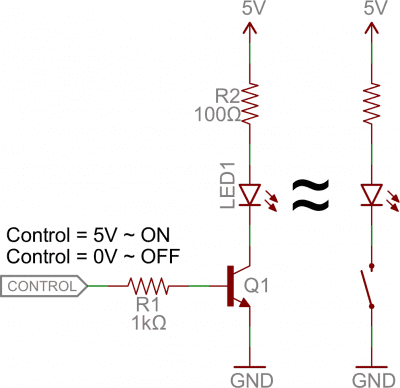
- One participant suggests using a better transistor than the 2N2222A, as it could not handle the required current for the electromagnet.
- Another participant proposes measuring time at multiple heights to determine g and account for relay time delays.
- Concerns are raised about the response time of the electromagnet itself, suggesting that a higher voltage drive and more complex electronic switching could improve performance.
- A participant mentions that increasing the fall height can help mitigate relay lag errors.
- One participant reports improved results with a heavier mass, attributing this to the gravitational force overcoming the magnetic force more effectively.
- Suggestions include using a mechanical platform or latch system to release the falling object more effectively than an electromagnet.
- Another participant discusses the use of a computer mouse ball as a better falling object due to its material properties, which allow for quicker release from the electromagnet.
- Some participants suggest using multiple measurement points to eliminate common timing errors and improve the accuracy of g calculations.
Areas of Agreement / Disagreement
Participants express multiple competing views on the best method to achieve accurate timing in the experiment. There is no consensus on a single solution, as various approaches are discussed and refined throughout the thread.
Contextual Notes
Participants highlight limitations such as the response time of the electromagnet and the need for precise timing mechanisms. There are also unresolved questions regarding the optimal design of release mechanisms and the effects of different materials on measurement accuracy.
Who May Find This Useful
This discussion may be useful for students and hobbyists interested in experimental physics, particularly those exploring methods for measuring gravitational acceleration and improving timing accuracy in experiments.