Alternatives to varistors as overload protection at DC motor

Click For Summary

Discussion Overview

The discussion revolves around alternatives to varistors for overload protection in a 12V linear actuator powered by a DC motor. Participants explore various protective devices, including fuses and zener diodes, while considering the specific requirements and limitations of the application.

Discussion Character

  • Exploratory
  • Technical explanation
  • Debate/contested

Main Points Raised

  • One participant mentions the advice received from an electrical engineer to use varistors rated at 18V rms and 1000A surge, but expresses difficulty in sourcing appropriate varistors.
  • Another participant questions the type of faults the original poster is trying to protect against, suggesting that a fuse may be more suitable for protecting against excess current draw from a stalled motor.
  • Some participants discuss the use of resettable fuses, also known as polyswitches or polyfuses, as alternatives to varistors for overload protection.
  • A participant proposes using series-opposing 15V zener diodes as a potential solution, expressing concern about voltage spikes from the motor's operation.
  • Concerns are raised about the adequacy of the proposed solutions, particularly regarding the potential for motor current during stalling conditions.
  • Some participants suggest using current sense resistors with the L298 motor driver to manage current draw, although the original poster does not use PWM control.
  • Links to various protective devices, including TVS diodes and datasheets, are shared as potential options for voltage protection.

Areas of Agreement / Disagreement

Participants express differing opinions on the suitability of varistors versus fuses for overload protection, and there is no consensus on the best alternative solution. The discussion remains unresolved regarding the optimal protective device for the specific application.

Contextual Notes

Participants highlight limitations in sourcing specific components, such as the lack of available 18V varistors, and discuss the implications of using alternative devices like zener diodes and fuses. The discussion includes various assumptions about the operating conditions and potential faults.

Who May Find This Useful

Individuals interested in DC motor protection, particularly in applications involving linear actuators, may find the discussion relevant. Those exploring alternatives to traditional protective devices in electrical engineering contexts may also benefit.

marellasunny
Messages
245
Reaction score
3
Alternatives to varistors as overload protection at DC motor

DC Motor here implies 12V linear actuator w/DC Motor that consumes 2.8A under loading condition. Pretty costly equipment.

I'm using a L298N motor driver connected in parallel to run the linear actuator. The motor driver is run by a 12V 10Ah lead acid battery. An electrical engineer advised me to use varistors 'MOVs' instead of 10A blade fuses for overload protection at my linear actuator. He specified that I select a varistor rated at 1.5x12V=18V rms and 1000A surge. I've been able to source only 130V rated Varistors in my locality/country. Is there any other alternative cheap way to ensure surge protection of my costly linear actuator? Are the fuses engh?
From what I've read varistors start to conduct current only above the DC rated voltage.
L298N connected in parallel:
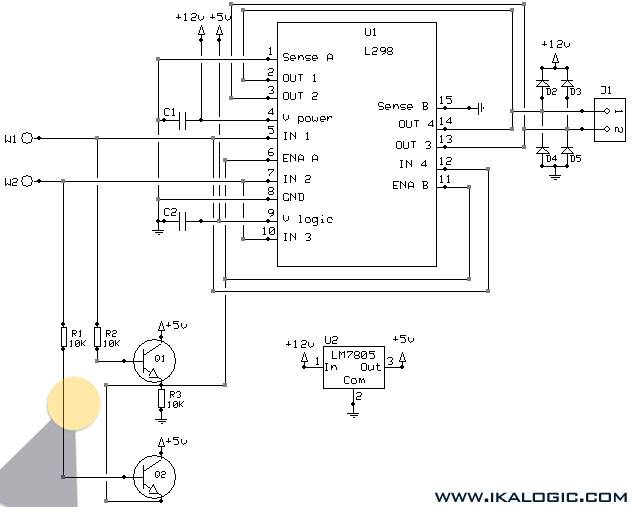
hb_l298.jpg


Varistor working:
VaristorCharacteristicCurve.gif

10A blade fuse:
http://s1097.photobucket.com/user/wlwltd/media/10_AMP_BLADE_FUSE_STANDARD_2.jpg.html?t=1324466963
 
Engineering news on Phys.org
What sort of faults are you trying to protect against?

An 18V 1000A varistor would imply you are concerned about over voltage - perhaps due to a failure of the lead acid battery charger?

If you are concerned about something stalling/blocking the linear actuator/DC Motor causing excess current draw then I think a fuse is a better option. However there are Varistors intended for use as automatically resettable fuses...

http://www.littelfuse.com/products/resettable-ptcs.aspx

http://www.littelfuse.com/~/media/e..._dc_application_varistor_design_guide.pdf.pdf

Perhaps read up on the different types of varistor. There are some you put in parallel with the load and these clamp or absorb over voltage transients. There are others you put in series with the load that act like automatically resettable fuses and protect against over current faults.
 
Last edited:
marellasunny said:
An electrical engineer advised me to use varistors 'MOVs' instead of 10A blade fuses for overload protection at my linear actuator. He specified that I select a varistor rated at 1.5x12V=18V rms and 1000A surge. I've been able to source only 130V rated Varistors in my locality/country.
That advice is not applicable to your situation.

The advice from CWatters to use a current limiting device is good. Resettable fuses are also marketed as “polyswitch” or “polyfuse” because they are based on a polymer. https://en.wikipedia.org/wiki/Resettable_fuse

If PWM control of the DC motor was being used then a current sense resistor on pins 1 and 15 of the L298 could detect load current and reduce duty cycle to limit maximum current.
 
Thanks for the replies. FYI I managed to only get hold of 130V clamping voltage varistors. Nothing in the range of 18V is available. So, I'm thinking of connecting series-opposing 15V zener diodes instead. Is that okay?

CWatters- "If you are concerned about something stalling/blocking the linear actuator/DC Motor causing excess current draw then I think a fuse is a better option."

My DC Motor (Linear actuator) already has limit switches inside of them. So, this would mean that everytime my actuator shaft reaches it end limits, my motor no longer draws any more current (mechanical switches). Nevertheless I'm going to use a 10A fuse in series.

"An 18V 1000A varistor would imply you are concerned about over voltage - perhaps due to a failure of the lead acid battery charger?"

My lead acid battery is getting charged by solar power( regulated by a charge controller ). This battery in-turn powers my actuator dc motor. I'm concerned about over voltage from motor switch-off and the collapsing magnetic field that could spike voltage. .

Baluncore- "If PWM control of the DC motor was being used then a current sense resistor on pins 1 and 15 of the L298 could detect load current and reduce duty cycle to limit maximum current."

Great idea Sir. I'll see if I can use these pins for ordinary motor switch on/off also. I don't use PWM speed control, nevertheless...

Unfortunately, I've got to import polyfuses & 18V varistors. Lead time and money are constraints. I'm thinking of going with the zener diode idea/sense pins idea/try and rip-off spare ECU circuits to search for polyfuses.
 
marellasunny said:
Thanks for the replies. FYI I managed to only get hold of 130V clamping voltage varistors. Nothing in the range of 18V is available. So, I'm thinking of connecting series-opposing 15V zener diodes instead. Is that okay?
That is quite unnecessary as maximum supply voltage should not be a problem.
The overload problem you fear is motor current when the motor is stalled.
 
  • Like
Likes   Reactions: jim hardy
marellasunny said:
Nothing in the range of 18V is available
i guess D2 through D5 direct motor surges to the power supply rails ?
If somebody is worried that's inadequate

One of these might be reassuring
http://www.littelfuse.com/~/media/e.../littelfuse_tvs_diode_1_5ke_datasheet.pdf.pdf
or if you're protecting against lightning (1000 amps? sounds impractical to me)
here's a 548 amp 20 volt...
http://www.littelfuse.com/~/media/e.../littelfuse_tvs_diode_20kpa_datasheet.pdf.pdfand their whole line of them
http://www.littelfuse.com/products/tvs-diodes.aspx
i'd say pick one higher than your power supply tolerance but below absolute maximum voltage rating of the device
 

Similar threads

  • · Replies 7 ·
Replies
7
Views
3K